
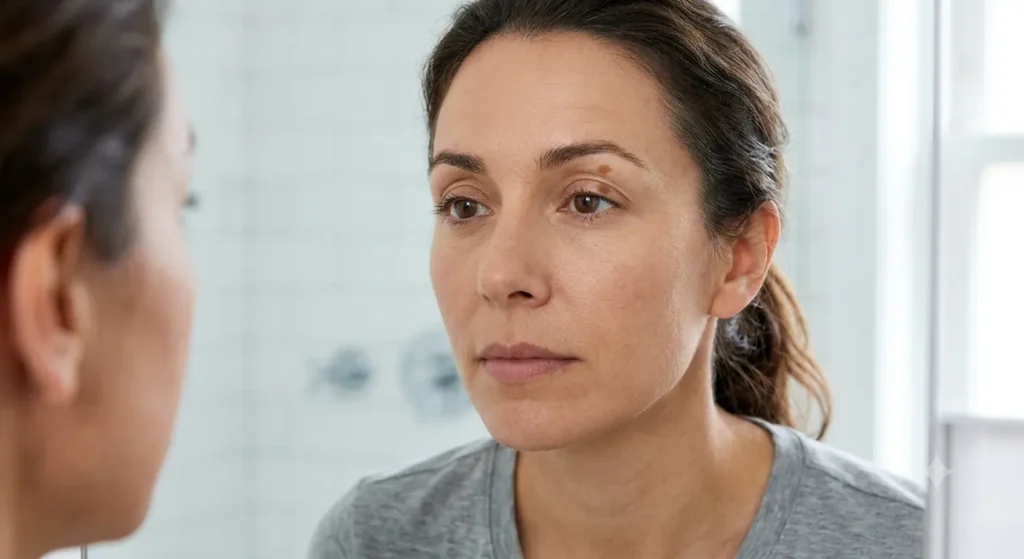
You caught it in the mirror this morning. A brown spot on your eyelid, right there, staring back at you. Maybe it’s been there a while and just got darker. Maybe it’s brand new. Either way, your brain jumps straight to “is this bad?”
I get it. Eyelid skin is paper-thin. It’s also the first thing people see when they look at your face. So any mark there feels ten times bigger than it actually is.
Here’s the short version, before we go deep: a brown spot on the eyelid is almost always harmless. It’s usually just pigment doing what pigment does — clumping up in one spot instead of spreading out evenly. Sun, age, and genetics cause most of these. But I’m not going to stop at “don’t worry about it,” because that’s not actually useful to you. Let’s break down what’s really going on, how to tell a normal spot from one that needs attention, and what you can do starting today.
Table of Contents
What Is a Brown Spot on the Eyelid, Really?
Your skin makes a pigment called melanin. It’s the same stuff that decides your hair color and eye color. Normally it’s spread out fairly evenly across your skin. But sometimes it bunches up in a small area instead. That bunched-up patch is what you’re looking at when you see a Brown Spot Eyelid
It goes by a few different names depending on what’s causing it:
- Solar lentigo — the classic “age spot” or “sun spot” Learn more about age spots from the American Academy of Dermatology.
- Seborrheic keratosis — a slightly raised, waxy patch
- Post-inflammatory hyperpigmentation — a dark mark left behind after your skin got irritated
- Periorbital hyperpigmentation — general darkness around the whole eye area, not just one spot
- If the discoloration affects the entire eye area instead of a single spot, it may be related to under-eye pigmentation rather than a localized lesion. You can also explore our guide to natural remedies for dark circles under eyes
Eyelid skin has almost no fat layer underneath it. That’s why marks show up faster and more clearly here than they would on your cheek or forearm. One quick note before we move on — if the brown mark is actually on your eyeball rather than the skin around it, that’s a different thing entirely, usually called an eye freckle or nevus. This article is about the skin, not the eye surface itself.
How Does It Compare to Other Marks?
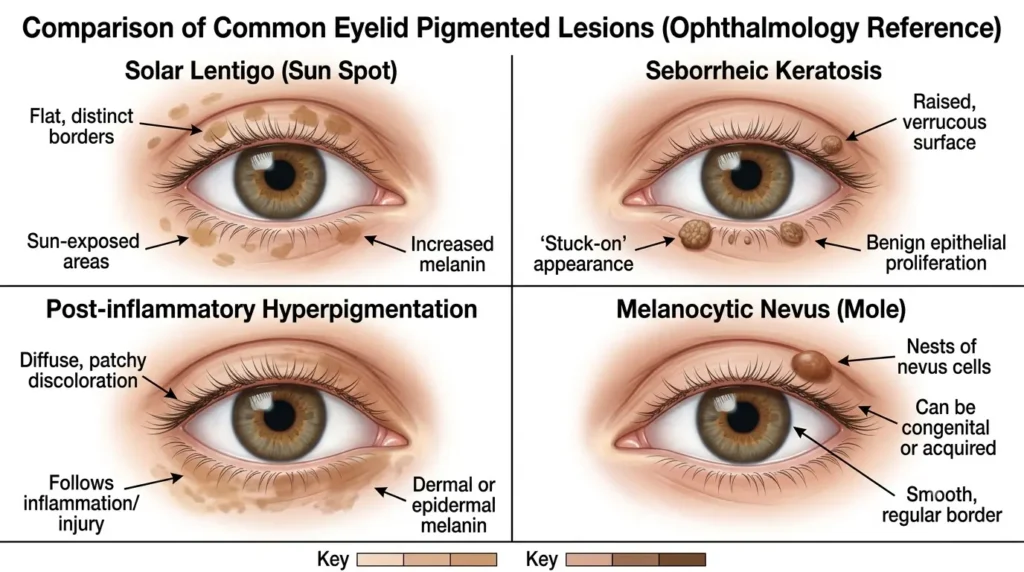
People mix up a brown spot eyelid with a handful of other common marks. Here’s how they stack up against each other.
| Feature | Solar Lentigo | Seborrheic Keratosis | Nevus (Mole) | Post-Inflammatory Mark |
|---|---|---|---|---|
| Texture | Flat | Raised, waxy | Flat or slightly raised | Flat |
| Common Cause | Sun, aging | Aging, genetics | Present from birth or develops over time | Rubbing, eczema, irritation |
| Color | Light to dark brown | Brown to black | Brown to dark brown | Brown or grayish-brown |
| Growth Pattern | Very slow or stable | Slow | Usually stable | Fades over months |
| Needs Watching? | Sometimes | Sometimes | Yes, for changes | Usually resolves alone |
I’m not showing you this table to turn you into your own dermatologist. I’m showing it so you walk into any conversation with a real doctor already knowing roughly what category your spot might fall into.
What People Usually Notice
Most people who deal with a brown spot eyelid describe the same handful of things:
It doesn’t hurt. It doesn’t itch. It just sits there, being visible. It shows up slowly rather than overnight, unless it’s tied to some kind of irritation. It stays roughly the same size for years at a stretch. And makeup tends to make it stand out more, since eyelid skin doesn’t have much texture to blend a dark patch into.
A lot of people also notice their brown spot eyelid gets a bit darker after a summer of sun without sunglasses, or after a rough allergy season full of eye rubbing. Both of those make sense — UV light and friction are two of the biggest triggers for pigment buildup. Sunscreen and gentle care around the eyes going forward can slow new spots from forming. It won’t erase an old one on its own, though. I want to be straight with you about that instead of overselling it.
One thing worth remembering: a spot that’s been sitting there quietly for five years isn’t going to suddenly transform overnight. Change happens slowly with these. Sudden shifts are rare, and that rarity is exactly why they matter when they happen.
The General Pattern
No two people are identical, but here’s what tends to hold true across most cases of a brown spot eyelid:
- Size — usually a few millimeters, sometimes closer to a centimeter
- Onset — often shows up after age 30 or 40, earlier if you’ve had heavy sun exposure
- Location — upper lid, lower lid, or right along the lash line
- Color — tan to dark brown, sometimes a little uneven
- Triggers — UV rays, aging, genetics, hormones, chronic rubbing, or occasionally certain medications
Take these as general patterns, not guarantees. Skin behaves differently from person to person, and your history matters more than any list ever could.
Who Is More Likely to Develop a Brown Spot on the Eyelid?
Some people are simply more prone to this than others. If you fall into a few of these categories, don’t be surprised if a brown spot eyelid shows up sooner or more often for you than it does for someone else.
- Age over 40. Pigment cells become less predictable as skin ages, and sun damage has had more time to add up.
- Fair skin. Lighter skin has less natural melanin protection against UV rays, so pigment reacts more visibly.
- Years of sun exposure. Cumulative sun exposure matters more than any single afternoon outdoors.
- Outdoor workers. Farmers, construction workers, lifeguards, landscapers — anyone spending regular hours in direct sun faces higher odds.
- Family history. If your parents or siblings developed similar spots, genetics are likely playing a role in yours too.
- Previous eczema. A history of eczema around the eyes leaves skin more reactive and prone to post-inflammatory pigment changes.
- Frequent eye rubbing. Chronic rubbing, whether from allergies or habit, irritates the skin repeatedly and can trigger pigment buildup over time.
None of these guarantee you’ll develop a spot, and having none of them doesn’t guarantee you won’t. But if two or three of these apply to you, it’s worth being a little more proactive about prevention — which is exactly what we’ll cover next.
Is It Safe To Leave Alone?
For most people, yes. A brown spot eyelid sitting quietly and not changing is not a red flag. It doesn’t mess with your vision. It doesn’t affect how your eyelid moves or functions. It’s one of the most well-documented and understood skin changes tied to aging and sun.
That said, I’d rather you be cautious than casual here. Watch for these:
- Any change in size, shape, color, or texture — don’t brush that off
- Because eyelid skin is so thin, it’s worth knowing the difference between simple pigment and something that actually needs a closer look
- Spots tucked right near the lash line are trickier to keep an eye on, literally
If your brown spot on the eyelid has been stable for years and doesn’t bother you, simple observation is reasonable. If it’s new, growing, or acting differently, that’s your cue to get it looked at.
The ABCDE Rule — Know This One
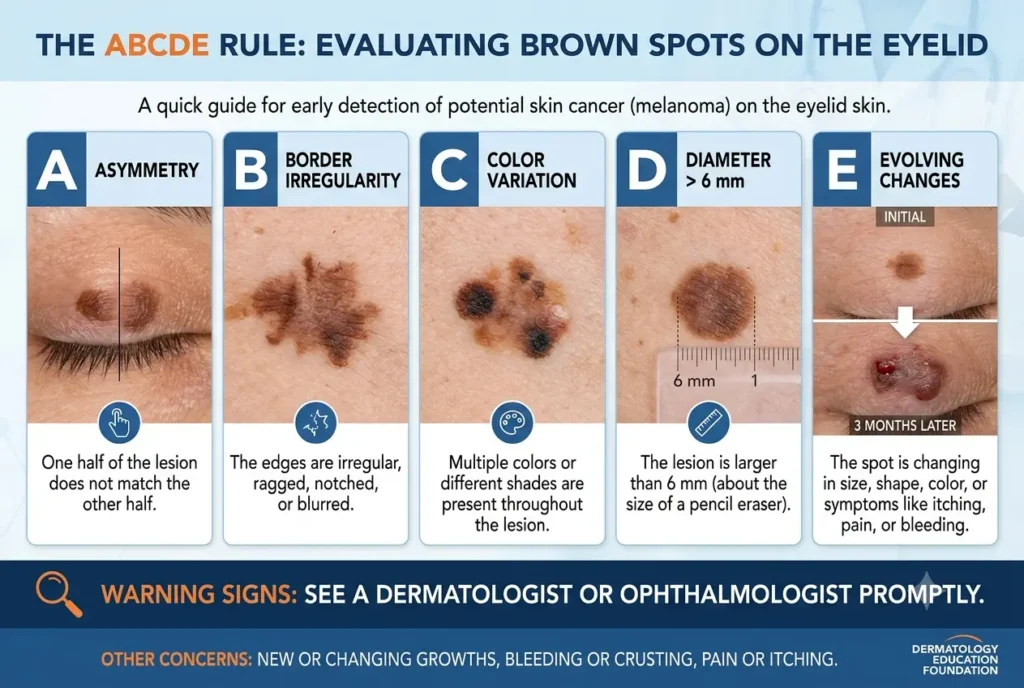
This is the single most useful thing I can hand you in this whole article. Dermatologists use a simple five-letter checklist to flag spots that need a closer look. It was originally built for moles, but it works just as well for judging any brown spot eyelid you’re keeping an eye on. Learn it once and you’ll never have to guess again.
- A – Asymmetry. Fold the spot in half, mentally. Do both sides roughly match? A normal spot usually does. If one half looks nothing like the other, note it.
- B – Border irregularity. Healthy spots tend to have smooth, even edges. Watch for ragged, blurry, or notched borders instead.
- C – Color variation. One even shade of brown is typical. Multiple colors packed into a single spot — tan mixed with dark brown, black, red, or even white — is not.
- D – Diameter larger than about 6mm. That’s roughly the size of a pencil eraser. Bigger doesn’t automatically mean dangerous, but it’s a reason to get it checked.
- E – Evolving. Any spot that’s changing — growing, darkening, shifting shape, starting to itch or bleed — deserves attention regardless of what the other four letters show.
If your spot checks one of these boxes, don’t panic. Do book an appointment. That’s really the whole point of the ABCDE rule — giving you a plain way to decide when “probably fine” turns into “let’s get this looked at.”
Can You Prevent a Brown Spot on the Eyelid From Forming?
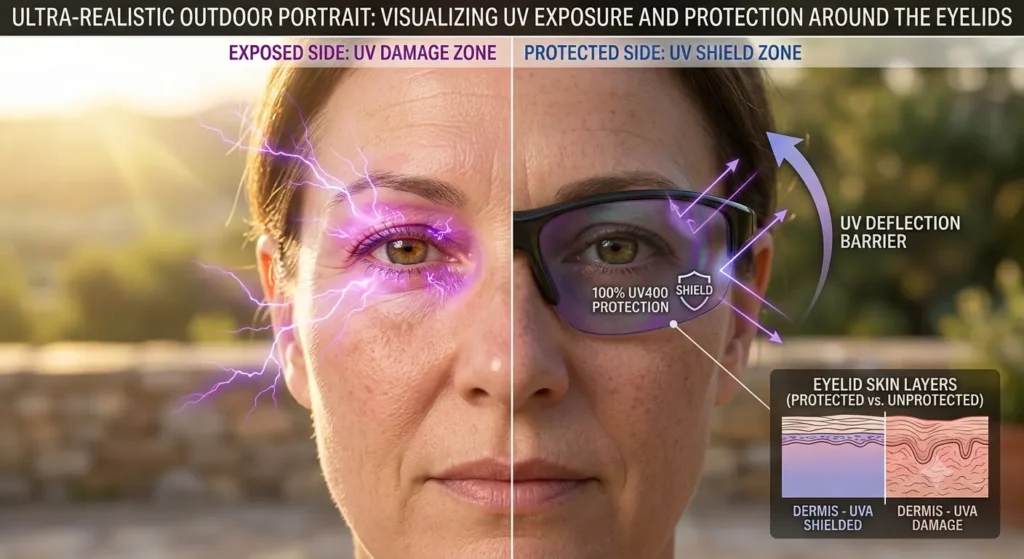
Mostly, yes — at least the sun-driven kind, which covers the majority of cases. You can’t rewrite your genetics, but you can control almost everything else on this list.
- Wear sunglasses. Choose a pair with real UV protection, not just dark lenses. This is your first line of defense.
- Apply SPF every day. Not just on beach days — daily, even when it’s cloudy, even in winter. UV rays don’t take days off.
- Avoid tanning beds. These deliver concentrated UV exposure directly to your skin, and the eye area is not spared.
- Don’t rub your eyes. I know I already said this once, but it’s worth repeating because it’s one of the easiest habits to fix and one of the most overlooked triggers.
- Control allergies. If allergies are driving the rubbing, treating the allergy itself solves the root problem instead of just the symptom.
- Use gentle skincare. Harsh products around the eyes cause irritation, and irritation is a known trigger for pigment changes. Fragrance-free, eye-safe formulas are worth the small extra cost.
None of this guarantees you’ll never develop a brown spot eyelid — genetics and age still play a role no cream can override. But consistent habits genuinely do reduce your odds, and they’re cheap and easy enough that there’s no real reason to skip them.
How I’d Manage It, Step by Step
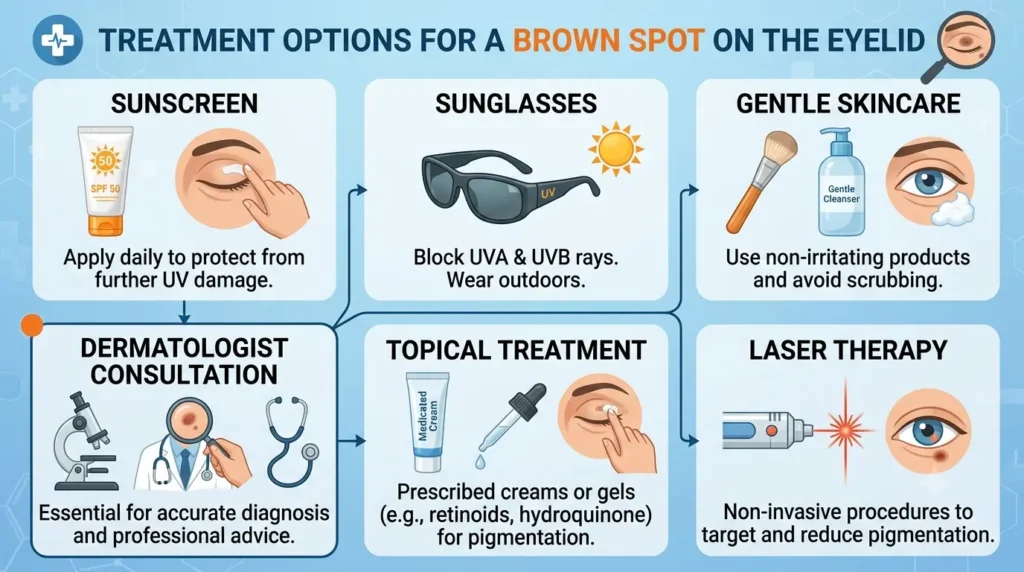
If you want to actually do something about a brown spot eyelid, here’s a realistic order of operations.
1. Sun protection first, always. Use a broad-spectrum sunscreen made for use near the eyes, and wear UV-blocking sunglasses outdoors. This is genuinely the single biggest lever you have.
2. Hands off. Rubbing and scratching make pigmentation worse, especially if you deal with allergies. I know it’s tempting when your eyes itch. Resist it near that spot.
3. Go easy with brightening products. Some people use mild, eye-safe brightening ingredients under a professional’s guidance. Most standard skin-lightening creams are too harsh for eyelid skin — save those for elsewhere on your body.
4. Take photos over time. A quick phone photo every few months lets you spot subtle changes you’d otherwise miss day to day.
5. Talk to a specialist about in-office options. Depending on what type of spot it is, light-based treatments or minor procedures might come up. Eyelid skin is delicate enough that this conversation should happen with a real professional, not a DIY kit.
6. Give it time. Pigment doesn’t fade overnight. Expect weeks to months before you see a real difference, even when you’re doing everything right.
Mistakes I See People Make
A few habits tend to backfire when someone’s dealing with a brown spot eyelid:
Slathering on strong pigmentation creams meant for the face or body. Eyelid skin can’t handle what your cheeks can. Ignoring a spot that suddenly changed, just because most spots are harmless — that assumption can cost you time you didn’t need to lose. Rubbing at it, hoping friction will somehow make it fade — it usually does the opposite. Skipping sunscreen because “it’s such a small spot” — UV exposure is one of the most consistent drivers of pigment change, small area or not. And diagnosing yourself off a Google image search instead of an actual exam. Photos online never replace someone examining your actual skin.
Choosing the Right Person To See
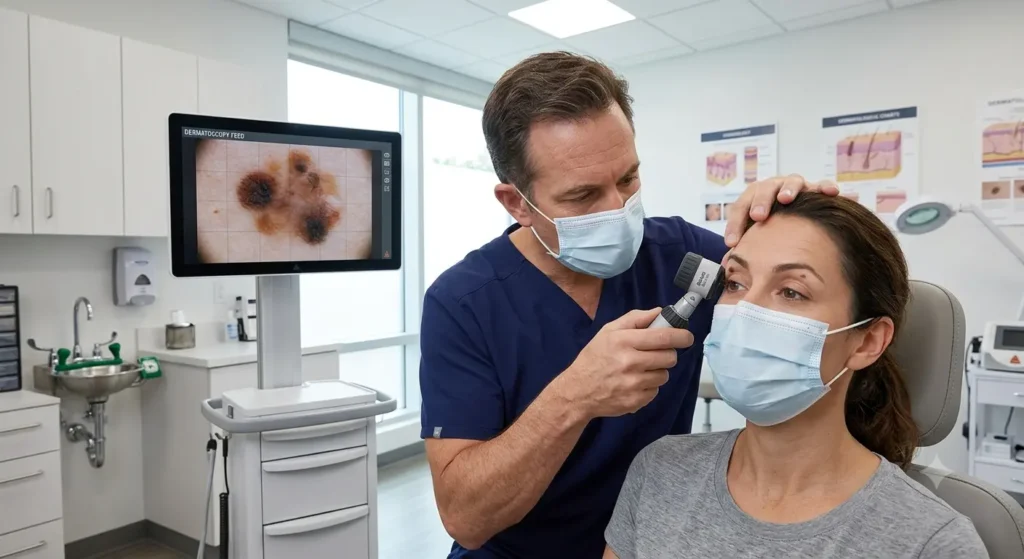
If you decide to get a brown spot eyelid checked out, a few things will make that process smoother:
Find a dermatologist or oculoplastic specialist who has real experience with eyelid skin specifically — it behaves differently than skin elsewhere on your face. Ask directly whether any treatment they’re suggesting has a track record of being used safely that close to the eye. Be skeptical of anyone promising guaranteed removal before they’ve even examined you — the type of pigment changes what’s realistic. Stick with gentle, fragrance-free products for daily eye care instead of multi-purpose creams. And if a specialist isn’t accessible right away, a general dermatologist can still give you a solid first opinion and point you toward the right next step.
Frequently Asked Questions
Are dark eyelids a health warning? Usually not. Most of the time it comes down to sun, age, genetics, or minor irritation. Occasionally, sudden or noticeable darkening paired with other symptoms can point to something like a nutritional gap or an allergy, so it’s worth mentioning to a doctor if it happens fast.
How do you remove a dark spot on the eyelid? There’s no single fix that works for everyone. Daily sun protection, keeping your hands off it, and professional-guided treatment — whether that’s a gentle topical or an in-office procedure — tend to reduce a brown spot on the eyelid over time. Be cautious with home remedies here; the skin is too thin to take chances.
What does a brown spot on your eye mean? That’s a different thing from a brown spot eyelid. A spot on the eyeball itself is usually called an eye freckle or nevus, made of clustered pigment cells. Eye care professionals typically just monitor these periodically rather than treat them.
What vitamin deficiency causes dark eyelids? Low iron or B12 levels get mentioned sometimes, since both affect circulation and skin tone. It’s not a guaranteed link, though. A blood test is the only real way to know if a deficiency is playing a role.
Can a brown spot on the eyelid go away on its own? Sometimes, if it came from temporary irritation — those can fade over a few months. Spots from long-term sun exposure or aging are usually more stubborn and typically need active management instead of just waiting it out.
When should I actually see a doctor about this? If the spot showed up fast, grew quickly, changed color or shape, became raised, or came with irritation, bleeding, or any vision changes — get it checked. Don’t wait it out and hope.
A Quick Word on Accuracy
I’ve put this together using widely accepted, publicly available dermatological knowledge, and I’ve kept it general on purpose. This isn’t a diagnosis of your specific spot, and it isn’t a substitute for a real exam by a dermatologist or ophthalmologist. If something about your particular situation feels off, that instinct is worth listening to — go get it looked at.
Where This Leaves You
A brown spot eyelid is, in the vast majority of cases, just a normal part of getting older, spending time in the sun, or inheriting the genes you inherited. It’s not usually something to panic over. Knowing the difference between a stable spot and a changing one, staying consistent with sun protection, and keeping your hands off your eyes will take you further than most people expect.
But if something about your spot doesn’t fit the normal pattern — if it’s growing, shifting, or bringing along other symptoms — don’t sit on it. Get it checked. A calm, informed approach beats guesswork every single time, and that’s really the whole point of understanding your own skin in the first place.