
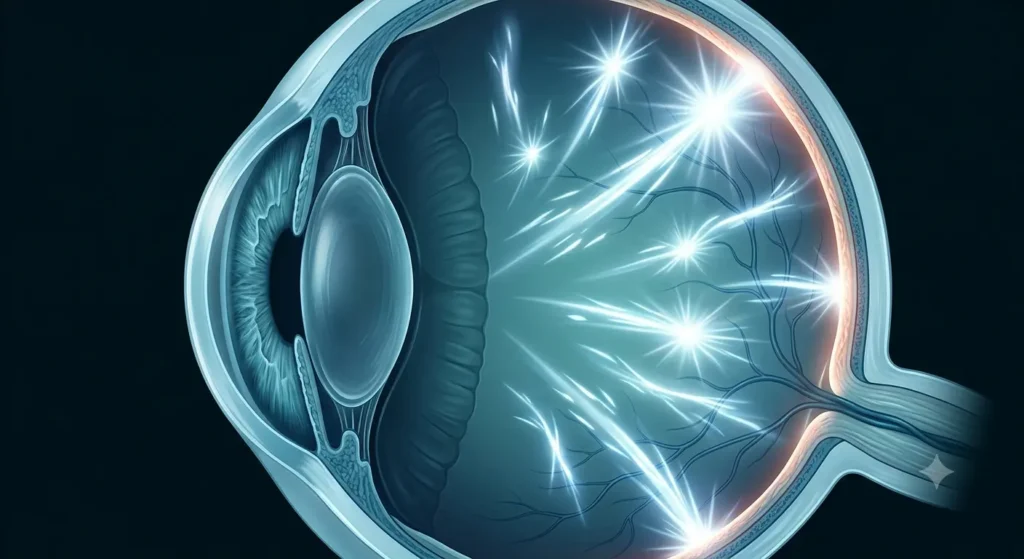
Quick answer: You see flashes of light because your retina is being physically tugged, pressed, or irritated, and it fires off a “light” signal to your brain even though no real light is involved. Most of the time this comes from a normal, age-related process called posterior vitreous detachment. But sudden, frequent flashes paired with new floaters or a shadow in your side vision can mean a retinal tear, and that needs same-day medical care.
That’s the one-line version. Now let me actually walk you through it, because “it depends” isn’t good enough when it’s your eyesight on the line.
Table of Contents
My First Time Seeing It
I still remember the first time it happened to me. I was lying in bed, half asleep, and a tiny streak of light shot across the corner of my eye. No lamp was on. No phone screen. Nothing in the room could have caused it. My first thought was simple: why do I see flashes of light when there’s literally no light source anywhere near me?
If you’ve typed “why do I see flashes of light” into Google at 2 AM, you’re not alone. It’s one of the most searched eye symptoms out there, and honestly, it deserves the attention. Sometimes it’s nothing. Sometimes it’s your eye telling you to get checked out today, not next month.
What Actually Happens When You See Flashes of Light
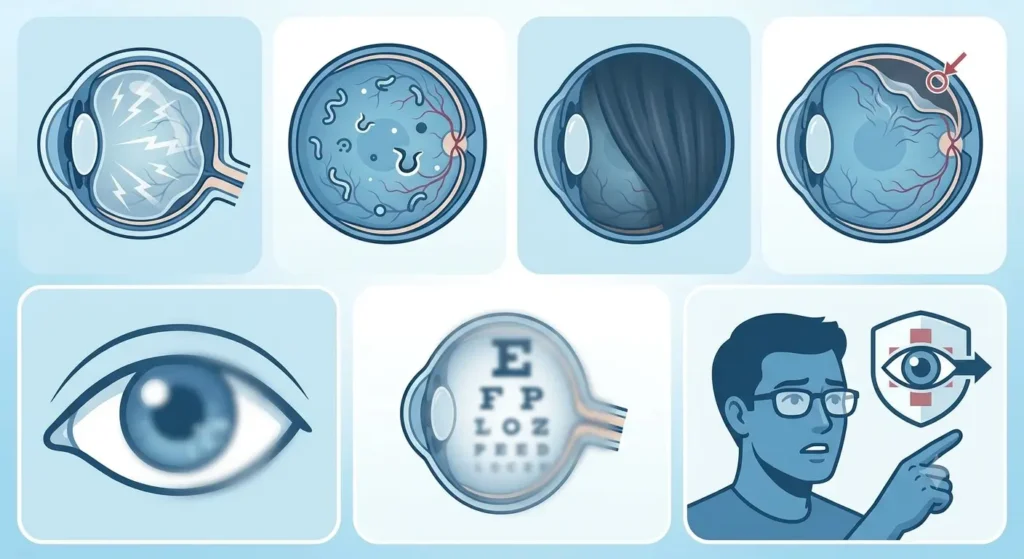
Here’s the short version. Your retina — the light-sensing layer at the back of your eye — sends signals to your brain whenever it gets stimulated. Normally that stimulation comes from actual light entering your eye. But your retina isn’t picky. If something tugs on it, presses on it, or irritates it in any other way, it fires off the exact same “light” signal anyway.
Your brain doesn’t know the difference. It just sees a flash.
That’s the real answer to why do I see flashes of light — your retina is reacting to mechanical pressure or irritation, not to actual photons hitting your eye. It’s a glitch in translation, not a light show.
People describe these flashes in a few common ways:
- Quick sparks or flickers, usually off to the side
- Jagged streaks that look like tiny lightning bolts
- A burst that feels like a camera flash went off
- Shimmering, zigzag patterns, often tied to headaches
They can show up in one eye or both. Dim rooms make them easier to notice. So does closing your eyes. A lot of people tell me they see flashes most right after waking up or right before falling asleep, though that timing really does vary from person to person.
Who Is Most Likely to Experience Eye Flashes?
Not everyone is equally likely to get this symptom. A few groups run a noticeably higher risk, and knowing where you fall on that list helps you judge how seriously to take a new flash.
- Adults over 50. Vitreous detachment is age-driven. Research shows the prevalence sits around 24% in people aged 50 to 59, and it climbs to roughly 87% by ages 80 to 89. Basically, if you live long enough, your vitreous will eventually pull away from your retina.
- People with high myopia (severe nearsightedness). Studies on highly myopic eyes found vitreous detachment can develop up to a decade earlier than in people with normal vision. Myopic patients also carry a higher risk of the vitreous tearing the retina on its way out.
- Anyone who’s had cataract surgery or other eye surgery. Removing the natural lens changes the internal structure of the eye and can speed up vitreous separation.
- People managing diabetes or high blood pressure. These conditions affect the blood vessels feeding the retina over time, and some patients report flashes as a downstream effect.
- Migraine sufferers. Migraine affects roughly 12% of people worldwide, and of that group, about 25 to 30% experience an aura — the visual disturbance that includes flashes, zigzags, and shimmering.
- Anyone with a family history of retinal detachment. Genetics play a real role here, and a family history bumps up your personal risk.
- People who’ve had a recent blow to the head or eye. Trauma is a direct, mechanical trigger for flashes, independent of age.
If you fall into more than one of these categories, don’t panic — but do pay closer attention if something changes.
Flashes vs. Floaters — They’re Not the Same Thing
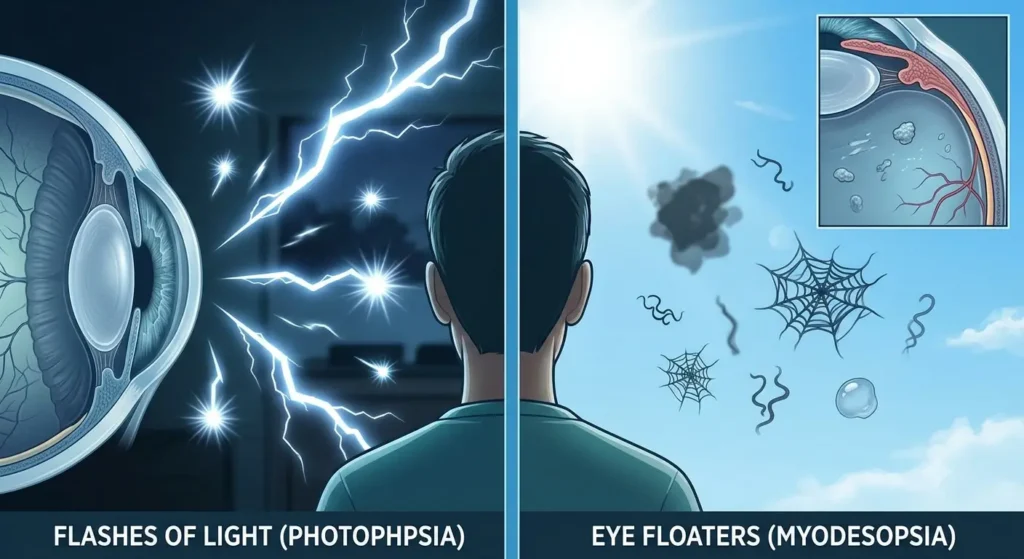
People mix these two up constantly, and I get why. They often show up together. But they’re caused by different things, and knowing the difference helps you describe your symptoms accurately if you ever call a doctor.
| Feature | Flashes of Light | Eye Floaters |
|---|---|---|
| What it looks like | Sparks, streaks, bursts | Specks, cobwebs, squiggly shapes |
| Cause | Mechanical pull on the retina | Small clumps in the vitreous gel casting shadows |
| When you notice it | Dim light, side vision | Bright backgrounds, like a clear sky |
| Movement | Brief, doesn’t drift | Floats and moves with your eye |
| Concern level | Can signal something urgent | Usually mild, unless it spikes suddenly |
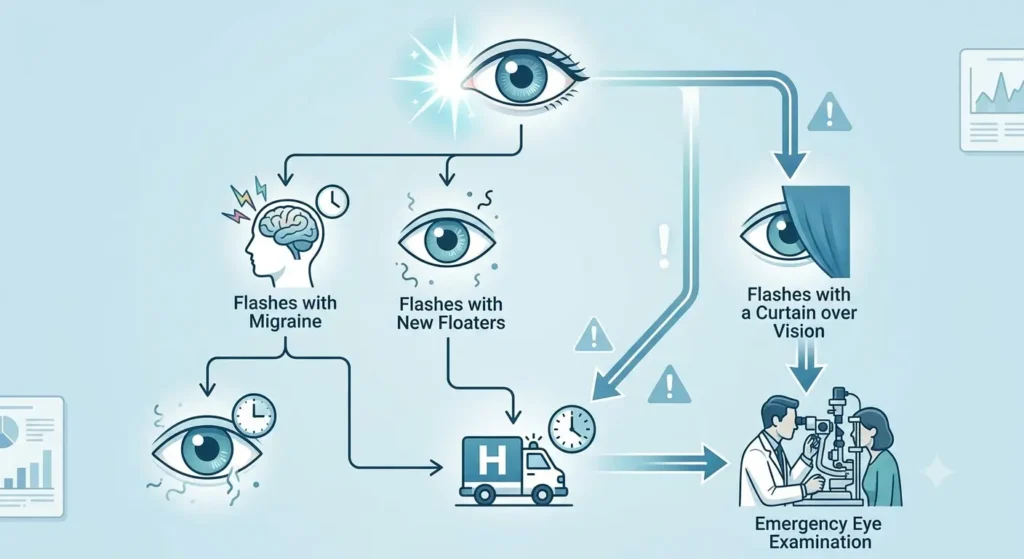
Here’s the pattern eye doctors take seriously: flashes plus a sudden wave of new floaters. If that combo hits you out of nowhere, don’t wait around. That’s often the retina waving a red flag.
Symptom Snapshot by Likely Cause
This table gives you a fast way to match your symptoms to a probable cause, and how urgently each one usually needs attention. It’s a starting point, not a diagnosis.
| Cause | Typical Symptom Pattern | Pain Involved? | Urgency Level |
|---|---|---|---|
| Posterior vitreous detachment (PVD) | Occasional flashes, side vision, mild new floaters | No | Routine to prompt exam |
| Retinal tear or detachment | Sudden, frequent flashes, shower of floaters, shadow or curtain | Usually no | Emergency |
| Migraine with aura | Zigzag or shimmering pattern, builds over 10–30 minutes, may precede headache | Sometimes, after aura fades | Low, unless new or unusual |
| Mechanical pressure (rubbing, coughing, bump) | Brief flash right after the trigger, resolves fast | No | Low, monitor only |
| Optic neuritis | Flashes plus dimming or color changes in vision | Sometimes, especially with eye movement | Prompt exam |
| Diabetic or hypertensive retinal changes | Gradual flashes alongside other vision changes | No | Prompt exam, tied to condition management |
The Real Causes Behind Why Do I see Flashes of Light
There’s no single answer to why do I see flashes of light. Several completely different conditions can trigger the same symptom, so let’s go through them one at a time.
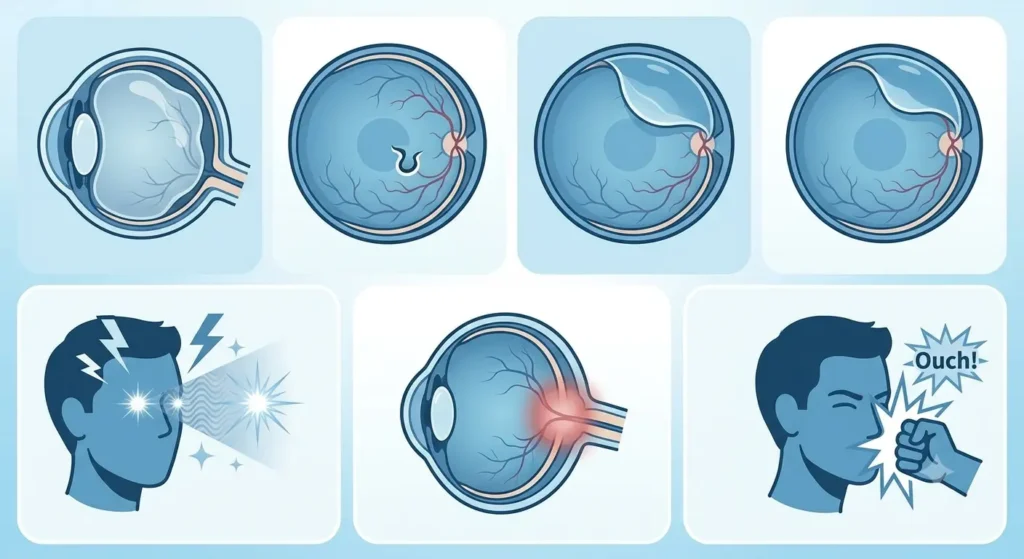
Posterior vitreous detachment (PVD). As you age, the vitreous — the gel filling your eye — shrinks and slowly pulls away from the retina. This is a genuinely normal part of getting older. The tugging can create brief flashes, usually out in your peripheral vision. As the numbers above show, it’s practically universal by your 80s.
Retinal tears or detachment. Sometimes that vitreous doesn’t pull away cleanly. It tugs hard enough to actually tear the retina. Clinical data suggests around 10 to 15% of people with an acute, symptomatic PVD are found to have a retinal tear at the same time. Left untreated, a tear can progress to full detachment in an estimated 30 to 47% of cases. With prompt treatment, that risk drops to under 9%. Retinal detachment overall affects roughly 1 in every 10,000 people each year — rare, but serious enough that speed matters.
Migraine with aura. Some people get visual disturbances — flashes, zigzag lines, blind spots — right before or during a migraine. These auras generally clear up within 30 to 60 minutes and aren’t considered dangerous by themselves.
Mechanical pressure on the eye. Rub your eyes too hard, cough violently, or bump your head, and you can create temporary pressure on the retina. That produces brief flashes doctors call phosphenes. Annoying, but usually harmless.
Optic nerve inflammation (optic neuritis). When the optic nerve gets inflamed, sometimes linked to infections or nerve conditions, flashes can appear alongside other changes in your vision.
Underlying health conditions. Diabetes and high blood pressure can mess with the blood vessels feeding your retina over time. Some people with these conditions notice visual disturbances, flashes included. That’s a general association, though — not a guarantee you’ll experience it just because you have one of these conditions.
Is Seeing Flashes of Light Dangerous?
This is the part people actually want answered. And the honest truth is: it depends entirely on the pattern.
Lower concern, generally speaking:
- Occasional flashes in the corner of your eye with nothing else going on
- Flashes that match a known migraine pattern and clear up within an hour
- A one-off flash right after rubbing your eyes or a small bump to the head
Higher concern, and worth acting on fast:
- A sudden burst of frequent, repeated flashes
- Flashes showing up with a sudden spike in floaters
- A dark shadow or curtain creeping across your side vision
- Flashes after a real eye injury or head trauma
- Flashes paired with blurry or darkening vision
If you’re severely nearsighted, you’ve had eye surgery before, or you’re managing diabetes, you’re at somewhat higher risk for the serious causes. It’s worth being extra attentive if anything new pops up.
How Eye Doctors Diagnose Flashes of Light
Before jumping to what you should do at home, it helps to know what actually happens at the eye doctor’s office, because this demystifies the whole process.
- Symptom history. Your doctor will ask when the flashes started, how often they happen, whether they’re in one eye or both, and what else you’re noticing — floaters, shadows, blurred vision.
- Visual acuity check. A standard vision test rules out other issues and gives a baseline.
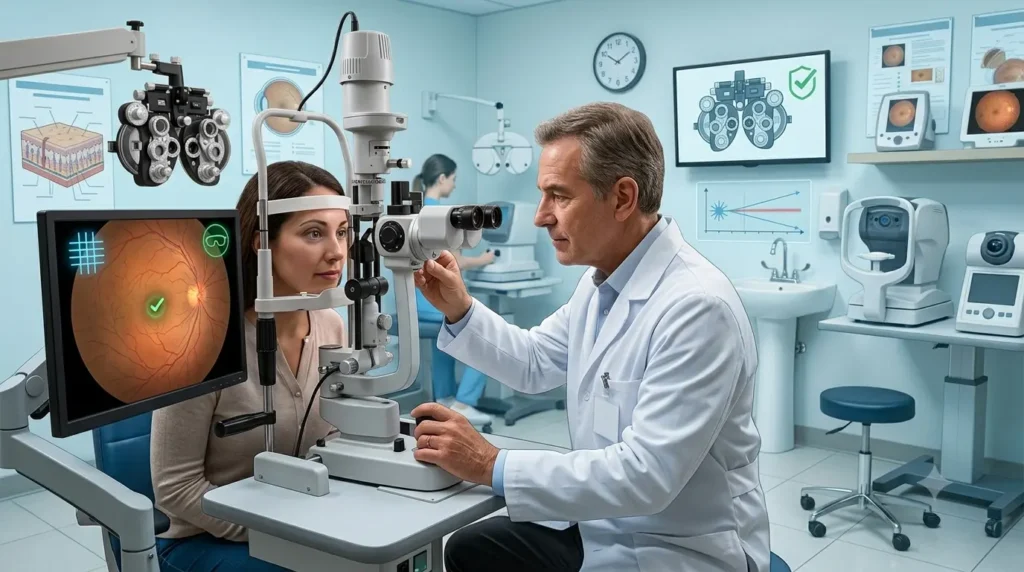
- Dilated fundus exam. Eye drops widen your pupil so the doctor can look directly at your retina and vitreous with a bright light and magnifying lens. This is the single most important step for spotting a tear.
- Slit-lamp biomicroscopy. A specialized microscope lets the doctor examine the structures at the front and back of your eye in fine detail.
- Indirect ophthalmoscopy. Using a headset light and a handheld lens, your doctor checks the far edges of your retina, where tears most commonly form.
- Ocular ultrasound (B-scan), if needed. If there’s bleeding in the eye blocking the view, an ultrasound can still detect a retinal tear or detachment underneath.
- OCT imaging, in some cases. Optical coherence tomography creates a cross-sectional image of the retina, useful for confirming subtle detachment or swelling.
None of this is painful. The dilation drops sting for a second and blur your vision for a few hours afterward, but that’s the extent of the discomfort.
Can You Prevent Flashes of Light?
Honest answer: you can’t fully prevent flashes caused by normal aging, because the vitreous pulling away from the retina is a biological process, not a lifestyle choice. But you can lower your risk of the serious complications and catch problems early.
- Get regular dilated eye exams, especially after age 40, or earlier if you’re highly myopic or diabetic. Annual or biannual exams catch retinal thinning before it becomes a tear.
- Manage diabetes and blood pressure carefully. Keeping these numbers controlled protects the blood vessels in your retina over the long run.
- Wear proper eye protection during sports or physical work. Blunt trauma to the eye is a direct, preventable trigger for flashes and retinal damage.
- Stop rubbing your eyes hard. It’s a small habit, but repeated pressure adds up over years.
- Know your family history. If a parent or sibling had a retinal detachment, mention it to your eye doctor so they can watch more closely.
- Act fast on new symptoms. You can’t prevent a tear from starting, but treating it within days, rather than weeks, is what actually prevents it from turning into a full detachment.
Prevention here isn’t about stopping flashes altogether. It’s about not letting a fixable problem turn into an unfixable one.
What To Actually Do When You Notice Flashes
Here’s the step-by-step I’d give a friend who texted me asking why do I see flashes of light and what to do about it.
- Stay calm and pay attention to details. How often is it happening? One eye or both? Is there a pattern — after standing up, in dark rooms, at a certain time of day?
- Check for other symptoms. New floaters, shadows, blurry vision, headache. Write them down if you can.
- Don’t rub your eyes. It adds pressure to the retina and can make things worse, not better.
- Track the timeline. Sudden flashes that are increasing in frequency need faster attention than mild flashes you’ve had for months.
- Book a comprehensive eye exam. A dilated exam lets your doctor actually see the retina and vitreous directly, checking for tears or detachment.
- Go urgent if warning signs show up. Sudden flashes with new floaters, vision loss, or a curtain-like shadow call for same-day care, not a routine appointment three weeks out.
- It’s also important not to confuse flashes of light with other eye problems such as a swollen eyelid, eye strain has completely different causes and warning signs.
Mistakes I See People Make Constantly
Treating every flash the same way. Migraine-related flashes and retina-related flashes are not the same thing, and the urgency behind them is completely different.
Waiting too long. Because early flashes usually don’t hurt, people put off getting checked, even while the flashes get more frequent.
Rubbing eyes to “clear” the flash. This doesn’t help. It adds pressure and can make the sensation worse.
Ignoring flashes tied to a headache. Migraine auras are usually harmless, but mention the pattern to a doctor anyway, especially if it’s new for you.
Forgetting to mention medication changes. Some medications are linked to visual disturbances. Easy to overlook unless you specifically bring it up.
How to Decide on Care and Keep Track of Symptoms
A few general guidelines help here.
A routine eye exam makes sense if flashes are mild, occasional, and not accompanied by anything else.
A prompt appointment, within a day or two, is a good idea if flashes are new but there’s no vision loss involved.
Same-day or emergency care is the right call if you get a sudden surge of flashes, a wave of new floaters, or any shadow or curtain effect creeping into your vision.
If this is your first time dealing with it, know that a dilated eye exam is completely standard for evaluating flashes. Your doctor widens your pupils to get a full, clear view of the retina and vitreous. It’s routine, quick, and nothing to stress over.
Frequently Asked Questions
Why do I see flashes of light out of nowhere? It usually means your retina got stimulated by something other than actual light — most often a small tug from the vitreous gel. Occasional random flashes are typically tied to normal aging changes, but frequent or sudden ones deserve a proper eye exam.
Can dehydration cause flashing lights in the eyes? Not directly, no. It’s not a well-established cause on its own. Severe dehydration can trigger headaches or migraines though, and those can come with visual aura symptoms like flashes for some people. Don’t assume dehydration is the whole story if flashes keep happening — get your eyes checked.
Are flashing lights a symptom of stroke? Occasionally, sudden vision changes including flashes can be tied to neurological events, but it’s not the typical cause of photopsia. If flashes hit suddenly along with slurred speech, one-sided weakness, confusion, or a severe headache, treat that as an emergency immediately.
Why does my vision look like flashing lights? Because your retina is being mechanically or electrically stimulated instead of actually receiving light. Common triggers are age-related vitreous changes, migraine aura, eye rubbing, or, in more serious cases, a retinal tear.
Why am I seeing flashes of light in the corner of my eye specifically? That corner location is often linked to posterior vitreous detachment, which is a normal age-related process. But because retinal tears can produce the exact same symptom in the exact same spot, get it confirmed by a doctor, especially if it’s new or getting worse.
How long do eye flashes usually last? Each individual flash lasts a fraction of a second. A full episode, like a migraine aura, can stretch out over 10 to 30 minutes. If flashes are still showing up days later or getting worse, book an eye exam soon.
Can you prevent flashes of light from happening at all? Not entirely, since age-related vitreous changes aren’t something you can stop. What you can control is catching problems early through regular dilated exams, protecting your eyes from trauma, and managing conditions like diabetes that affect retinal blood vessels over time.
Bottom Line
So, why do I see flashes of light? The answer ranges from a completely harmless part of your eye aging normally, to an early signal that something needs urgent attention. Occasional, mild flashes with nothing else going on are usually low-stakes. Sudden, frequent flashes — especially alongside new floaters, vision loss, or a shadow creeping across your side vision — deserve a same-day evaluation.
You don’t need to panic every time a flicker crosses the corner of your eye. But you also shouldn’t shrug off a pattern that’s changing or getting worse. When you’re unsure, a dilated eye exam is still the most reliable way to find out what’s really going on behind your eyes — and to protect your vision for the long haul.
Medical accuracy note: This article has been checked against current ophthalmology literature, peer-reviewed studies, and clinical resources referenced throughout. It’s written for general education, not personal diagnosis. If you’re dealing with new or worsening symptoms, please see a licensed eye care professional — a page on the internet can’t examine your retina.