
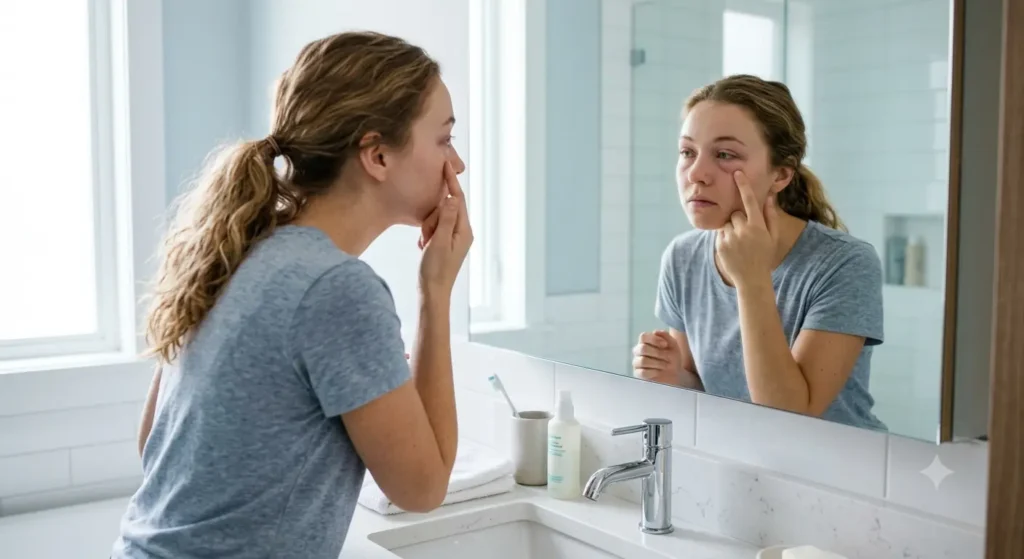
Quick Answer
Most swollen eyes improve within a few hours with a cold compress, adequate hydration, and rest. If swelling is severe, affects only one eye, causes pain, vision changes, fever, or follows an injury, seek medical attention promptly.
Waking up with swollen or puffy eyes is a common problem. It can happen after poor sleep, allergies, crying, eating salty foods, or even mild irritation
Good news. Most of the time, this isn’t serious. It’s annoying, it’s visible, and it can knock your confidence before a meeting or a photo. But it’s usually fixable with things you already have at home. Let me walk you through what actually works, what doesn’t, and when you should stop treating it yourself and see a doctor instead.
Whether you’re dealing with puffy eyes in the morning, a swollen upper eyelid after a rough night, swollen lower eyelid from allergies, or general eye inflammation that won’t quit, this guide covers real eye swelling remedies that go beyond “just put a cucumber on it.” By the end, you’ll know exactly how to relieve swollen eyes fast, and how to stop them from coming back.
Table of Contents
What Swollen Eyes Actually Are
Swollen eyes happen when fluid or inflammation builds up under the thin skin around your eyes. That skin is some of the most delicate on your entire body. There’s barely any fat or muscle protecting it, which is exactly why puffiness shows up here first, before anywhere else on your face.
Some quick facts worth knowing before we get into fixes:
- Puffy eyes usually hit both eyes at once and calm down within a few hours on their own.
- One-sided swelling, or swelling that sticks around for days, usually points to something else going on — an infection, a stye, or an allergic reaction.
- Almost everyone deals with this occasionally. It’s not a red flag by itself.
- Most cases come down to fluid retention, blood vessels widening, or a mild inflammatory response.
Knowing which category you’re in changes how you should treat it. Treating allergy-related swelling the same way you’d treat “I cried last night” swelling won’t get you very far.
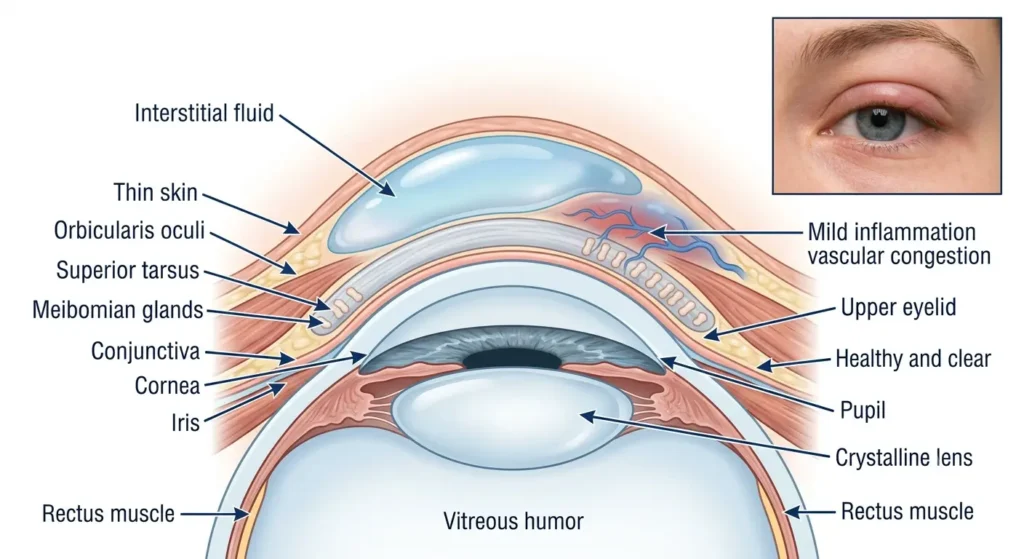
Puffy Eyes, Swollen Eyelids, Dark Circles — They’re Not the Same Thing
People throw these terms around like they mean the same thing. They don’t.
| Condition | What It Looks Like | What Causes It | Usually Affects |
|---|---|---|---|
| Puffy eyes | Mild fullness, worse in the morning | Poor sleep, salty food, fatigue, crying | Both eyes |
| Swollen eyelids | Visible swelling, sometimes red or warm | Allergies, infection, injury, styes | One or both eyes |
| Dark circles | Discoloration, no actual swelling | Genetics, thin skin, lack of sleep | Both eyes |
| Under-eye bags | Sagging or bulging skin, long-term | Aging, genetics, loss of elasticity | Both eyes |
You can have puffy eyes on Monday and dark circles on Tuesday without either one being a real problem. They’re related but they’re not interchangeable, and mixing them up is why so many people reach for the wrong remedy.
Why Is My Upper Eyelid Swollen? The Real Causes
This question comes up constantly, so let’s get specific. Here’s what’s usually behind it:
Poor sleep. Fluid pools under your eyes overnight when you’re not resting properly. Simple as that.
Crying. Tears increase blood flow to the area and pull in more fluid. That’s why your eyes look bigger and heavier after a good cry — it’s temporary, and it fades.
Allergies. Pollen, dust, pet dander, certain foods. All of these can trigger histamine release, and histamine causes swelling, redness, and itching around the eyes. Swollen eyes from allergies usually come with itching too, which is your biggest clue that this is the cause rather than plain fluid retention.
Too much salt. Sodium makes your body hold onto water. That water shows up around your eyes because the skin there is so thin.
Dehydration. Sounds backwards, but it’s true. When you’re not drinking enough, your body starts hoarding water wherever it can, and your eyes are an easy target.
Sleep position. Lying flat lets fluid settle around your eyes instead of draining away like it would if you were upright.
Eye infections. Conjunctivitis, blepharitis, styes — these cause more noticeable, often painful swelling that home remedies alone won’t fix.
Age. Skin and connective tissue weaken over time, so puffiness becomes more visible and takes longer to go down.
Alcohol and smoking. Both dehydrate you and stir up inflammation, which is a bad combination for eye puffiness.
If you’re asking why your upper eyelid is swollen specifically in the morning, look first at your sleep position, your salt intake the night before, and whether you cried or rubbed your eyes before bed. Nine times out of ten, it’s one of those three.
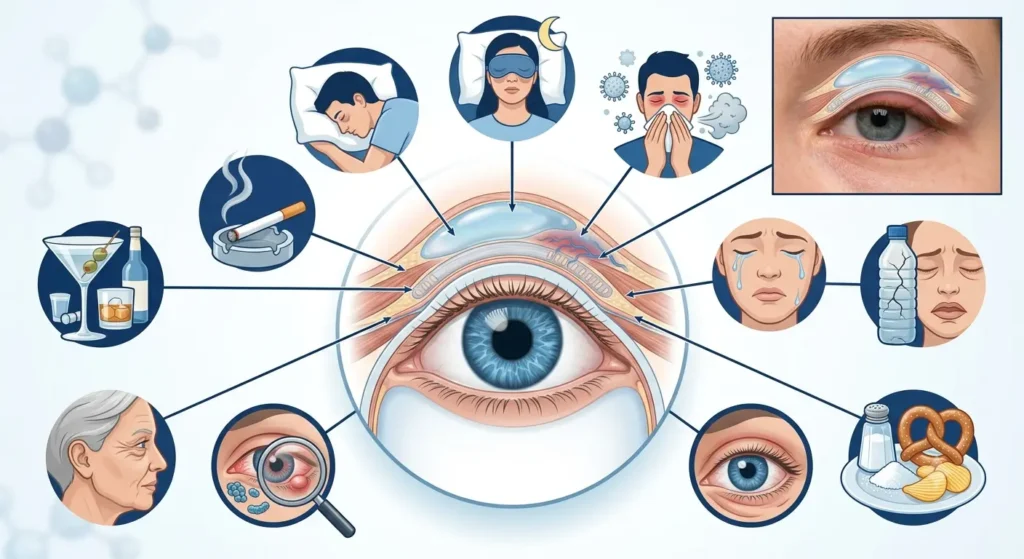
What Medical Conditions That Can Cause Swollen Eyes
The causes above cover most everyday cases. But sometimes eye swelling is a symptom of something happening elsewhere in the body, not just the eye area itself. I’d rather you know about these than miss them.
Thyroid eye disease. An overactive or underactive thyroid can cause the tissue behind and around the eyes to swell, sometimes making the eyes look like they’re bulging. This tends to develop gradually and doesn’t go away with cold compresses.
Kidney disease. One classic sign is puffiness around the eyes specifically in the morning, caused by the body struggling to get rid of excess fluid and sodium overnight. If morning eye puffiness is a daily pattern rather than an occasional one, it’s worth mentioning to a doctor.
Sinus infection. The sinuses sit right behind and below the eyes, so inflammation there often spills over into eyelid swelling, usually paired with facial pressure, congestion, or a headache.
Contact dermatitis from cosmetics. Eye makeup, makeup remover, and even new skincare products can trigger an allergic skin reaction right where you apply them. This usually shows up as swelling with itching, redness, or a rash, and it clears up once you stop using the product.
None of these are meant to alarm you. Most swollen eyes are still just about sleep, salt, or crying. But if your puffiness is a recurring pattern rather than a one-off, one of these four is worth ruling out.
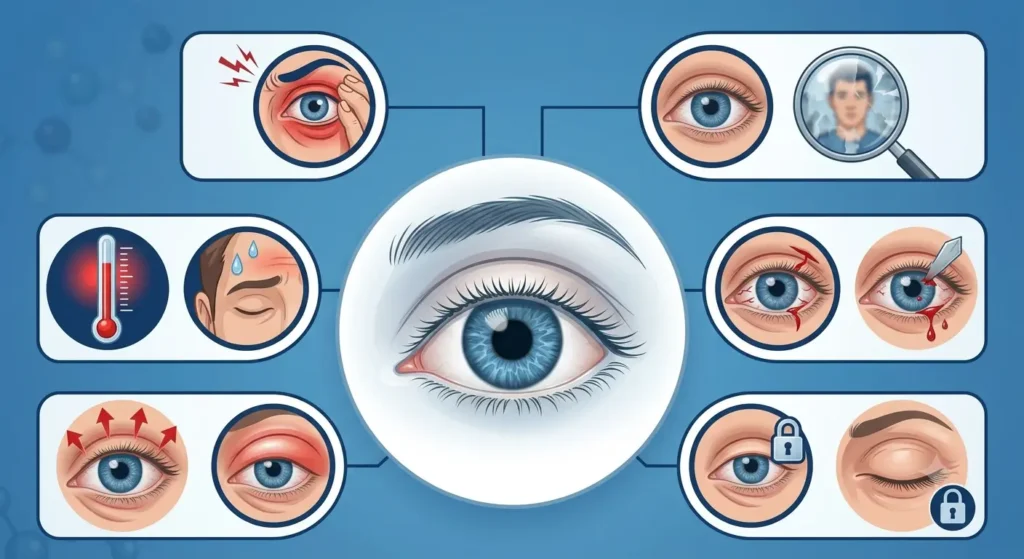
Seek Urgent Medical Care If
Home remedies are fine for everyday puffiness. But some symptoms mean you should stop treating it yourself and get medical attention right away.
- Vision suddenly becomes blurry
- Severe eye pain develops
- Swelling spreads rapidly
- Fever occurs along with eyelid swelling
- An eye injury caused the swelling
- You cannot open the eye
If any of these apply to you, don’t wait it out with a cold compress. Get seen.
Here’s a quick reference table to match your type of swelling with the right treatment path.
| Swelling Type | Likely Cause | Best Treatment |
|---|---|---|
| Morning puffiness | Fluid retention | Cold compress |
| Allergy swelling | Histamine release | Antihistamine drops |
| Infection | Bacteria | See a doctor |
| Crying | Increased blood flow | Cold compress |
| Injury | Trauma | Medical evaluation |
How to Relieve Swollen Eyes Fast: The Fastest Way to Heal a Swollen Eyelid
If you need results in the next twenty minutes, here’s the order I’d go in. This is the fastest, most reliable way I know for how to relieve swollen eyes without spending a rupee on anything fancy.
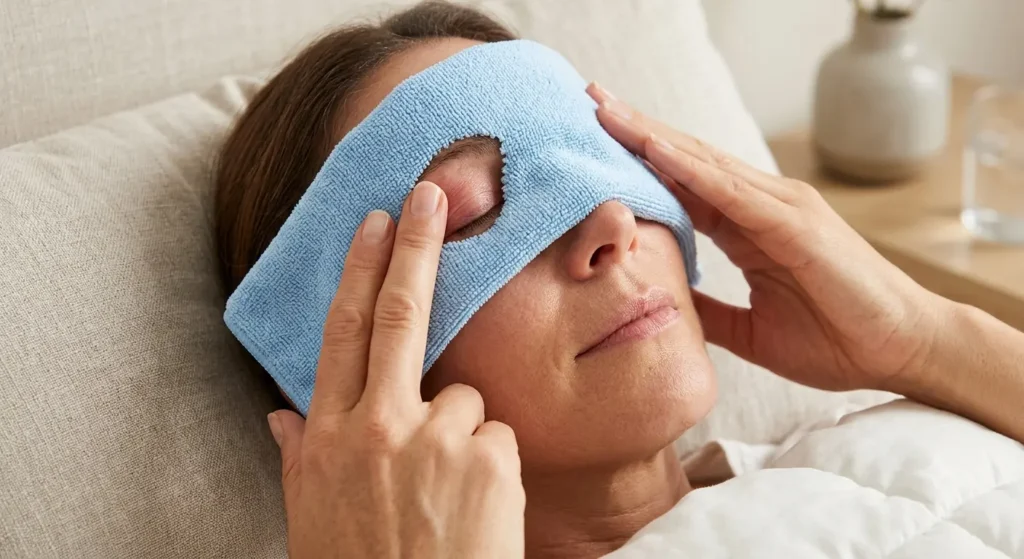
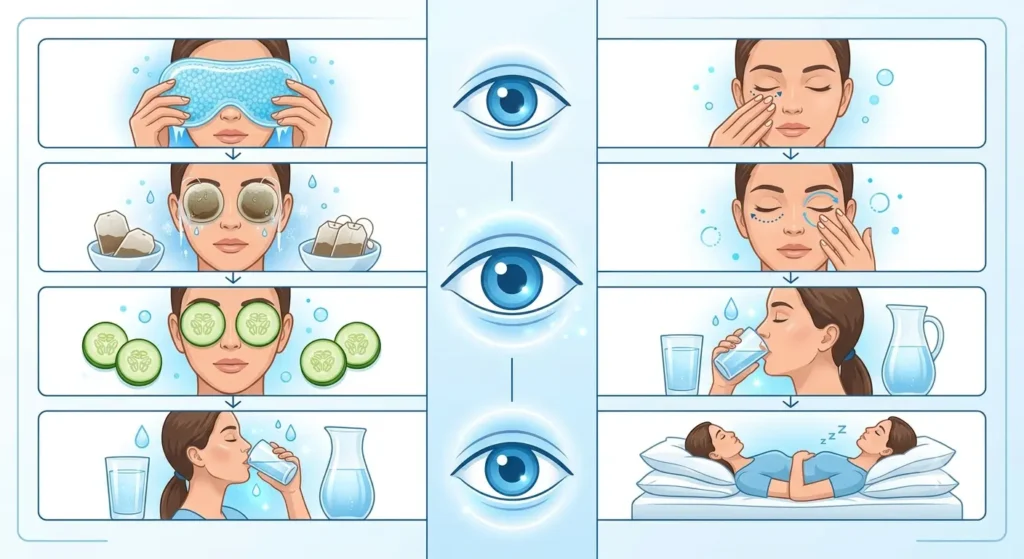
1. Cold compress, first move, every time. Soak a clean washcloth in cool water, wring it out, and press it gently against closed eyes for 10 to 15 minutes. If you’re using ice, wrap it in cloth first — ice directly on skin can actually make irritation worse, not better.
2. Chilled tea bags. Steep two bags briefly, cool them, then chill them in the fridge for about 20 minutes. Lay them over closed eyes for 15 to 20 minutes. The cold plus the mild caffeine content seems to help fluid move along faster than a plain compress alone.
3. Cucumber slices. Chill them first. Lay them over closed eyes for around 10 minutes. It’s a cliché for a reason — it’s cheap, it’s gentle, and it works well enough that it’s stuck around for decades.
4. Light massage or tapping. Use clean fingertips, or a cool metal roller if you have one, and gently sweep the skin around your eyes toward your temples. This encourages fluid to move instead of just sitting there. Go easy — this skin bruises and irritates more easily than you’d think.
5. Prop your head up. An extra pillow at night keeps fluid from settling around your eyes while you sleep. This one’s small but it genuinely helps with morning puffiness.
These remedies help reduce temporary swelling, but they won’t treat the underlying cause if an infection, injury, or medical condition is responsible.. They speed up something your body would eventually do on its own. But when you need to look less tired in the next half hour, this is your fastest path.
How to Reduce Puffy Eyes From Crying, Instantly
Crying swelling is its own category because it comes on fast and it’s usually gone just as fast if you treat it right away.
- Splash cold water on your closed eyes immediately, then follow with a cold compress.
- Avoid rubbing. I know it’s tempting. Rubbing pushes more fluid into the tissue and makes things worse.
- Sit upright rather than lying down right after crying — gravity actually helps drain the fluid instead of letting it pool.
- A cold spoon (yes, really) pressed gently against closed eyelids for a minute or two works in a pinch if you don’t have anything else cold on hand.
Most crying-related puffiness fades within 20 to 30 minutes with a cold compress. It’s one of the easier types of swelling to bounce back from.
One Eye Swollen in the Morning? Pay Attention to This
If it’s just one eye, that changes things. Symmetrical puffiness from sleep or salt is common and rarely worrying. But swelling in a single eye — especially with redness, pain, discharge, or warmth — is more likely tied to something localized. A stye, an insect bite near the eye, an early eye infection, or even something as simple as sleeping face-down on that side can cause one-sided swelling.
Give it a day with gentle cold compresses. If it’s not improving, or it’s getting worse, that’s your signal to see a doctor rather than keep waiting it out.
Is Home Treatment Actually Safe?
Mostly, yes. But it’s worth knowing the trade-offs before you start experimenting.
What’s in your favor:
- Cheap, easy, and you likely already have what you need
- Low risk when done correctly
- Fast, visible results for everyday puffiness
- Works for most healthy adults
Where it falls short:
- Won’t touch underlying issues like infections or thyroid-related swelling
- Overusing eye drops can actually make irritation worse over time
- Putting things directly on the eye instead of around it raises your risk of irritation or infection
- Not appropriate if you have an open wound, an active infection, or recently had eye surgery
If you wear contacts, you’re pregnant, or you have an existing eye condition, check with a doctor or pharmacist before trying anything new near your eyes. It’s a five-minute conversation that can save you a much bigger headache.
Swollen Eyelid Treatment: Eye Drops Worth Knowing About
For allergy-related puffiness specifically, over-the-counter antihistamine eye drops can genuinely help. They target the histamine response directly, which cold compresses can’t do. Use them as directed on the label — not more, not longer than recommended.
One warning worth repeating: redness-relief drops (the kind that make your eyes look “whiter”) can backfire if you use them too often. Your eyes can become dependent on them, and the redness comes back worse when you stop. Save those for occasional use, not daily habit.
Swollen Lower Eyelid Treatment
Lower eyelid swelling responds to most of the same fixes as upper eyelid swelling, but a few things are worth adding:
- Sleep with your head slightly elevated to stop fluid pooling in the lower lid overnight.
- Cut back on salty food the evening before, since sodium retention shows up fastest in this area.
- Use a gentle, fragrance-free eye cream at night if dryness is part of what’s triggering the puffiness.
- If lower eyelid swelling comes with itching, it’s worth considering allergies as the cause rather than fluid retention alone.
Mistakes That Make Swollen Eyes Worse
I’ve made a few of these myself, so consider this a shortcut past my mistakes.
- Rubbing your eyes. It feels good in the moment and makes everything worse ten minutes later.
- Ice directly on skin. Always wrap it. Bare ice can actually damage the delicate skin around your eyes.
- Random internet remedies like hemorrhoid cream. It’s not made for your eye area, and using it there risks real irritation.
- Overusing eye drops. More isn’t better here. Follow the label.
- Ignoring swelling that won’t quit. Assuming everything is “just puffiness” can delay treatment if something else is actually going on.
- Skipping the basics. People reach for fancy remedies while ignoring sleep and hydration, which do more heavy lifting than any product.
Building a Simple Routine That Actually Works
If puffiness is a recurring problem for you rather than a one-off, here’s how I’d approach it long-term:
- Stick to fragrance-free products around your eyes. Fewer ingredients, fewer chances of irritation.
- Patch-test anything new on another part of your skin first.
- Keep your tools clean. Facial rollers and washcloths pick up bacteria fast if you’re not washing them.
- Read eye drop labels carefully if you wear contacts — a lot of formulas aren’t compatible.
- Be consistent. Sleep and hydration fix this stuff better than any single product ever will.
- Figure out your triggers. If allergies are the recurring cause, reducing your exposure prevents the cycle from repeating.
How to Prevent Swollen Eyes
Treating puffiness after it shows up is one thing. Stopping it from showing up in the first place is a better use of your time. Once you know how to relieve swollen eyes in the moment, the next step is making sure you don’t need to keep doing it every week. Here’s what actually moves the needle:
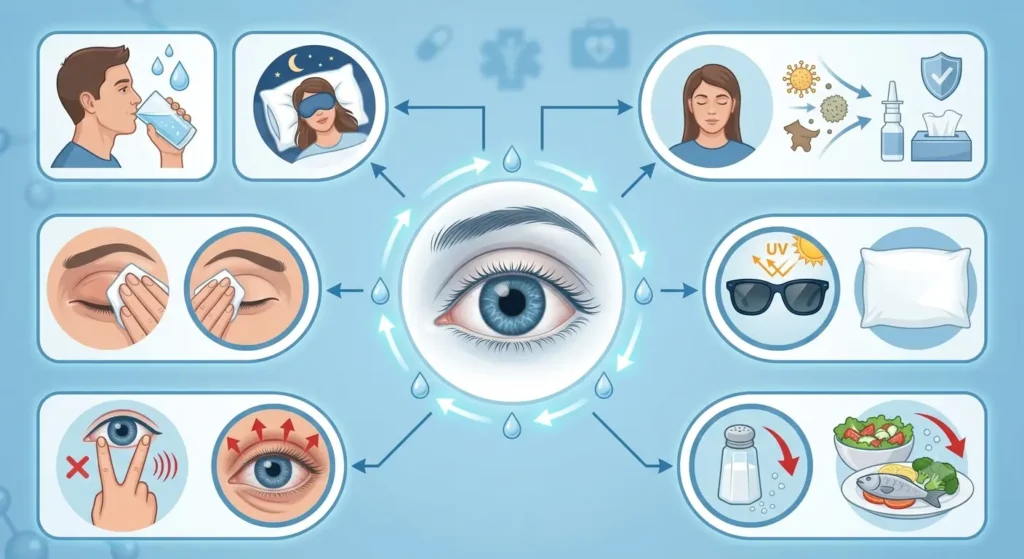
- Sleep 7 to 9 hours a night, consistently, not just on weekends
- Reduce sodium intake, especially in the evening
- Stay hydrated throughout the day
- Remove eye makeup completely before bed, every night
- Wash pillowcases regularly to cut down on irritants and bacteria near your eyes
- Avoid rubbing your eyes, even when they’re itchy or tired
- Manage seasonal allergies proactively instead of reacting to them
- Wear sunglasses outdoors to reduce sun-related eye irritation and squinting
None of this is complicated. It’s mostly just consistency, and consistency beats any single remedy on this page.
Here’s a simple breakdown of which habits actually help reduce puffiness:
| Habit | Helps Reduce Puffiness |
|---|---|
| Sleep on two pillows | Yes |
| Drink enough water | Yes |
| Reduce salt | Yes |
| Cold compress | Yes |
| Treat allergies | Yes |
| Remove makeup before bed | Yes |
Frequently Asked Questions
What is the fastest way to heal a swollen eyelid? A cold compress. Fifteen minutes with a cool, damp cloth or chilled tea bags against closed eyes noticeably reduces swelling fast.
How do I relieve swollen eyes overnight? The short answer for how to relieve swollen eyes overnight is simple: sleep with your head slightly elevated, cut salt at dinner, and stop drinking large amounts of water right before bed. Combine that with a cold compress in the morning and most overnight puffiness clears up fast.
Why is my upper eyelid swollen? Usually poor sleep, crying, allergies, high salt intake, or your sleeping position. Less often, it points to an infection or another medical cause.
How long until swollen eyes go down? Mild puffiness from sleep or diet usually improves within a few hours, faster with a cold compress. Allergy or infection-related swelling can take longer and may need targeted treatment.
What drink helps swollen eyes? Plain water, honestly. Staying hydrated helps your body manage fluid balance properly. Herbal tea helps too — drink it, then chill the used bags and put them on your eyes.
Are puffy eyes a sign of a health problem? Usually not. Most cases trace back to sleep, diet, or crying. But severe, one-sided, or painful swelling that isn’t improving deserves a doctor’s opinion.
Can allergies cause swollen eyelids? Yes, absolutely. Pollen, dust, and certain foods trigger histamine release, which causes swelling, redness, and itching around the eyes.
Does ice help swollen eyes? Yes, but wrap it first. Direct ice on skin can irritate or even damage the delicate eyelid area. Wrapped ice or a chilled compress gives you the benefit without the risk.
Can lack of sleep cause swollen eyes? Yes. Poor sleep is one of the most common causes of eye puffiness. Fluid pools under the eyes overnight when you’re not resting properly, and it shows up as swelling by morning.
Why are my eyes swollen after waking up? Usually a mix of sleep position, sodium intake the night before, and how much fluid settled around your eyes overnight. Occasionally it’s linked to allergies or, less commonly, kidney function.
Can dehydration cause puffy eyes? Yes, and it surprises most people. When you’re not drinking enough water, your body holds onto whatever fluid it has, and that fluid retention shows up around your eyes first.
When should I see an eye doctor? See a doctor if swelling is one-sided, painful, doesn’t improve after a day or two, comes with vision changes or fever, or follows an eye injury. Everyday morning puffiness usually doesn’t need a doctor’s visit.
If your eyes feel sore, tired, or uncomfortable after long hours of screen use, the problem may be eye strain rather than eyelid swelling. Learn more in our guide on How to Fix Eye Strain.
References
Medical information in this article is intended for educational purposes and is based on guidance from reputable ophthalmology and public health organizations. It should not replace individualized medical advice from a qualified healthcare professional.
- American Academy of Ophthalmology Eye Health
- MedlinePlus – Eyelid Disorders
- Cleveland Clinic – Puffy Eyes & Eye Bags
A Quick Note on Accuracy
Everything here is based on widely accepted, general health and skincare knowledge, written to help you understand common causes and low-risk remedies. It isn’t a replacement for professional medical advice, diagnosis, or treatment. If your swelling is severe, doesn’t improve, or comes with pain, please see a licensed doctor or eye care professional.
Final Thoughts
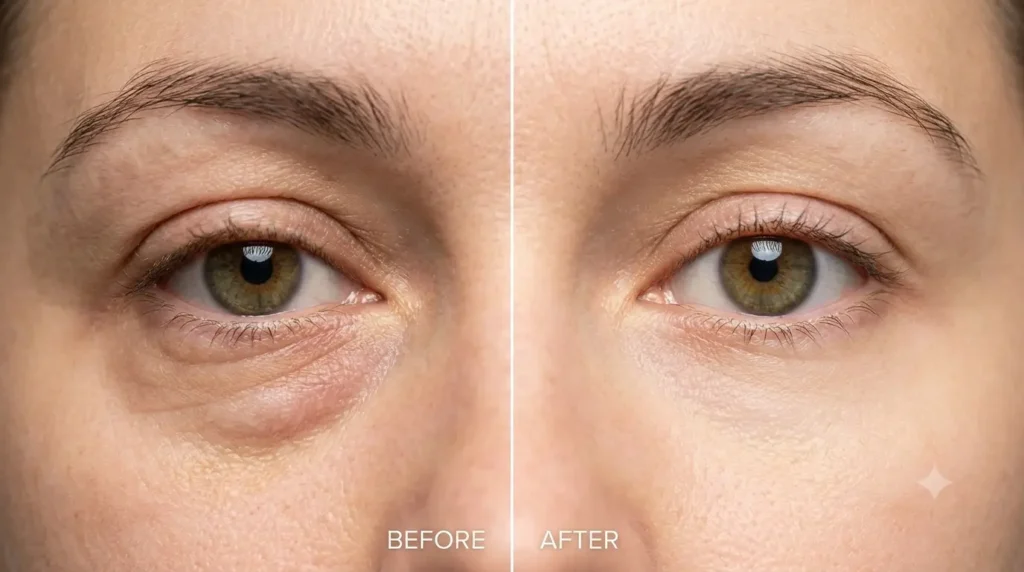
Swollen eyes are common, and most of the time, they’re nothing to stress over. If you take one thing away from this guide on how to relieve swollen eyes, let it be this: figuring out what’s actually causing yours — a bad night’s sleep, a good cry, too much salt, or allergies — and matching the remedy to the cause instead of guessing.
Cold compresses, chilled tea bags, proper hydration, and decent sleep will handle most cases of swollen eyes without any risk. If swelling sticks around, comes with pain, or only shows up in one eye, don’t just wait it out. Get it checked. Everything else, you can probably handle right at home.