
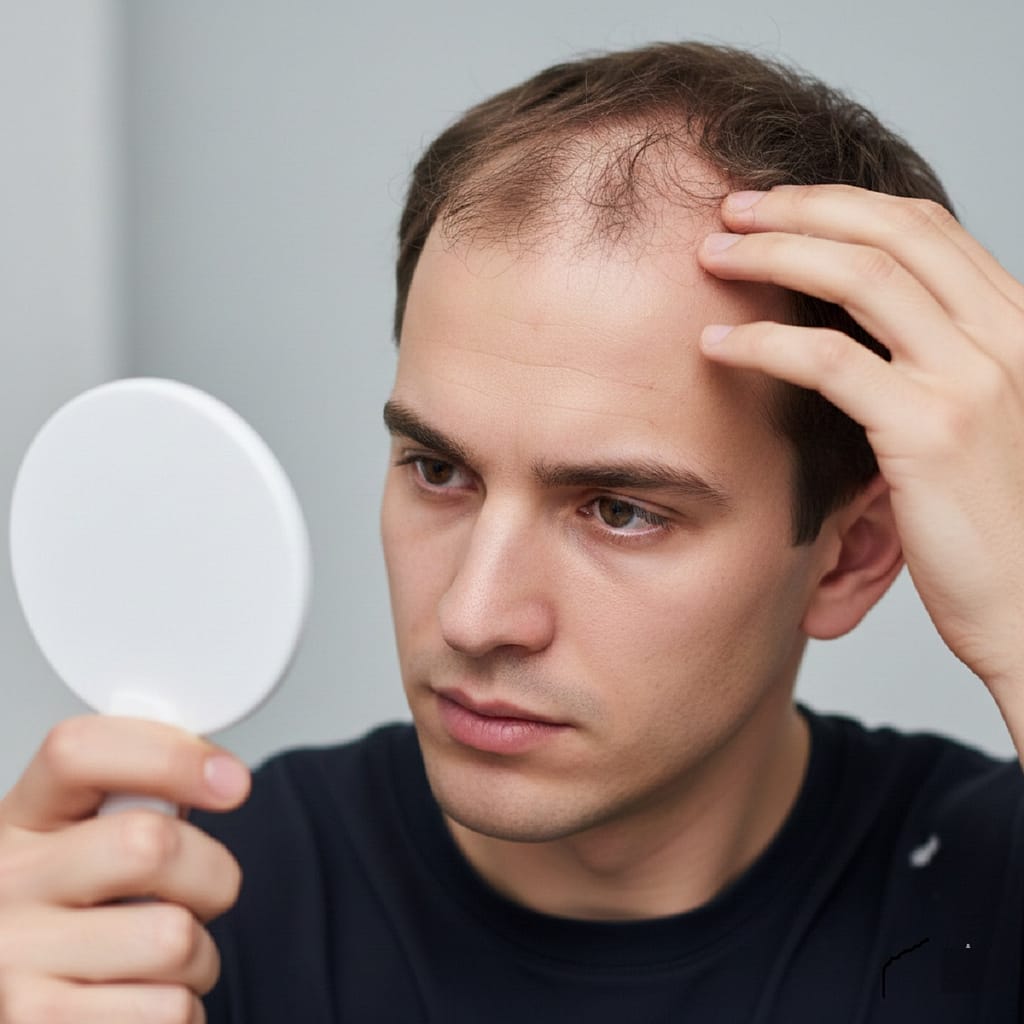
Hair loss messes with your head.
I know that.
I see it every day.
A few strands on your pillow. Extra hair circling the shower drain. A scalp that won’t stop itching. Once dandruff enters the picture, panic kicks in fast. And almost everyone asks the same question:
Can dandruff cause hair loss?
I’ll answer it clearly. No sugarcoating. No fear tactics.
Dandruff does not directly cause permanent hair loss.
It does not destroy hair follicles.
It does not cause baldness.
But that’s not the whole truth. And stopping there would be irresponsible.
Dandruff can absolutely lead to hair shedding, thinning, and visible hair loss if it’s severe, ignored, or handled the wrong way. The damage doesn’t come from flakes themselves. It comes from what dandruff does to your scalp environment—and how people react to it.
If you care about your hair, you need to understand this properly. Let’s break it down.
What Dandruff Really Is (And What It Is Not)
First, let’s clear a major misconception.
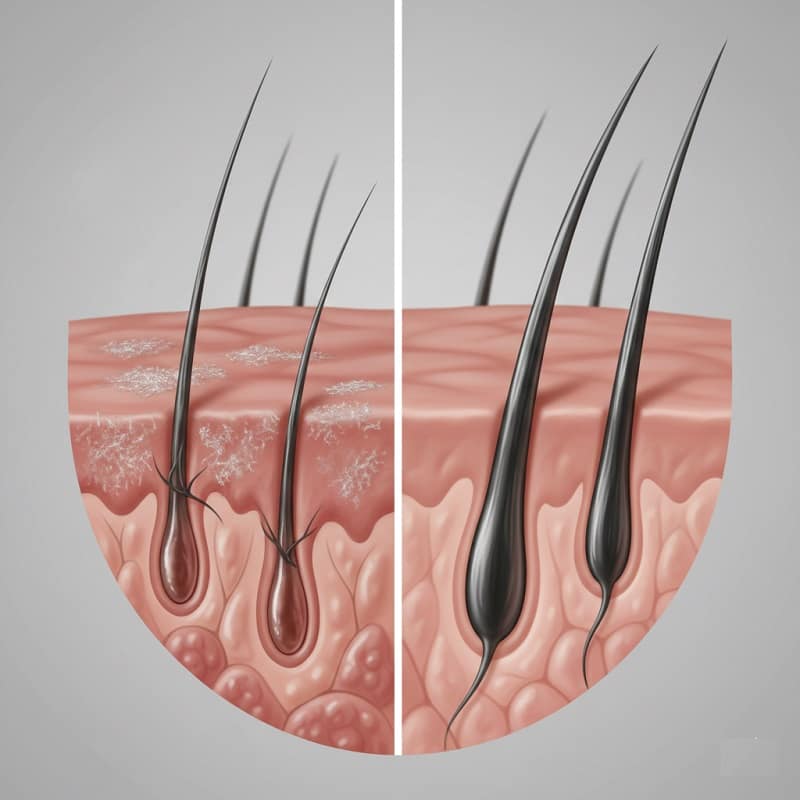
Dandruff is not just dry scalp.
Your scalp is living skin. It sheds cells constantly. Normally, you never notice it. With dandruff, that process speeds up due to irritation, inflammation, or imbalance. Dead skin cells clump together and fall off as visible flakes.
That’s dandruff.
Common signs include:
- White or yellow flakes on your shoulders
- Persistent itching
- Mild redness
- A greasy scalp or, sometimes, an overly dry one
Here’s the important part:
Dandruff affects the scalp skin—not the hair follicle itself.
Hair grows from follicles deep in the scalp. Dandruff sits on the surface. That’s why dandruff alone does not cause baldness.
But hair does not grow in isolation. It grows in an environment. And dandruff can seriously damage that environment.
So, Can Dandruff Cause Hair Loss Directly?
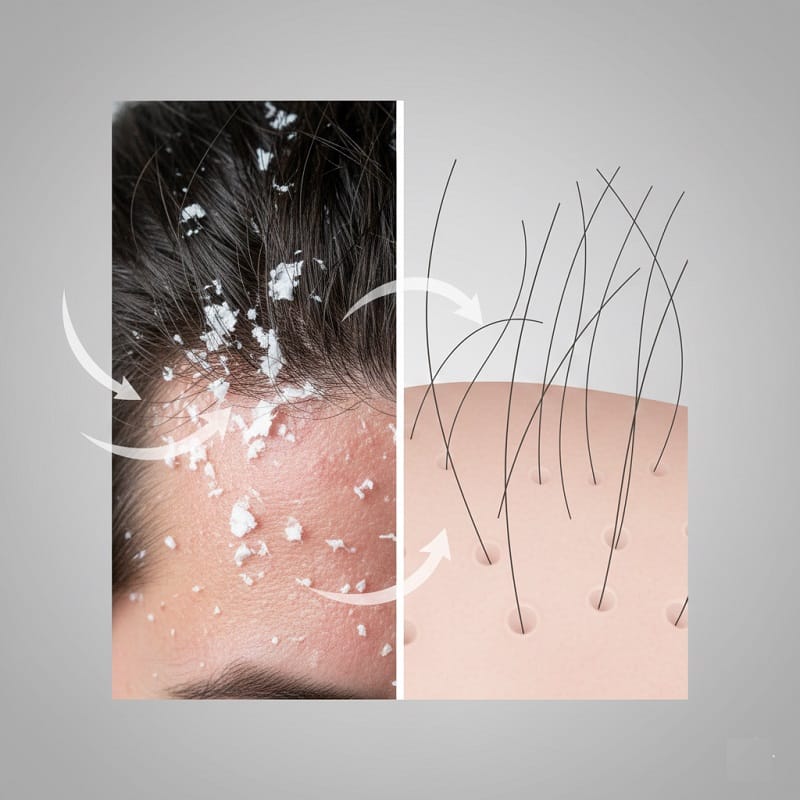
No.
Not directly.
Dandruff does not:
- Kill hair follicles
- Cause male-pattern baldness
- Cause female-pattern hair loss
- Create permanent bald patches on its own
Conditions like androgenetic alopecia are genetic and hormone-driven. Dandruff doesn’t touch that mechanism.
But—and this matters—dandruff can absolutely trigger hair loss indirectly.
That’s where people get confused. And scared.
How Dandruff Actually Leads to Hair Loss
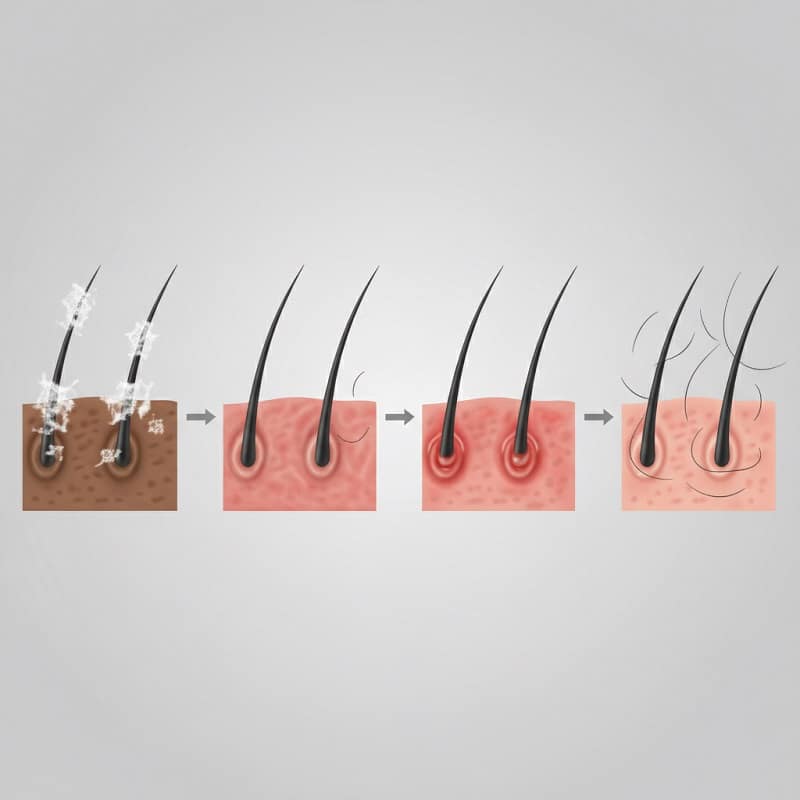
This is where the real problem begins.
1. Scratching Is the Biggest Culprit
Itching is unbearable. I get it.
When your scalp itches nonstop, you scratch without thinking. Fingertips. Nails. Combs. Brushes. Sometimes even keys or pens.
That constant mechanical trauma:
- Weakens hair shafts
- Snaps hair close to the scalp
- Dislodges growing hairs
- Injures follicles temporarily
The result looks like hair loss. And emotionally, it feels devastating.
This is breakage and shedding, not true baldness. But visually? It can be alarming.
This is the most common reason people think dandruff caused their hair loss.
In reality, scratching did.
2. Inflammation Disrupts Hair Growth Cycles
Inflammation is silent but destructive.
When dandruff is driven by yeast overgrowth or seborrheic dermatitis, your scalp stays in a low-grade inflammatory state. Over time, this does serious harm.
Inflammation can:
- Push hairs prematurely into the shedding phase (telogen)
- Shorten the growth phase (anagen)
- Weaken new hair growth
- Cause thinner regrowth
If you already have genetic hair thinning, this effect becomes obvious fast.
Dandruff doesn’t start the fire.
It pours fuel on it.
3. Dandruff Makes Existing Hair Loss Worse
If you’re genetically prone to hair loss, dandruff becomes a multiplier.
It can:
- Increase daily shedding
- Delay regrowth
- Make hair look thinner and weaker
- Accelerate visible thinning
This is why some people swear dandruff “made them go bald.”
It didn’t.
But it absolutely made things worse.
Scalp Conditions That Look Like Dandruff but Actually Cause Hair Loss
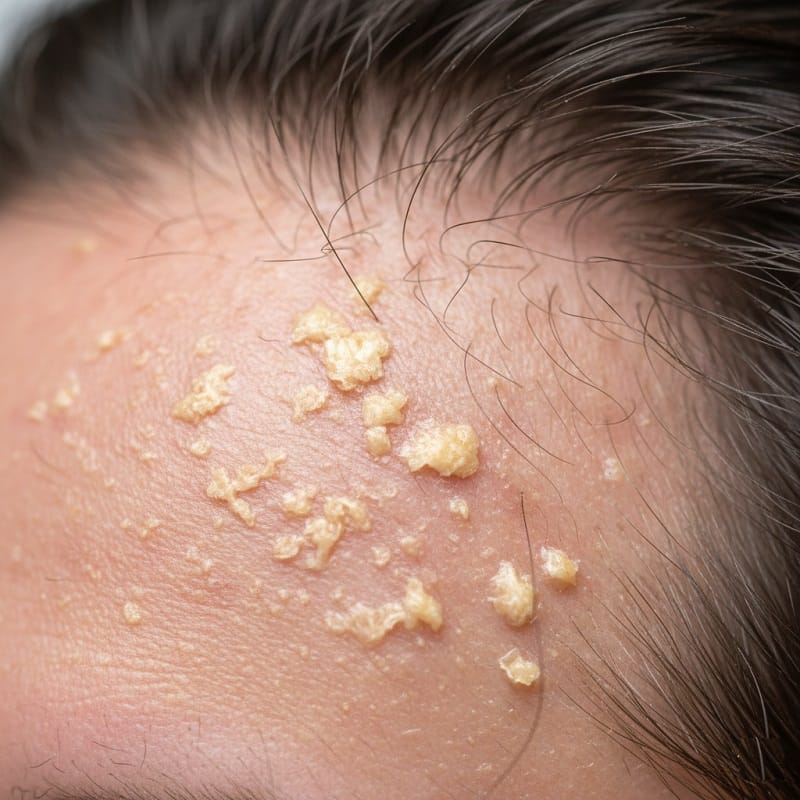
Not every flaky scalp is harmless dandruff. Some conditions both flake and cause hair loss if ignored.
This is critical to understand.
1. Seborrheic Dermatitis
This is the most common cause of chronic dandruff.
Signs include:
- Greasy yellow flakes
- Red, irritated patches
- Persistent itching
- Flare-ups during stress
Hair loss happens because of:
- Chronic inflammation
- Constant scratching
- Poor scalp barrier function
Hair usually grows back once inflammation is controlled. But ignoring it for years can weaken follicles.
2. Scalp Psoriasis
Psoriasis is autoimmune, not cosmetic.
It causes:
- Thick plaques
- Silvery scales
- Severe itching
- Painful scalp sensitivity
Hair loss comes from:
- Scratching
- Pulling scales off
- Inflamed skin choking follicles
The good news?
Once psoriasis is treated properly, hair almost always regrows.
3. Tinea Capitis (Scalp Ringworm)
This is not dandruff, but many people mistake it for one.
It causes:
- Patchy hair loss
- Circular bald spots
- Red, itchy scalp
- Broken hairs
This condition does directly cause hair loss and needs antifungal medication. No shampoo alone will fix it.
4. Yeast Overgrowth (Malassezia)
Malassezia yeast lives naturally on the scalp. When it overgrows, chaos follows.
It can:
- Trigger dandruff
- Cause intense itching
- Drive inflammation
- Disrupt scalp oils
This environment weakens hair and increases shedding until balance is restored.
5. Folliculitis
Inflamed hair follicles show up as:
- Pimples
- Tender bumps
- Painful or itchy spots
Left untreated, folliculitis can lead to scarring hair loss, which is permanent. Early treatment is non-negotiable.
I also write a article at what fruits are good for weight loss you can read it also
How I Recommend Preventing Hair Loss Linked to Dandruff
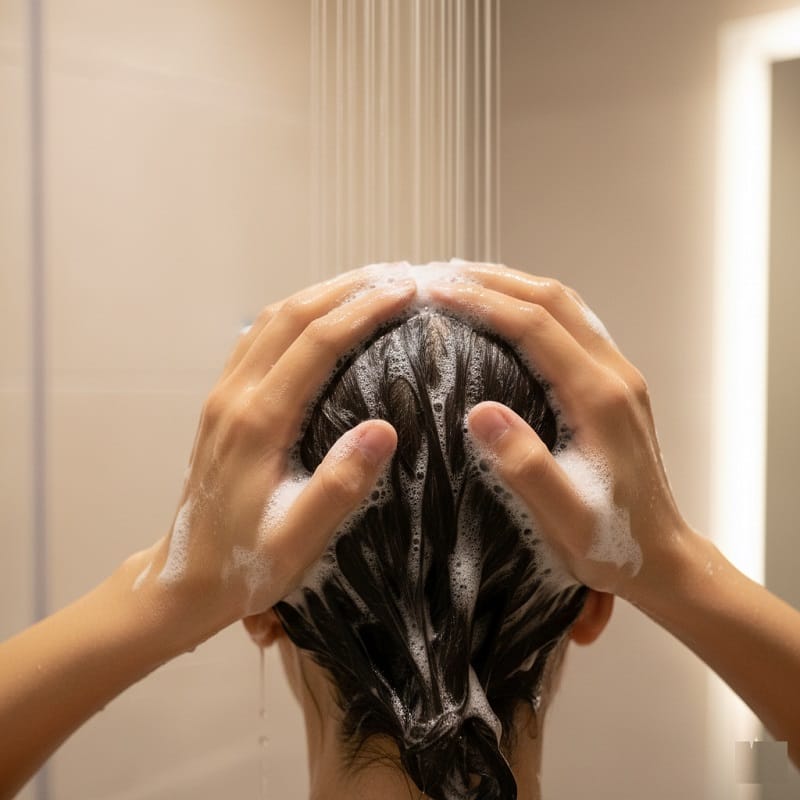
Here’s my stance:
Healthy scalp first. Always.
Hair follows.
1. Use Medicated Shampoos Correctly
Not occasionally. Not once a week when flakes annoy you.
Consistently.
Look for active ingredients like:
- Ketoconazole
- Zinc pyrithione
- Selenium sulfide
- Salicylic acid
Rotate if needed. And keep using them even when flakes improve. Dandruff loves to come back.
2. Stop Scratching. No Exceptions.
I know it feels good.
I know it’s reflexive.
But scratching is the fastest way to lose hair from dandruff.
Practical tips:
- Keep nails short
- Use anti-itch scalp treatments
- Treat inflammation, not symptoms
Relief should come from treatment—not trauma.
3. Moisturize the Scalp the Right Way
A dry scalp worsens everything.
Use:
- Lightweight conditioners
- Scalp serums designed for sensitive skin
- Non-comedogenic formulas
Avoid heavy oils if you have seborrheic dermatitis. Oils can feed yeast and make dandruff worse.
4. Be Ruthless with Hair Products
Fragrance, dyes, preservatives, alcohols—all potential irritants.
If dandruff appeared suddenly:
- Strip your routine down
- Go fragrance-free
- Avoid harsh styling products
Your scalp doesn’t need luxury. It needs calm.
5. Stress Management Is Not Optional
Stress doesn’t cause dandruff directly. But it absolutely triggers flare-ups.
Stress:
- Weakens immune control
- Increases inflammation
- Delays scalp healing
Walk more. Sleep better. Breathe intentionally. Small changes matter.
6. Protect Your Scalp from Sun Damage
Moderate sun can help dandruff. Excess sun damages skin.
Too much UV:
- Irritates the scalp
- Increases inflammation
- Weakens hair roots
Use hats or scalp-safe sunscreen when needed.
7. Feed Your Hair from the Inside
Hair is protein. Growth depends on nutrition.
Key nutrients:
- Protein
- Iron
- Zinc
- Biotin
- Omega-3 fatty acids
No supplement replaces food. Eat properly.
When You Should See a Dermatologist

Do not self-diagnose forever.
Get professional help if:
- Dandruff doesn’t improve after weeks of treatment
- Hair loss becomes patchy
- Your scalp hurts, oozes, or bleeds
- Shedding feels excessive or relentless
Early treatment saves follicles. Delays cost hair.
The Bottom Line on Can Dandruff Cause Hair Loss
Let me be blunt.
- Dandruff does not cause baldness
- Scratching causes hair breakage
- Inflammation causes shedding
- Underlying conditions matter
- Hair usually regrows once dandruff is controlled
Ignoring dandruff is what creates damage. Treating it early protects your scalp—and your confidence.
if you want to know about Orbital Fat Loss than this is a best article for you
Ayesha’s Story: When Fear Turned into Control
Ayesha was nineteen. First year of college in Lahore. White flakes on her black clothes embarrassed her daily.
She ignored it. Then the itching started. She scratched in class. Scratched at night. Slowly, hair began showing up on her pillow.
Panic followed.
She thought dandruff was making her go bald.
A dermatologist explained the truth. Calmly. Clearly.
It wasn’t baldness. It was inflammation, stress, scratching, and harsh products.
With medicated shampoo, gentle care, and stress control, the flakes faded. The itching stopped. The shedding slowed.
Her hair returned.
She learned what most people learn too late:
Hair care begins with scalp care.
Final Thought
If you’re asking “can dandruff cause hair loss”, you’re asking the right question.
Don’t panic.
Don’t ignore it either.
Treat your scalp with respect. Control inflammation. Stop scratching. And your hair will thank you for it—slowly, quietly, but surely.
Pingback: What Fruits Are Good for Weight Loss? Best & Worst Options Explained - healixahealth.com
Pingback: Orbital Fat Loss Explained: Why Your Eyes Look Sunken (And What Actually Helps) - healixahealth.com
Pingback: Dermatol for Hair Growth: The Truth, the Myths, and What Actually Works - healixahealth.com