
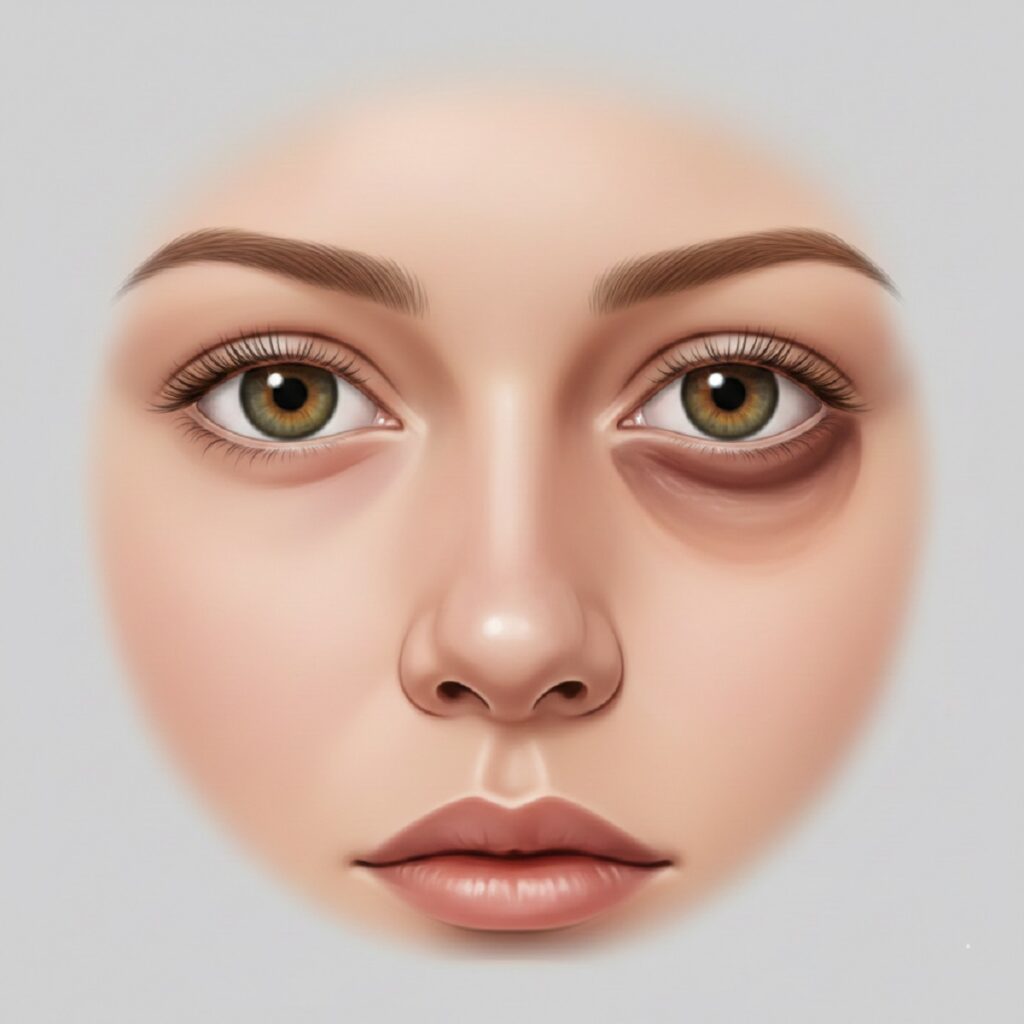
Orbital Fat Loss is not a buzzword.
It’s real.
It’s structural.
And once you notice it, you can’t unsee it.
I see people panic about dark circles, wrinkles, or “tired eyes.” Most of the time, that’s not the real issue. The real change is deeper. Under the skin. Around the bone. Inside the eye socket.
That change is Orbital Fat Loss.
This article is not meant to scare you.
It’s meant to ground you.
No hype. No miracle creams. No empty promises.
Just clear facts. Real causes. Smart management.
Quick Answer
Orbital fat loss is the gradual reduction of the natural fat pads that cushion and support the eyes inside the eye socket. It most commonly occurs due to aging, genetics, rapid weight loss, or the use of certain prostaglandin-based glaucoma medications and lash growth serums. As these fat pads shrink, the eyes may appear hollow, sunken, or more tired. While orbital fat loss usually does not affect vision, it can noticeably change facial appearance.
What Orbital Fat Loss Actually Is
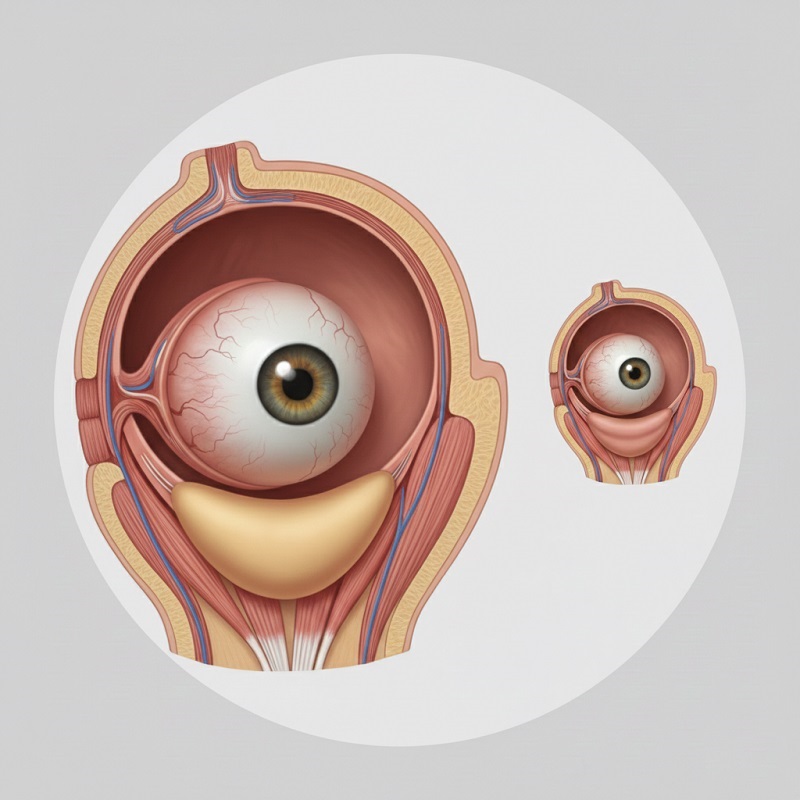
Orbital Fat Loss means a reduction in the fat pads that sit inside the eye socket. These fat pads are not decorative. They are structural.
They exist to:
- Cushion the eyeball
- Hold the eye in proper position
- Smooth facial contours
- Create balance between the eye, cheek, and brow
When this fat decreases, the eye doesn’t just look older. It looks different.
More hollow.
More sunken.
More exposed.
And no, this is not the same as thin skin or pigmentation.
Orbital Fat Loss is a volume issue. A depth issue. A support issue.
That distinction matters.
Because you can hydrate skin.
You can brighten skin.
But you cannot moisturize fat back into existence.
Why So Many People Are Noticing Orbital Fat Loss Now

Ten years ago, most people didn’t talk about this. Today, it’s everywhere. For good reason.
Here’s why Orbital Fat Loss is getting attention now:
- High-definition cameras reveal depth changes instantly
- People are using stronger skincare closer to the eyes
- Lash growth serums are more common than ever
- Social media before-and-afters are more honest
- People are noticing changes earlier, not later
This is not vanity culture.
This is awareness culture.
The eye area controls how rested, healthy, and emotionally open you look. Even small changes can shift how people read your face.
And how you feel about your face.
The Anatomy Most People Never Learn
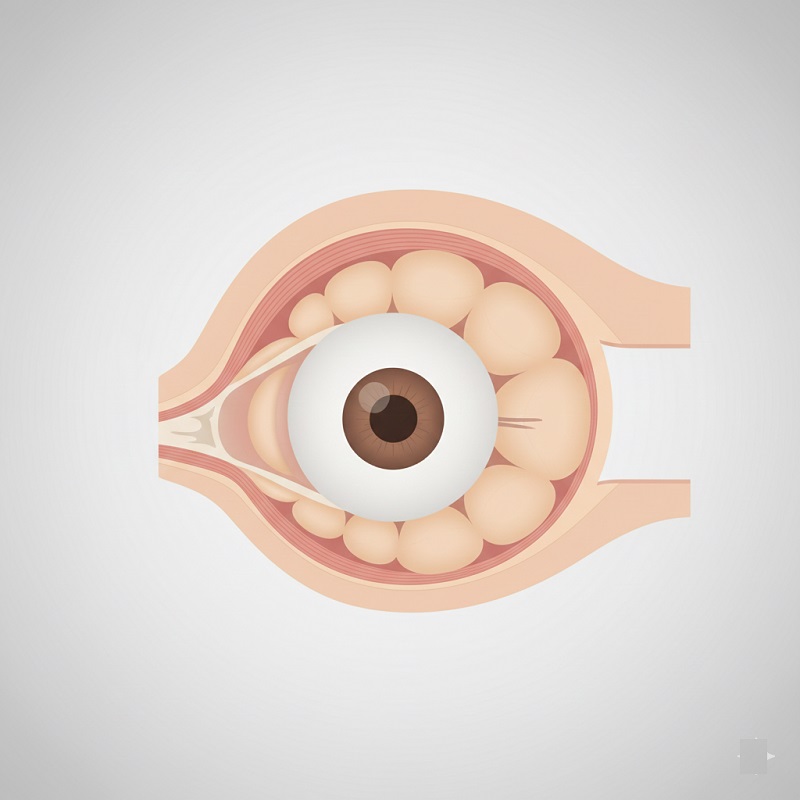
Orbital fat is not one smooth pad.
It’s multiple compartments.
Each compartment:
- Ages at a different speed
- Shrinks independently
- Responds differently to weight loss, genetics, and products
As this fat recedes, other structures become visible:
- Bone
- Blood vessels
- Muscle contours
That’s why Orbital Fat Loss often creates shadows, not discoloration. The darkness is depth, not pigment.
Bone also plays a role.
As we age, the orbital rim slowly resorbs. That makes fat loss look worse, even if the actual fat loss slows down.
This is why hollowing accelerates visually with age.
The Real Causes of Orbital Fat Loss
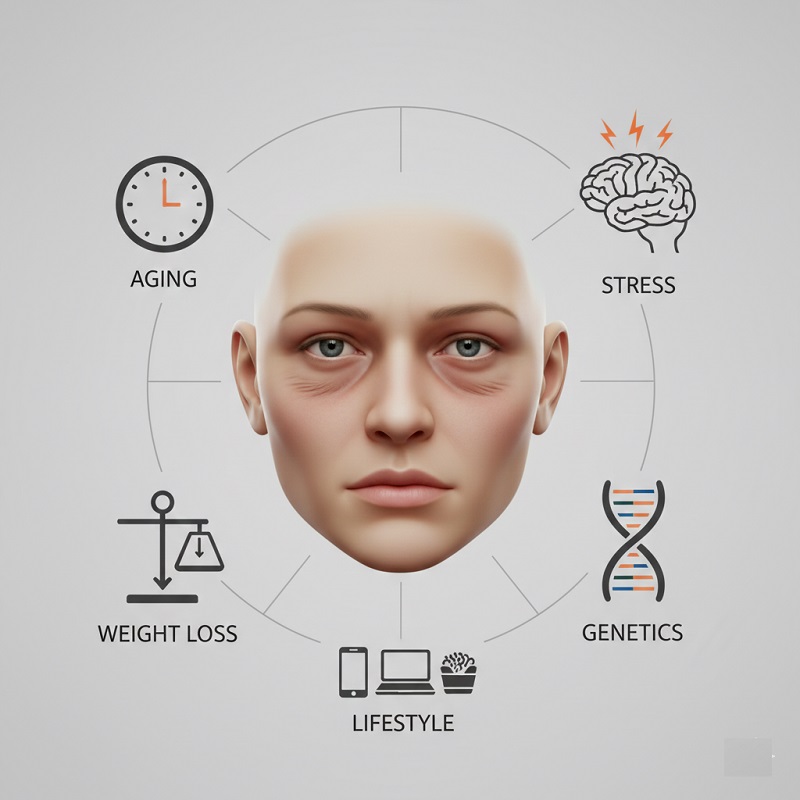
Let’s be clear.
There is no single cause.
Most people experience Orbital Fat Loss due to a combination of factors.
1. Natural Aging
This is the biggest one. And it’s unavoidable.
Facial fat starts to change earlier than people expect. Sometimes late 30s. Often early 40s.
What happens:
- Fat compartments shrink
- Collagen production drops
- Skin thins
- Bone support weakens
This is gradual. Quiet. Easy to miss.
Until one day, the mirror looks different.
Aging doesn’t destroy orbital fat overnight. It erodes it slowly.
2. Genetics
Some people are born with:
- Less orbital fat
- Deeper-set eyes
- Sharper orbital bones
If hollow eyes run in your family, no cream can rewrite that blueprint.
Genetics determine:
- How much fat you start with
- How early you lose it
- How dramatic it looks
This is not a failure on your part. It’s biology.
3. Rapid or Extreme Weight Loss
Facial fat responds fast to calorie changes.
Crash dieting is especially harsh on the face.
I see Orbital Fat Loss accelerate in people who:
- Lose weight too quickly
- Stay in prolonged calorie deficits
- Experience illness-related weight loss
The problem? Facial fat does not always return evenly.
Your body may regain weight.
Your face may not.
If you want to learn more about dry eyes, you can read our detailed guide on dry eyes.
4. Prostaglandin-Based Products
This matters. A lot.
Some lash growth serums and glaucoma medications contain prostaglandin analogs. These compounds can shrink fat cells around the eyes.
This condition is called prostaglandin-associated periorbitopathy.
Possible changes include:
- Sunken eyes
- Deep tear troughs
- Eyelid drooping
- More visible orbital bone
Not everyone is affected.
But when it happens, it’s noticeable.
The encouraging part?
If caught early, some changes may partially reverse after stopping the product.
Timeframes vary. Months, not weeks.
5. Lifestyle Stressors
Lifestyle alone rarely causes Orbital Fat Loss.
But it can speed things up.
Risk accelerators include:
- Chronic sleep deprivation
- Smoking
- Dehydration
- High oxidative stress
- Poor protein intake
These don’t remove fat directly.
They weaken the support system around it.
And that makes loss look worse.
if you want to know about the fruits that are good for weight loss click here
How Orbital Fat Loss Shows Up
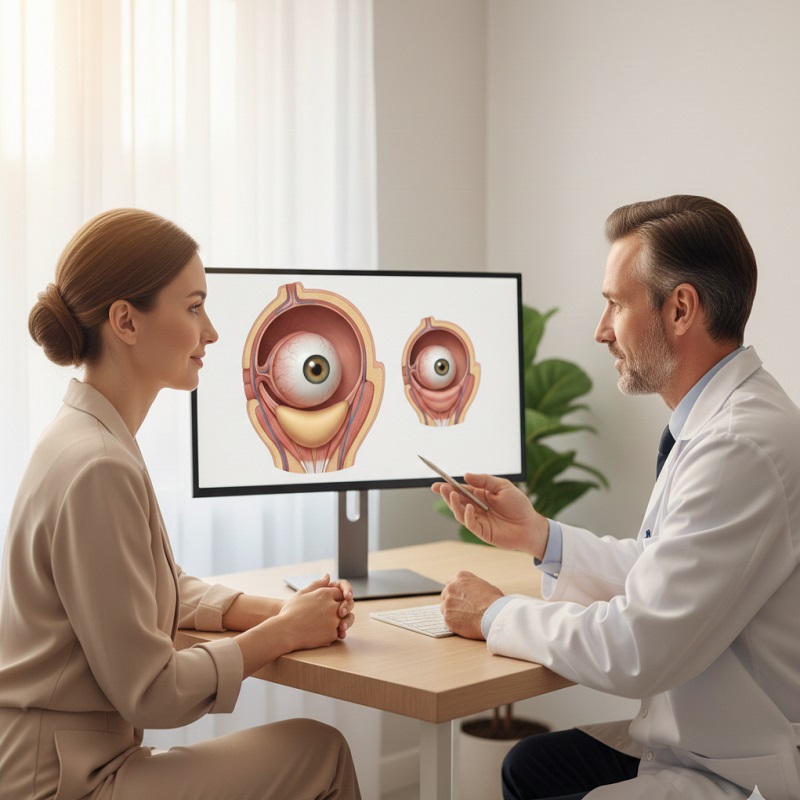
It doesn’t look the same on everyone.
Common signs include:
- Hollow under-eyes
- Sunken upper lids
- Prominent eyeballs
- Deepened tear troughs
- Shadowing without true pigmentation
- One eye aging faster than the other
This is structural change.
Not inflammation.
Not allergies.
Puffiness and Orbital Fat Loss are opposites.
Some people first notice orbital fat loss in photographs rather than in the mirror. Shadows may become more obvious under bright lighting, and makeup may no longer sit the same way around the eyes. Friends or family may even comment that you look tired despite getting enough sleep.
Unlike dark circles caused by pigmentation, the darkness associated with orbital fat loss is often created by changes in facial volume and the way light falls into the hollow areas around the eye.
Is Orbital Fat Loss a Health Problem?
Medically? No.
Cosmetic orbital fat loss does not damage vision or eye function.
But psychologically?
It can matter a lot.
Hollow eyes are often interpreted as:
- Fatigue
- Stress
- Aging
- Sadness
That perception can affect confidence, even when health is perfect.
That impact is valid. It deserves honesty, not dismissal.
If you’re wondering whether dandruff can lead to hair loss, read our detailed guide on the connection between dandruff and hair loss.
How Is Orbital Fat Loss Diagnosed?
Doctors usually diagnose orbital fat loss through a physical examination and a review of your medical history. They may ask about recent weight loss, cosmetic procedures, medications, glaucoma eye drops, lash growth serums, or any previous eye surgery.
In most cases, imaging tests are not necessary unless another medical condition is suspected. If the appearance changes suddenly or affects only one eye, your doctor may recommend additional evaluation to rule out other causes.
Can Orbital Fat Loss Be Reversed?
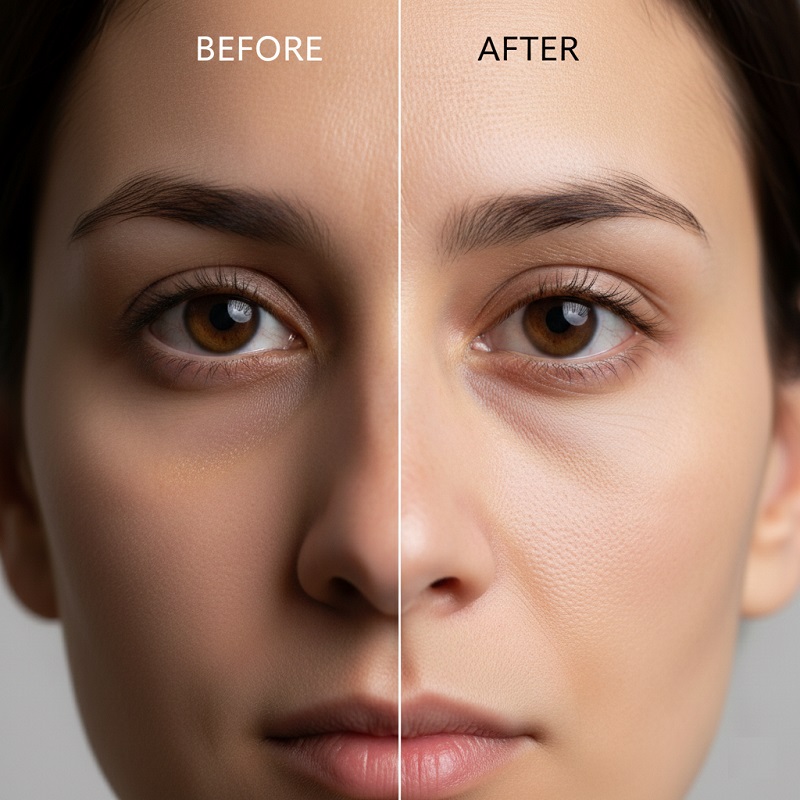
Here’s the straight answer.
Sometimes.
Partially.
Early.
Situations Where Improvement Is Possible
- Product-induced fat loss
- Temporary metabolic changes
- Mild weight-loss-related hollowing
In these cases, removing the trigger can allow partial recovery over time.
Not instantly.
Not fully.
But noticeably.
Situations Where It’s Unlikely
- Advanced age-related loss
- Strong genetic hollowing
- Long-standing structural changes
In these cases, management beats reversal.
What Actually Helps (And What Doesn’t)
Let’s talk reality.
Skincare: Useful, But Limited
Eye creams do not restore fat. Period.
But good skincare can:
- Improve skin thickness
- Reduce light absorption
- Soften the look of hollows
Ingredients worth using:
- Hyaluronic acid
- Peptides
- Ceramides
- Antioxidants
Be cautious with strong actives near the lash line unless designed for that area.
I avoid aggressive experimentation around the eyes.
Lifestyle: Small Things, Big Payoff

These habits won’t regrow fat.
But they protect what’s left.
- Consistent sleep
- Adequate hydration
- Protein-rich diet
- Smoking cessation
- Daily sunscreen
Slow progress is still progress.
Although orbital fat loss cannot always be prevented, especially when it is caused by aging or genetics, healthy habits may help protect the tissues around your eyes and reduce unnecessary volume loss.
Helpful habits include:
- Avoiding crash diets and rapid weight loss
- Eating enough protein and healthy fats
- Wearing sunscreen every day
- Not smoking
- Getting enough sleep
- Staying hydrated
- Talking with your eye doctor before using prostaglandin-based medications if you have cosmetic concerns
These habits won’t stop the natural aging process, but they can support healthier skin and facial tissues over time.
Devices: Manage Expectations
Radiofrequency, microcurrent, LED therapy can:
- Improve skin firmness
- Boost circulation
They do not replace volume.
They support structure. That’s it.
Professional Options for Volume Restoration
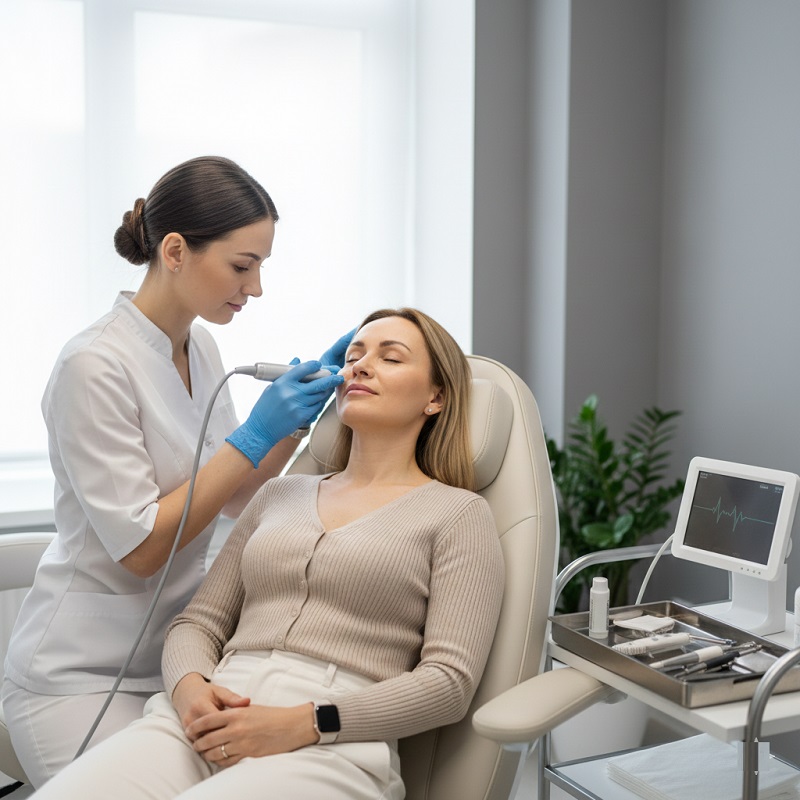
If appearance correction matters to you, medical options exist.
Common ones include:
- Hyaluronic acid fillers
- Midface support injections
- Autologous fat transfer
The orbital area is complex.
Experience matters more than price.
These are choices. Not requirements.
Conservative approaches age better than aggressive ones.
How I’d Evaluate Orbital Fat Loss Calmly
Before reacting, I’d do this:
- Take photos in the same lighting
- Track changes over months, not days
- Note product timelines
- Watch symmetry
- Avoid changing five things at once
Most panic comes from rushing conclusions.
Faces change slowly.
Your response should too.
Cost Reality
Let’s be practical.
- Observation and lifestyle changes: minimal cost
- Skincare optimization: low to moderate
- Devices: moderate
- In-office procedures: higher investment
Early awareness is always cheaper than correction.
Common Myths I Hear All the Time
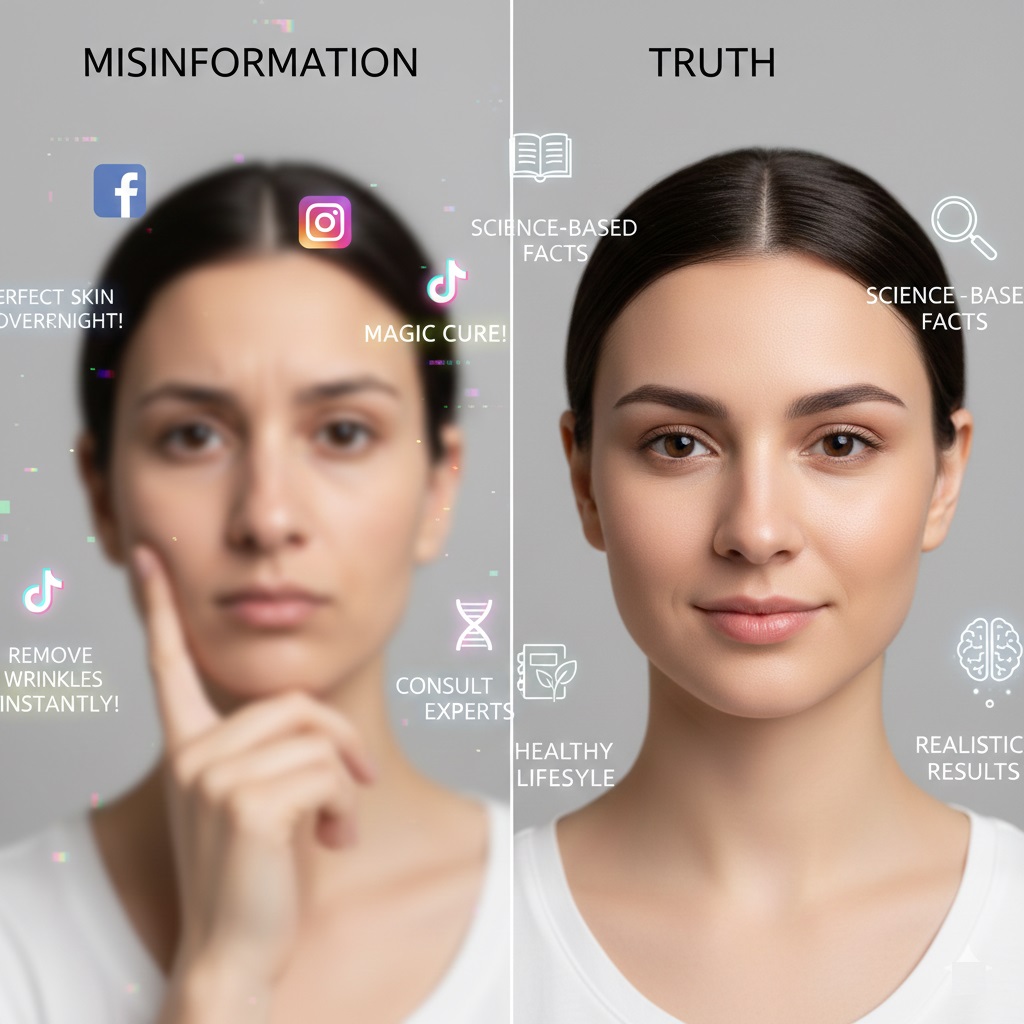
“Eye creams restore fat.”
No.
“Hollow eyes mean poor health.”
Wrong.
“Everyone using lash serums gets Orbital Fat Loss.”
False.
“Only surgery works.”
Also false.
Extreme claims help no one.
Frequently Asked Questions
Can orbital fat loss affect vision?
Orbital fat loss usually changes appearance rather than vision. However, if your eyes suddenly become sunken or you experience vision problems, you should see an eye doctor promptly.
Is orbital fat loss permanent?
It depends on the cause. Age-related and genetic orbital fat loss is usually permanent, while medication-related or weight-loss-related changes may improve partially over time.
Can eye creams restore orbital fat?
No. Eye creams can improve hydration and skin quality, but they cannot replace lost orbital fat.
Can gaining weight restore orbital fat?
Sometimes mild facial fullness returns after healthy weight gain, but orbital fat does not always return to its previous level.
Which doctor should I see for orbital fat loss?
An ophthalmologist, particularly one specializing in oculoplastic surgery, is the best specialist to evaluate orbital fat loss and discuss treatment options if needed.
Does dehydration cause orbital fat loss?
No. Dehydration may temporarily make the eyes appear more sunken, but it does not permanently reduce orbital fat.
Can orbital fat loss occur in young adults?
Yes. Genetics, significant weight loss, certain medications, or underlying medical conditions can cause orbital fat loss even in younger adults.
Are dermal fillers the only treatment option?
No. Treatment depends on the cause and severity. Some people benefit from skincare, lifestyle changes, or simply monitoring the condition, while others may consider fillers or fat grafting after consulting an experienced specialist.
My Final Take
Orbital Fat Loss is a structural facial change.
Not a personal failure.
Not a skincare mistake.
It’s influenced by age, genetics, weight changes, lifestyle, and sometimes products.
The smartest response is not fear.
It’s understanding.
Notice early.
Protect what you have.
Act conservatively.
And if you choose treatment, do it informed and unhurried.
There is no universal fix.
But there is a smarter way to manage change.
And that alone puts you ahead.