
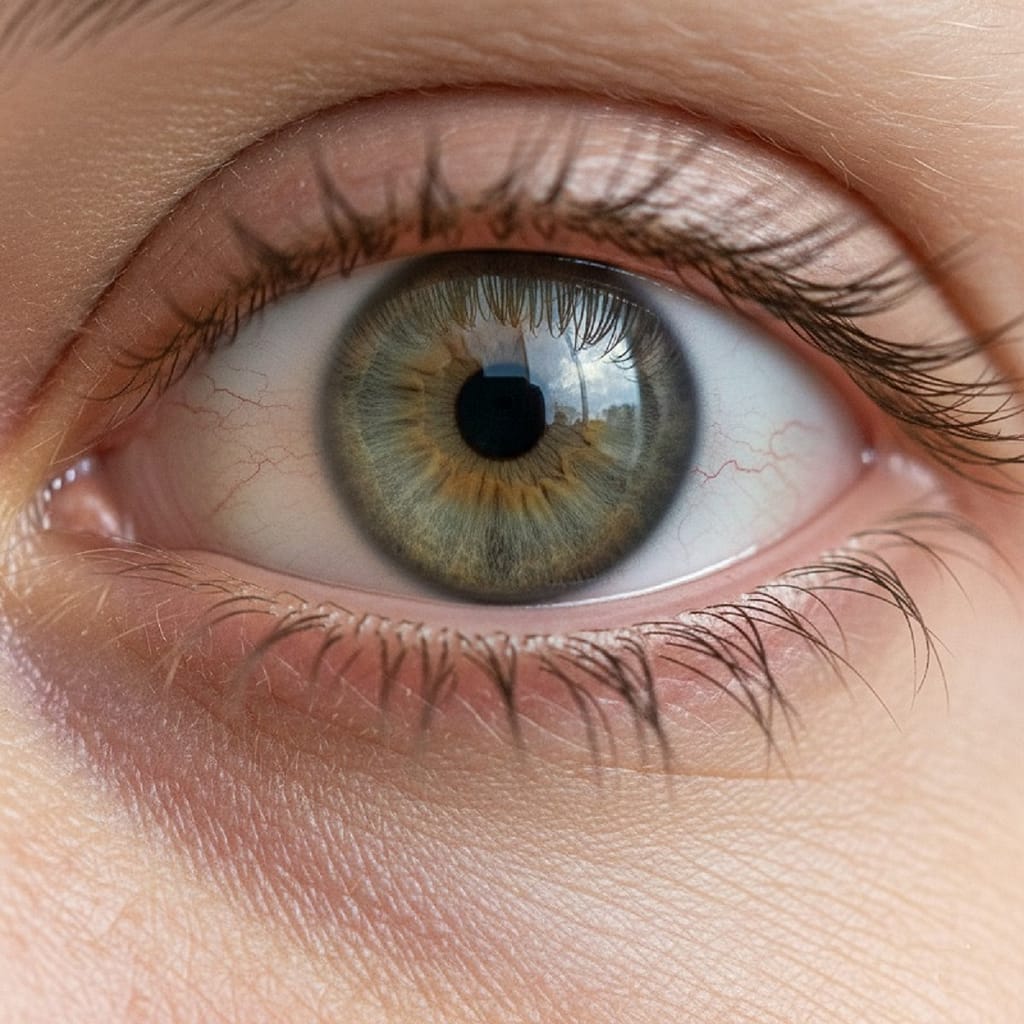
Dry eyes are often brushed off as a small problem.
A little burning.
Some redness.
A gritty feeling at the end of the day.
I strongly disagree with treating dry eyes casually.
Dry eye disease is not just discomfort. It affects vision quality, focus, safety, work, and daily life. And for many people, one serious question keeps coming up again and again:
Can dry eyes cause blindness?
I will answer this honestly.
Not with fear.
Not with exaggeration.
And not with medical fluff.
The short answer is no, dry eyes usually do not cause blindness.
But that is not the full truth.
In rare, severe, and untreated cases, dry eye disease can contribute to vision-threatening damage. That risk is small. But it is real. And ignoring it is a mistake.
In this article, I will explain everything clearly.
How dry eye starts.
How it affects vision.
When it becomes dangerous.
And how you can protect your eyesight for life.
No scare tactics.
Just facts.
Table of Contents
What Dry Eye Disease Really Is
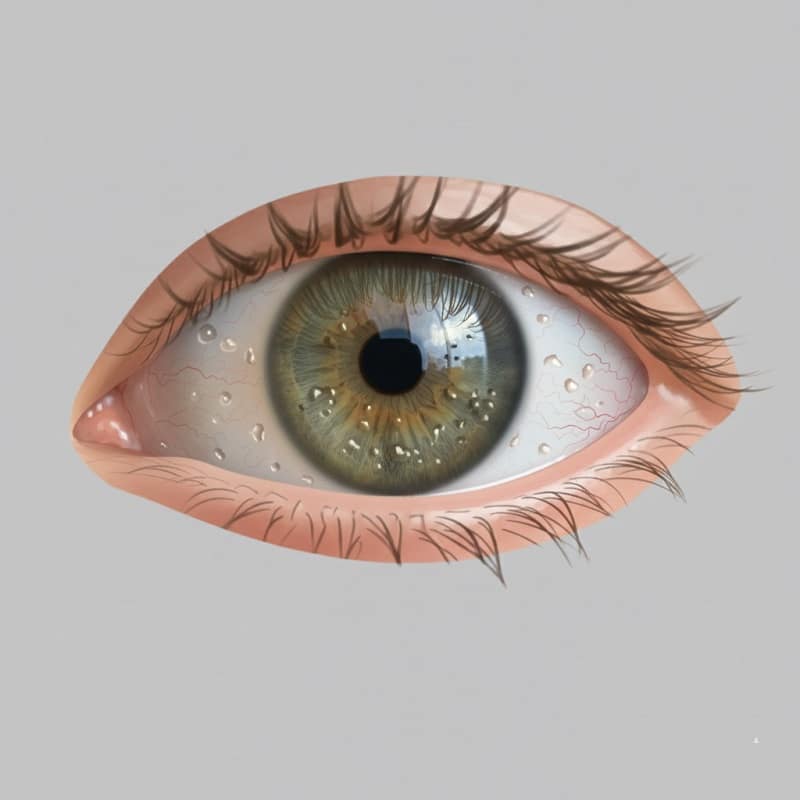
Dry eye disease happens when your eyes cannot maintain a healthy tear film.
Tears are not optional.
They are not just for comfort.
They are essential for vision.
Dry eye happens for two main reasons:
- Your eyes do not make enough tears
- Your tears evaporate too fast or are poor quality
Either way, the surface of the eye suffers.
Healthy tears keep the front of the eye smooth, clean, nourished, and protected. When that system fails, irritation begins. Then inflammation. Then surface damage.
Dry eye is not one disease.
It is a spectrum.
Mild cases feel annoying.
Severe cases can become destructive.
Why Tears Matter More Than You Think
Many people believe tears are just salty water.
That is wrong.
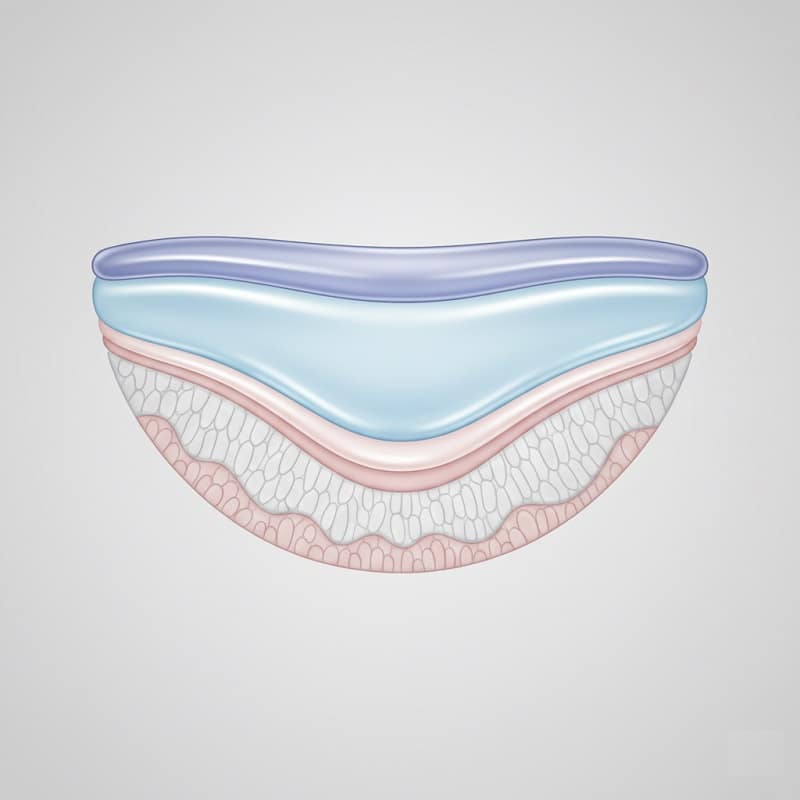
Your tear film is a complex structure with three critical layers. Each layer has a job. If one fails, the entire system breaks down.
1. The Oil Layer
This is the outer layer.
It comes from the meibomian glands in your eyelids.
Its job is simple but vital:
Slow down evaporation.
Without this oil layer, tears disappear too fast. This is one of the most common causes of chronic dry eye.
2. The Water Layer
This is the middle layer.
It comes from the lacrimal glands.
It hydrates the eye.
Delivers oxygen.
Washes away dust, bacteria, and debris.
Low tear volume means the eye is left exposed.
3. The Mucus Layer
This is the inner layer.
It helps tears stick evenly to the eye’s surface.
Without it, tears bead up and break apart instead of forming a smooth surface.
When any of these layers fail, dry eye begins.
Common Causes of Dry Eye Disease
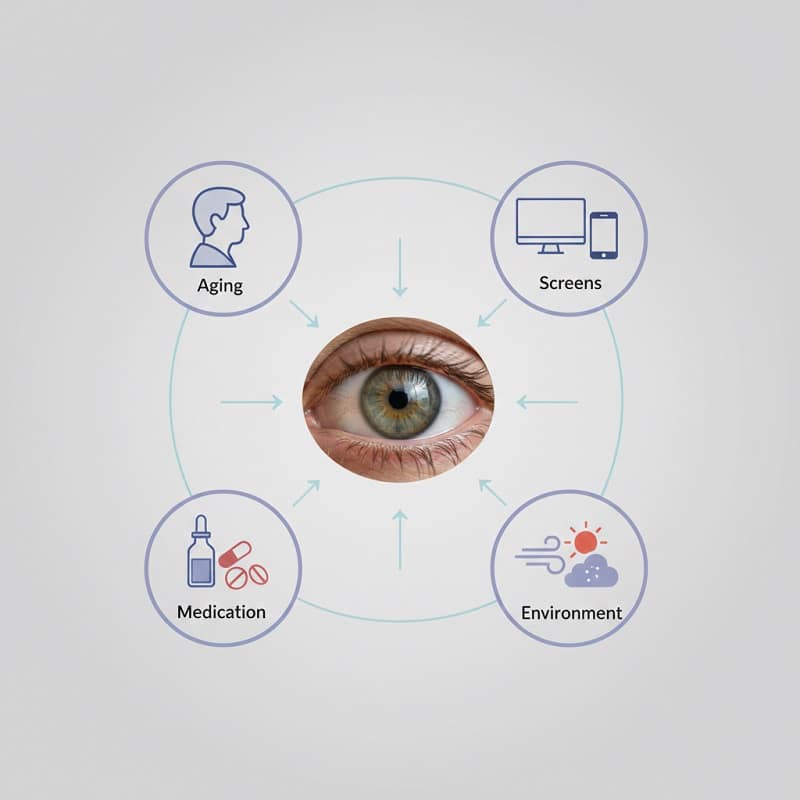
Dry eye is rarely caused by just one thing. Most people have multiple triggers at the same time.
Age and Hormones
Dry eye becomes much more common after age 50.
Hormonal changes reduce tear production. This is especially true during menopause.
This is biology. Not weakness.
Meibomian Gland Dysfunction (MGD)
This is one of the biggest causes of chronic dry eye.
The oil glands become blocked or inflamed. Tears evaporate too fast. The eyes stay dry even if tear production is normal.
Screen Overuse
Screens destroy blinking habits.
When staring at phones or computers, blink rate can drop by 50 to 60 percent.
Less blinking means more evaporation. More evaporation means dryness.
Medical Conditions
Dry eye is often linked with systemic diseases, including:
- Sjögren’s syndrome
- Rheumatoid arthritis
- Lupus
- Diabetes
- Thyroid disorders
- Vitamin A deficiency
These conditions reduce tear production or damage tear quality.
Medications
Many common medicines worsen dry eye:
- Antihistamines
- Antidepressants
- Blood pressure drugs
- Acne medications
- Hormone treatments
People are often shocked to learn this.
Environment and Lifestyle
Your surroundings matter more than you think.
- Air conditioning or heating
- Smoke and pollution
- Wind and dust
- Contact lens overuse
- Dehydration
- Smoking
Dry eye is not just an eye problem. It is a lifestyle problem too.
if you want to learn about orbital fat loss than must read this article
Dry Eye Symptoms That Affect Vision

Dry eye does not feel the same for everyone.
Some people feel burning.
Others feel pain.
Some feel nothing but still have damage.
Common symptoms include:
- Burning or stinging
- Gritty or sandy sensation
- Redness
- Excessive tearing
- Light sensitivity
- Eye fatigue
- Trouble wearing contact lenses
- Blurry or fluctuating vision
The key word here is fluctuating.
Vision may improve after blinking. Then blur again seconds later. That is a classic dry eye sign.
How Dry Eye Changes Visual Clarity
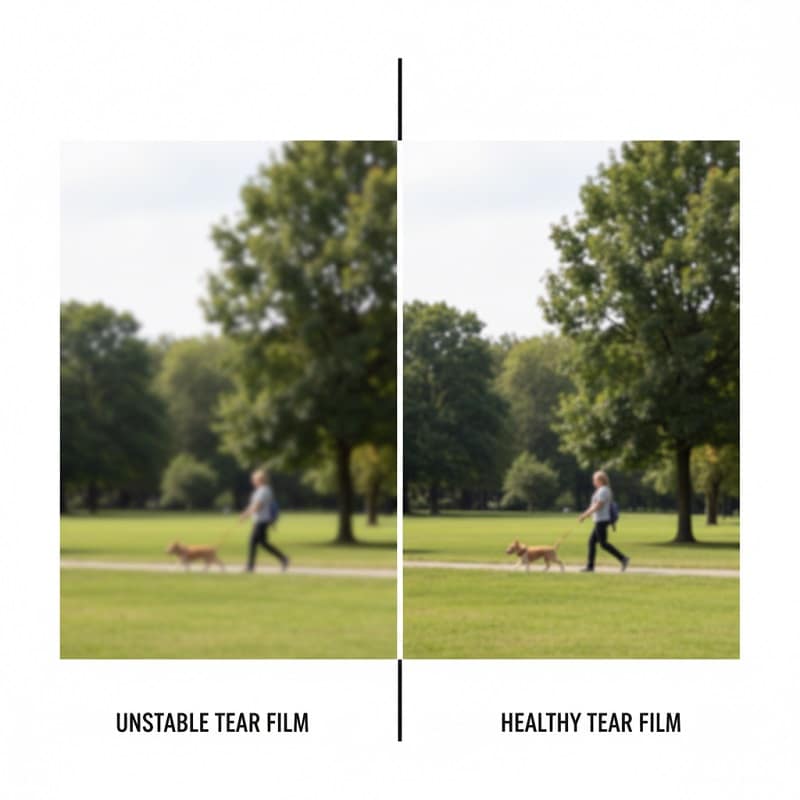
Tears are part of your optical system.
A smooth tear film allows light to enter the eye properly. When the tear film breaks up:
- Light scatters
- Focus becomes unstable
- Contrast drops
- Night vision worsens
Driving at night becomes harder. Reading becomes tiring. Screens feel unbearable.
At first, these changes are temporary.
But chronic instability can lead to real damage.
Can Dry Eyes Cause Blindness? The Direct Answer

Let me be clear.
Mild and moderate dry eye does NOT cause blindness.
However…
Severe, untreated dry eye disease can, in rare cases, lead to vision loss.
So if you are asking, can dry eyes cause blindness, the honest medical answer is:
- Usually no
- Rarely yes
- Almost always preventable
The danger is not dryness itself.
The danger is damage to the cornea.
When Dry Eye Becomes Dangerous
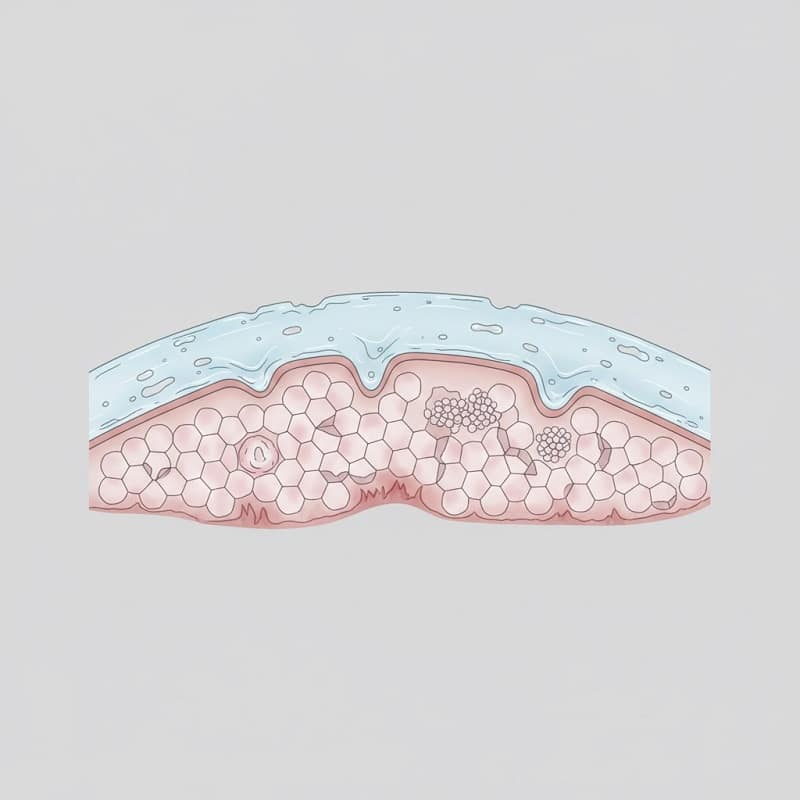
The cornea is the clear window at the front of your eye.
It has no blood vessels.
It depends completely on tears for survival.
When tears fail, the cornea suffers.
1. Surface Damage
Without lubrication, blinking becomes friction.
This causes:
- Tiny surface wounds
- Corneal abrasions
- Epithelial breakdown
These wounds hurt. And they open the door to infection.
2. Higher Infection Risk
Tears contain natural antibacterial proteins.
Without tears:
- Bacteria are not washed away
- Viruses linger longer
- Infection risk increases
A dry eye is a vulnerable eye.
3. Corneal Ulcers
In severe cases, open sores called corneal ulcers can form.
This is a medical emergency.
Ulcers can scar the cornea permanently.
4. Permanent Vision Loss (Very Rare)
If scarring happens in the center of the cornea, vision can be permanently distorted.
In extreme, untreated cases, this can result in functional blindness in that eye.
I want to emphasize this clearly:
This outcome is extremely rare and almost always preventable.
Long-Term Effects of Ignoring Dry Eye

Even without blindness, untreated dry eye can slowly destroy quality of life.
- Reading becomes exhausting
- Screen work becomes painful
- Driving confidence drops
- Productivity suffers
- Mental fatigue increases
Dry eye is not harmless when ignored.
How Dry Eye Is Diagnosed
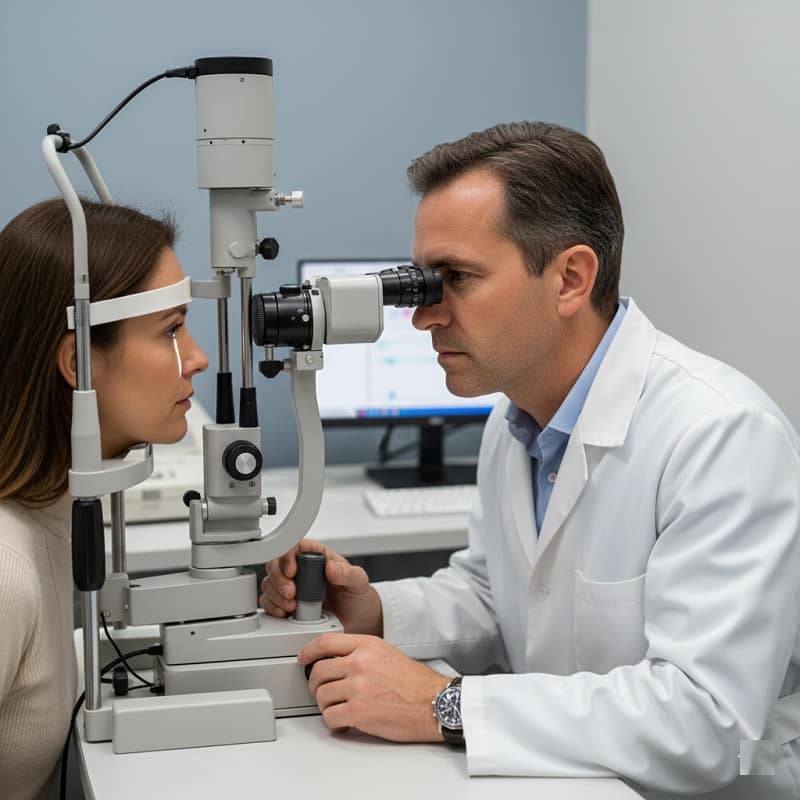
A proper diagnosis is not guesswork.
An eye doctor may check:
- Tear quantity
- Tear stability
- Corneal surface damage
- Oil gland function
- Eyelid health
Treating dry eye without identifying the cause is a mistake.
Treating Dry Eye to Protect Vision

Dry eye treatment is not one-size-fits-all.
The goal is not just comfort.
The goal is protecting the eye surface.
Over-the-Counter Options
- Preservative-free artificial tears
- Lubricating gels
- Night ointments
- Warm compresses
These help, but they are not enough for everyone.
Prescription Treatments
- Anti-inflammatory drops
- Tear-stimulating medications
- Prescription lubricants
Inflammation must be controlled. Otherwise dryness continues.
In-Office Procedures
- Meibomian gland treatments
- Tear retention methods
- Advanced gland therapies
These treatments can be life-changing for severe cases.
Treating the Root Cause
Autoimmune disease.
Hormonal imbalance.
Eyelid inflammation.
If the cause is not addressed, symptoms return.
if you want to learn about why do my eyes hurt when I wake up than this article is best for you
Preventing Dry Eye Complications

Prevention matters.
A lot.
Better Screen Habits
- Follow the 20-20-20 rule
- Blink consciously
- Lower screen height
Small changes protect tears.
Protect Your Environment
- Use humidifiers
- Wear sunglasses outdoors
- Avoid smoke and direct airflow
Your eyes live in your environment.
Nutrition and Hydration
- Drink enough water
- Eat omega-3 fatty acids
- Maintain balanced nutrition
Eyes need fuel.
Contact Lens Discipline
- Follow wearing limits
- Clean lenses properly
- Never sleep in lenses unless prescribed
Contact lens abuse worsens dry eye fast.
When to See an Eye Doctor Immediately

Do not wait if you have:
- Persistent blurry vision
- Increasing light sensitivity
- Eye pain
- Redness that does not improve
- Discharge or signs of infection
Early care prevents damage.
Always.
Final Thoughts: Should You Fear Blindness?
Dry eye disease is common.
It is frustrating.
And yes, it deserves respect.
But blindness from dry eye is extremely uncommon.
If you are asking can dry eyes cause blindness, the real danger lies only in severe, neglected cases.
Most people who seek care early keep healthy vision for life.
Dry eye is not just about comfort.
It is about protecting the surface of your eyes.
Ignore it, and problems grow.
Treat it early, and vision stays safe.
With awareness, proper care, and timely treatment, dry eye disease is manageable, preventable, and very rarely vision-threatening.
Your eyesight is worth that effort.
Pingback: Why Do My Eyes Hurt When I Wake Up? - healixahealth.com
Pingback: Orbital Fat Loss Explained: Why Your Eyes Look Sunken (And What Actually Helps) - healixahealth.com