
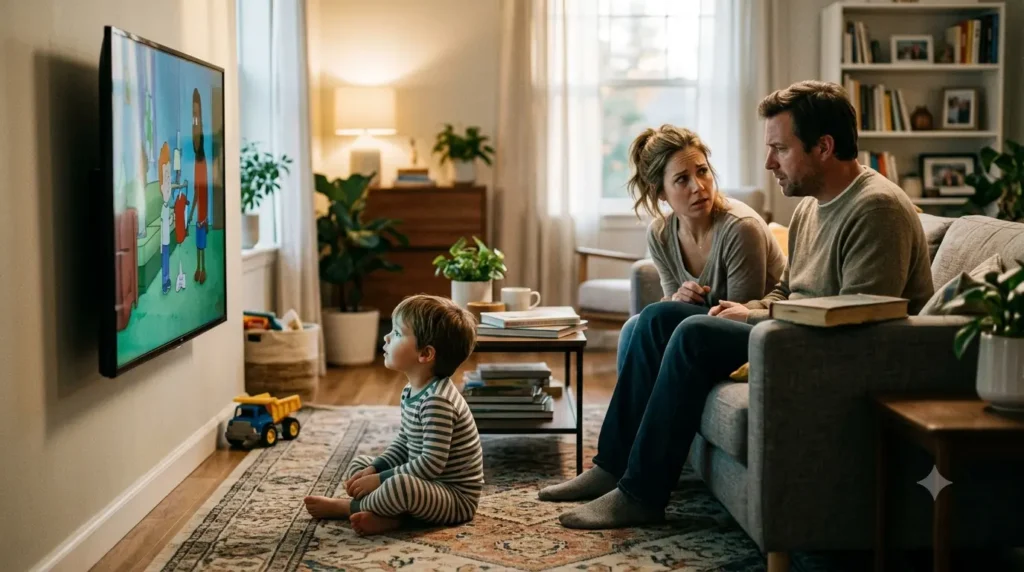
Quick Answer: Does sitting too close to a TV hurt your eyes? No, not permanently. Modern TVs can’t damage your eyes from close range. Sitting too close to a TV can cause temporary eye strain — dryness, tiredness, mild headaches — but it won’t ruin your vision. The “hurt your eyes” myth comes from old CRT televisions, not the flat-screen you own today.
I still hear my mom’s voice in my head every time my nephew scoots up to the TV. “Move back, you’ll ruin your eyes!” She said it to me. Her mom said it to her. It’s practically a family heirloom at this point.
But does sitting too close to a TV actually hurt your eyes, or is this just something parents say because their parents said it? I dug into this properly, and the answer surprised me a little. Let me walk you through it.
Table of Contents
What “Sitting Too Close to the TV” Actually Means
There’s no doctor’s rulebook that says “12 inches equals danger zone.” Nobody measured this scientifically and drew a line in the sand. When people ask does sitting too close to a TV hurt your eyes, they usually mean sitting a foot or two from the screen — close enough that a parent in the next room yells about it.
Here’s what I found matters:
- Sitting close doesn’t physically damage any part of your eye.
- It can make your eyes feel tired or dry for a bit.
- Kids do this way more than adults do. Their eyes are just built to focus up close more easily.
- The original scare had a real reason behind it once. That reason just doesn’t exist anymore.
That last point is the whole story, honestly. Let me explain.
Where This Myth Actually Came From
This wasn’t a random fear someone made up. Old-school TVs — the boxy CRT sets everyone had before the 1970s — genuinely emitted small amounts of radiation. Some models leaked more than safety regulators allowed, and manufacturers had to recall them. That’s not a rumor. That happened.
Your flat-screen today? Completely different animal. LED, OLED, LCD, plasma — none of them work the way old CRT tubes did, and none of them can produce that kind of radiation. Every TV sold now has to meet strict safety limits before it ever reaches a store shelf.
So when your grandmother warns you about sitting close to the TV, she’s not wrong that it was once a real concern. She’s just working off information that stopped applying decades ago.
| Aspect | Old Belief (Pre-1970s) | What We Know Now |
|---|---|---|
| Radiation risk | Some CRT TVs leaked radiation | Modern flat screens can’t produce it |
| Eye damage | Believed to cause lasting harm | No evidence of permanent damage |
| Eye strain | Barely discussed | Real, but temporary and manageable |
| Nearsightedness | “Caused” by sitting close | Mostly genetic — sitting close is often a symptom |
| Kids sitting close | Just a bad habit | Sometimes an early clue their eyes need checking |
What Sitting Close to the TV Actually Feels Like
I’ve done this myself during a gripping movie scene — scooted right up to the screen without even noticing. Afterward? My eyes felt heavy. A little dry. Slightly hard to refocus when I looked across the room.
That’s the real experience most people report:
- Tired or heavy-feeling eyes
- Dryness, sometimes a gritty feeling
- Occasional headaches after long stretches
- A brief moment of blurriness when you look away
None of that is permanent. It fades once you blink more, look away, or take a short break. Persistent symptoms deserve a chat with an eye doctor, but the occasional tired-eyes feeling isn’t a red flag.
Key Things Worth Understanding About Screens and Comfort
A few points cut through most of the confusion:
Distance alone isn’t really the villain here. It’s staring without blinking, without breaks, for long stretches. That’s what wears your eyes out, not proximity by itself.
Kids can focus up close more comfortably than adults naturally. This is exactly why children gravitate toward the screen without feeling any strain at all.
Blue light and viewing distance are two separate conversations. Sitting closer doesn’t dump more blue light into your eyes. Brightness and screen time before bed matter more for sleep than distance does. Some people also notice halos around lights, especially if another eye condition is present.
Room lighting changes everything. A pitch-black room or a glaringly bright one will strain your eyes regardless of how close or far you’re sitting.
Is Sitting Close to the TV Safe?
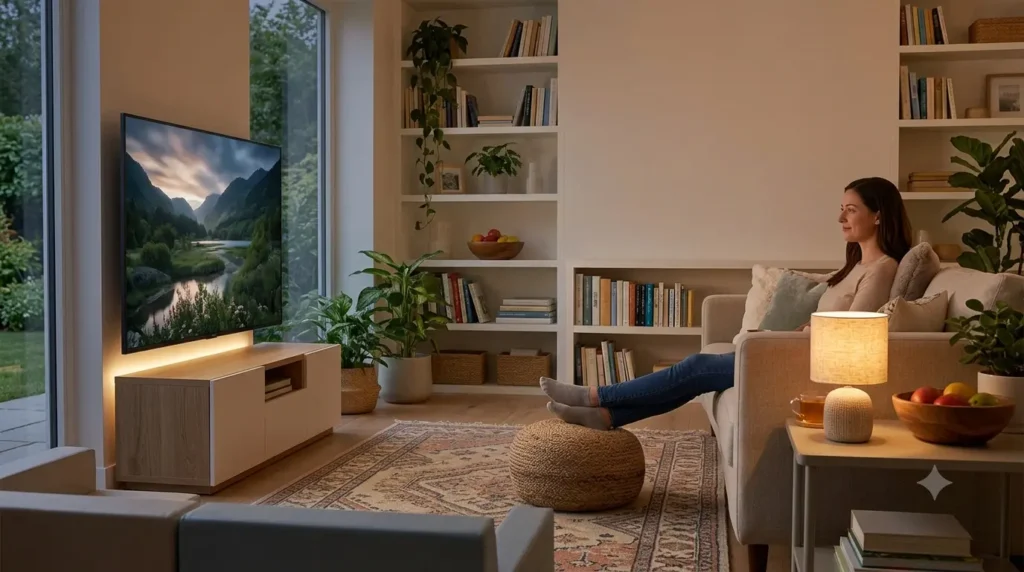
Generally? Yes. Occasionally sitting close isn’t dangerous for kids or adults.
Usually fine:
- Scooting close during an intense scene, then drifting back
- Kids sitting close for short bursts here and there
Worth a second look:
- A child who only ever sits extremely close, every single time
- Repeated complaints of headaches or blurry vision after screen time
- Marathon screen sessions with zero breaks
If your kid consistently plants themselves inches from the screen no matter how many times you ask them to scoot back, get their eyes checked. Not because the habit itself is harmful — because it might mean they genuinely can’t see well from farther away.
Symptoms of TV-Related Eye Strain
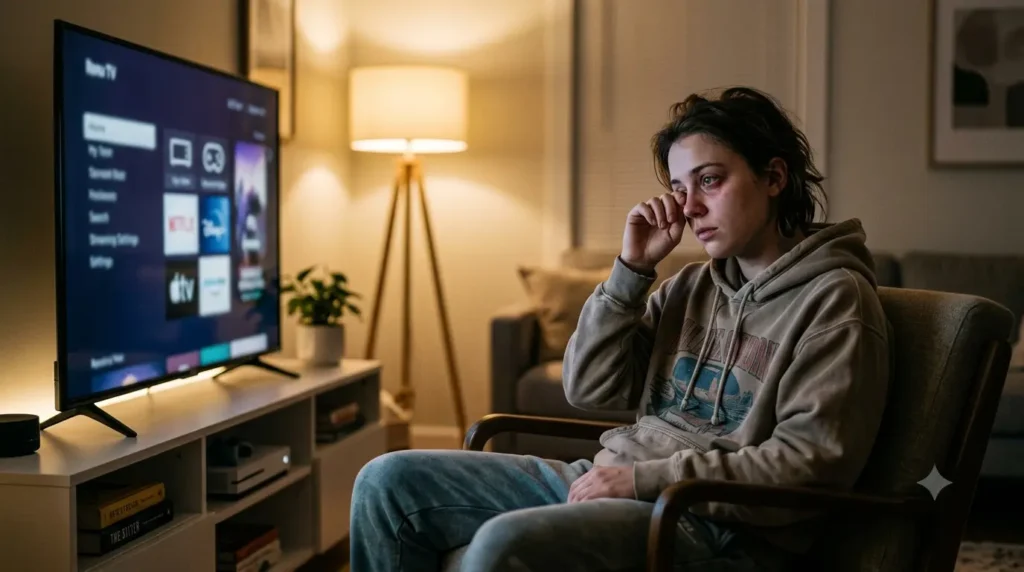
Digital eye strain shows up in fairly predictable ways:
- Dry or watery eyes
- Burning or itchy sensation
- Blurry vision after long viewing
- Headaches around the forehead or temples
- Trouble refocusing after looking away
- Extra sensitivity to bright light
These pass. Rest, blinking, better lighting — that’s usually all it takes.
What Actually Causes Eye Strain While Watching TV
It’s rarely one single cause. Usually it’s a mix of:
Reduced blinking. People blink way less when locked onto a screen. Less blinking means drier eyes.
Bad lighting. A room that’s too dark or too bright compared to the screen creates glare and contrast strain.
Marathon sessions. Hours of uninterrupted focus give your eye muscles zero chance to rest.
Poor brightness settings. A screen that’s too bright or too dim for the room forces your eyes to work overtime.
Undiagnosed vision problems. Uncorrected nearsightedness, farsightedness, or astigmatism make any screen more tiring, TV included.
How Far Should You Sit From the TV?
There’s no official government-stamped number here. It depends on your screen size and your own comfort. A common rule of thumb: sit roughly three times the diagonal screen size away. Newer high-definition sets stay sharp even closer up, so this rule has gotten a bit more flexible over the years.
| TV Size (Diagonal) | Comfortable Distance |
|---|---|
| 32 inches | 4–6.5 feet |
| 40–43 inches | 5–8.5 feet |
| 50 inches | 6.5–10 feet |
| 55 inches | 7–11.5 feet |
| 65 inches | 8–13.5 feet |
These are comfort guidelines, not medical law. If you feel fine at your distance, you’re fine.
Is It Worse for Children?
Kids sit closer than adults, full stop. That’s not automatically a warning sign. Their eyes focus at close range more easily than ours do, which is exactly why they gravitate toward the screen.
Two things worth keeping in mind, though:
If a child always insists on sitting unusually close and reminders don’t change anything, mention it at their next eye exam. It could point to nearsightedness.
Total daily screen time matters more for a child’s eyes than exact viewing distance. Mixing screen time with outdoor play and distance-focused activities is something eye doctors generally recommend for healthy visual development.
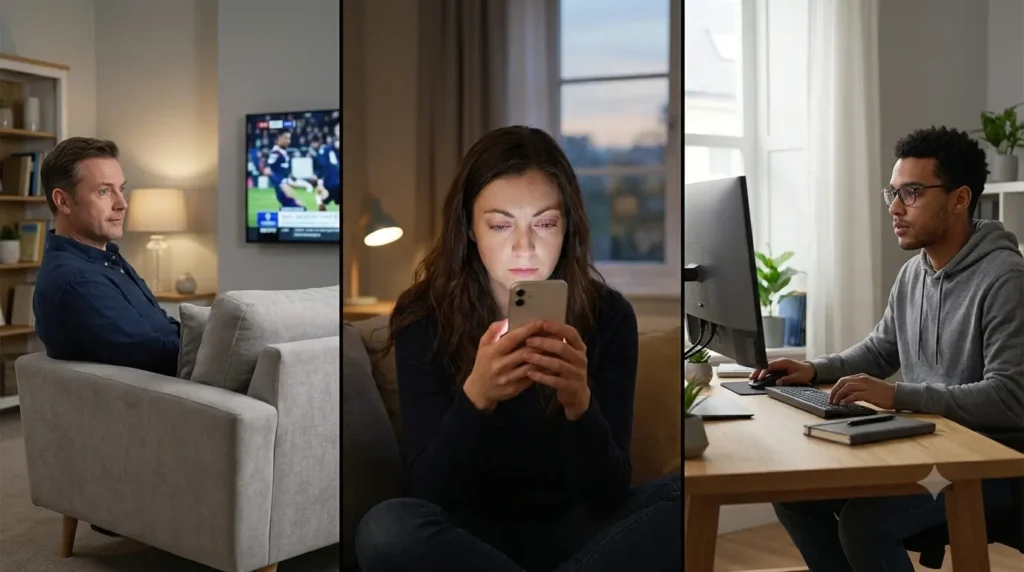
TV vs. Phone vs. Computer: Which Strains Your Eyes More?
| Factor | TV | Phone | Computer |
|---|---|---|---|
| Typical distance | Farther away | Very close | Arm’s length |
| Session length | Long (movies, shows) | Short, frequent bursts | Long, work-related |
| Blink rate impact | Lower | Significant | Significant |
| Common complaint | General fatigue | Strain, neck angle issues | Dryness, prolonged strain |
Phones and computers cause more reported eye strain than TVs overall. Makes sense — you hold them closer and use them longer without thinking about breaks. TVs, viewed from farther back, tend to be gentler on your eyes by comparison.
Best Ways to Cut Down Eye Strain While Watching TV
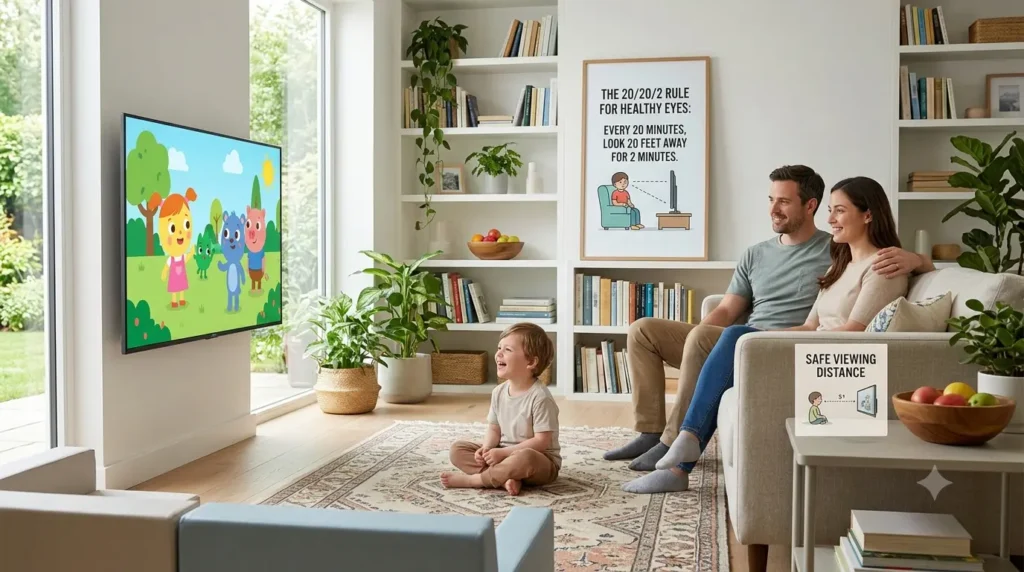
- Use the 20-20 rule. Every 20 to 30 minutes, look at something farther away. Give your eye muscles a breather.
- Fix your room lighting. Skip total darkness and cut glare from windows or overhead lights hitting the screen.
- Sit at a comfortable distance. Start with the size chart above, then adjust to what feels right.
- Blink on purpose. Screens cut your blink rate. Consciously blink fully and often.
- Match brightness to your room. Most TVs let you tune brightness so it doesn’t fight with ambient light.
- Take real breaks. Stand up, stretch, look outside during long movie nights.
- Keep the screen at eye level. Awkward neck angles pile onto the discomfort.
Common Mistakes People Make
- Blaming distance alone for vision problems, when genetics play a much bigger role in things like myopia.
- Watching for hours without a single break — that hurts more than proximity ever could.
- Ignoring room lighting entirely, which quietly makes strain worse.
- Brushing off a kid’s habit of sitting super close without ever booking an eye exam.
- Mixing up temporary strain with permanent damage. They’re not the same thing, and confusing them causes needless worry.
Setting Up a Comfortable TV Viewing Space
- Match distance to screen size using the table above as your starting point.
- Position the TV at or just below eye level.
- Balance ambient room light with screen brightness — neither should overpower the other.
- Build in regular breaks, especially for kids.
- Book routine eye exams. Catching issues early beats guessing later.
FAQs
Does sitting too close to a TV hurt your eyes permanently? No. There’s no credible evidence that sitting close to a modern TV causes lasting damage. It might cause temporary strain during long sessions, nothing more.
How close is too close to sit to a TV? No single number applies to everyone. Roughly three times the screen’s diagonal size is a decent starting point, but comfort matters more than any formula.
Is 7 hours of screen time bad for your eyes? Long stretches of screen time across any device raise your odds of temporary dryness and fatigue. Breaks and good habits help a lot. Occasional long sessions aren’t linked to permanent harm.
Can a 4K TV hurt your eyes? No. Higher resolution isn’t more damaging. Sharper images can actually feel more comfortable up close since the picture stays clear.
Does sitting close to the TV cause nearsightedness? No direct cause-and-effect link exists. Genetics drive nearsightedness far more than viewing habits. A kid sitting close might already have a vision issue rather than developing one from the habit.
Is it different for kids versus adults? Kids focus comfortably at closer range than adults without strain, which explains the habit. It’s normal. A child who exclusively and persistently sits extremely close is worth mentioning at their next checkup.
If you experience symptoms like seeing flashes of light, sudden vision loss, or severe eye pain, seek prompt medical attention because these symptoms are unrelated to normal TV viewing.
What the Research Actually Says
Studies on digital eye strain have piled up fast as screen use has grown across every age group. Researchers have tracked how extended exposure to displays — TVs, phones, computers alike — connects to dryness, irritation, and short-term blurry vision. The general consensus: these symptoms are real, but they’re short-lived and respond well to basic habits like breaks, blinking, and smarter lighting.
Research focused specifically on viewing distance hasn’t found a link between sitting close and permanent eye damage. Reviews of pediatric eye health consistently call the “sitting too close ruins your eyes” idea a myth, while treating temporary strain as a separate, well-documented issue on its own.
A Quick Note on Accuracy
This article is meant for general information, not medical advice. It reflects widely accepted knowledge about screen habits and eye comfort, not guidance from any specific doctor. If you or your child are dealing with ongoing eye discomfort or vision changes, talk to a licensed eye care professional. Don’t self-diagnose based on an article, mine included.
Conclusion
So, does sitting too close to a TV hurt your eyes? Not really, not in any lasting way. That warning made sense back when TVs could leak radiation. Today’s screens can’t do that. What sitting close can do is tire your eyes out for a while — dryness, mild headaches, that unfocused feeling after looking away. All temporary. All fixable with breaks, blinking, and decent lighting.
If your kid always plants themselves right against the screen, don’t panic. Just get their eyes checked next time you’re due for an appointment. It’s usually harmless, but it’s worth ruling out.
The real focus shouldn’t be exact inches from the screen. It should be how you manage screen time overall — breaks, lighting, and actually paying attention to how your eyes feel. When something feels off and doesn’t go away, skip the guesswork and see an eye doctor. That’s always the smartest move.