

Table of Contents
Why This Question Keeps Coming Up
Your eyes burn by mid-morning. You blink and it feels like sand is stuck under your eyelid. By afternoon, the words on your screen blur, and you’ve already used your eye drops twice. This isn’t random. For a lot of veterans, it’s the leftover cost of years spent in dust, wind, smoke, and glare that had nothing to do with a firefight.
If you’ve typed “Dry Eye Syndrome VA Rating” into Google, you’re not alone. Thousands of veterans search that exact phrase every month, and most of them want one straight answer: does this qualify for compensation, and how much?
Here’s the short version. Yes, your dry eye syndrome VA rating is real, and it can range anywhere from 10% to 60%. The long version has more moving parts, and I’m going to walk you through every one of them in plain English.
What Dry Eye Syndrome Actually Is
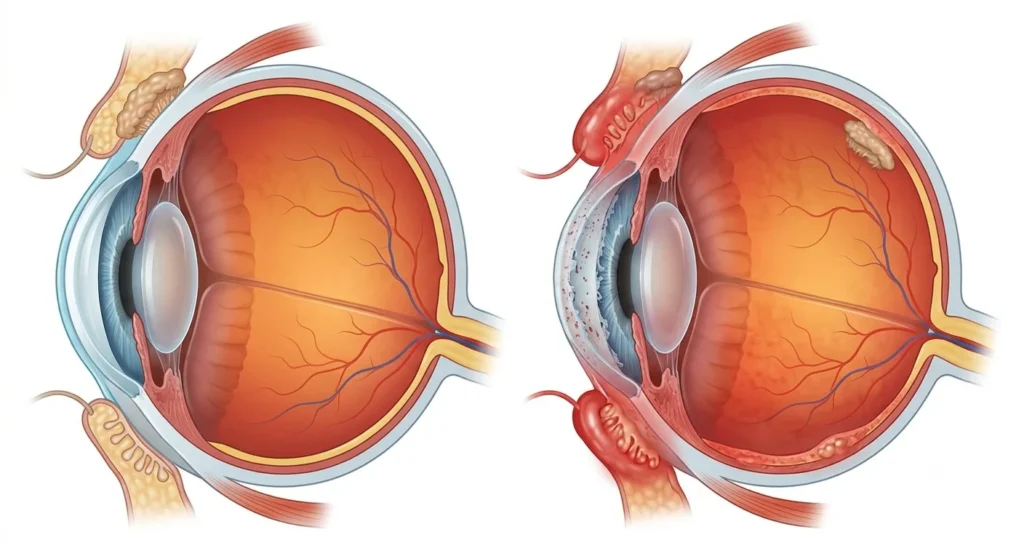
Your eyes need a steady film of tears to stay healthy. That film clears out debris, fights off infection, and keeps your vision sharp. Dry eye syndrome shows up when your eyes either stop producing enough tears or the tears you do make evaporate too fast to do their job.
The result isn’t just annoying. It’s disruptive.
Symptoms usually include:
- Burning or stinging that won’t quit
- Redness in one eye or both
- Sharp sensitivity to light
- That constant “something’s in my eye” feeling
- Blurry vision or eye fatigue after reading or screen time
- Watery eyes, which sounds backwards but happens when your eyes overcorrect for dryness
If you wear contact lenses, understanding how dry eye syndrome and contact lenses affect one another can help you manage symptoms more effectively.
Research published by the U.S. Department of Veterans Affairs and ophthalmology journals suggests that dry eye disease is more common among veterans due to environmental exposure, systemic diseases, Sand, wind, smoke, and dry climates during deployment are a big part of it. So are certain medications, autoimmune conditions, and mental health conditions like PTSD or depression. Dry eye symptoms may develop after LASIK or PRK surgery in some individuals. Whether this qualifies for VA compensation depends on the specific circumstances and evidence supporting the claim.
For additional educational information, you can review the National Eye Institute’s guide to dry eye, which covers risk factors, diagnosis, and management.

Dry Eye vs. Other Eye Conditions the VA Rates
Veterans mix up dry eye syndrome with other eye conditions all the time. They’re not the same, and they don’t follow the same rules for a dry eye syndrome VA rating. Here’s a quick side-by-side.
| Condition | Diagnostic Code | Rating Range | Rated Primarily By |
|---|---|---|---|
| Dry Eye Syndrome | DC 6025 (or by analogy) | 10%–60% | Tear production / incapacitating episodes |
| Chronic Conjunctivitis | DC 6018 | 10% minimum, then residuals | Active vs. inactive status |
| Glaucoma | DC 6013 | 10%–100% | Visual field loss, incapacitating episodes |
| Corneal Scarring | DC 6011 | 0%–30% | Visual acuity impact |
Treat this table as a general map, not a guarantee. Every claim gets evaluated on its own facts, and the code that ends up applied depends heavily on how your specific symptoms present. These ratings apply only when qualifying incapacitating episodes meet the VA’s regulatory definition. Routine follow-up appointments alone generally do not count.
What Veterans Actually Live With
I’ve heard the same story from a lot of veterans: dry eye syndrome looks minor on paper but wears you down in real life. Artificial tears become part of the daily routine. Wind or air conditioning turns into something to avoid. Long stretches of reading, driving, or screen work leave your eyes exhausted by the end of the day.
Symptoms don’t always hit both eyes equally, and they rarely stay at one steady level. Some weeks are manageable. Others aren’t.
I’ll be honest with you here, because this matters for how the VA thinks about a dry eye syndrome VA rating. Dry eye syndrome is usually a manage-it-forever condition, not a cure-it-once condition. Consistent treatment helps a lot of people, whether that’s over-the-counter drops or something more advanced from an eye specialist. But flare-ups still happen, especially with seasonal changes or certain environments.
Along with prescribed treatments, some home remedies for dry eye may help reduce irritation and improve daily comfort when used consistently.
How the VA Actually Calculates a Dry Eye Syndrome VA Rating
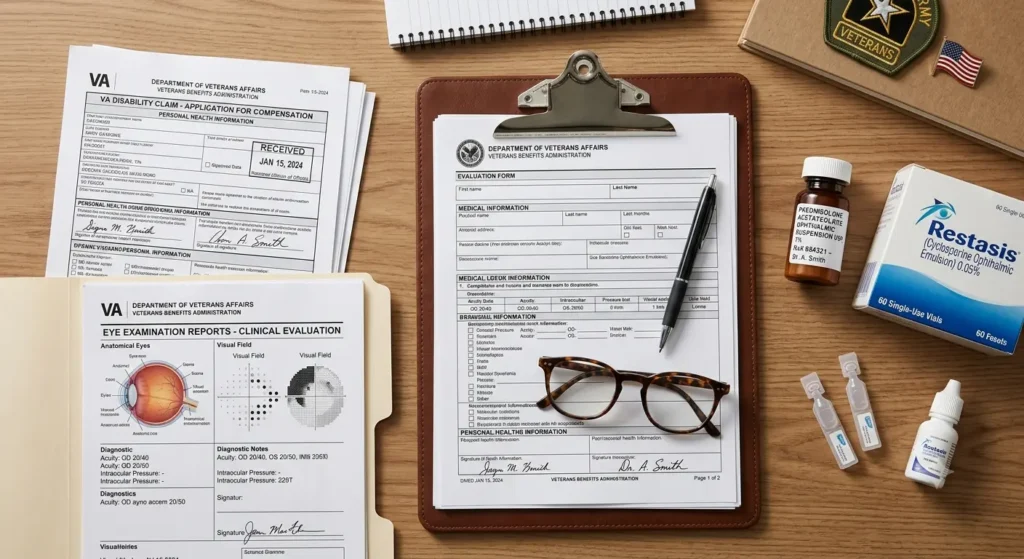
The VA rates dry eye syndrome under 38 CFR § 4.79, which covers diseases of the eye. Two main paths apply here, and both directly shape your final dry eye syndrome VA rating.
Path 1: Diagnostic Code 6025
This code covers disorders of the lacrimal apparatus, which is the medical term for your tear-producing system. It’s one of the two paths behind most dry eye syndrome VA rating decisions.
- One eye affected (unilateral): 10%
- Both eyes affected (bilateral): 20%
Path 2: The General Rating Formula for Eye Diseases
In some cases, the VA rates dry eye syndrome by counting how often you needed treatment for flare-ups over the past 12 months.
| VA Rating | Treatment Visits in Past 12 Months |
|---|---|
| 60% | 7 or more visits |
| 40% | At least 5 but fewer than 7 visits |
| 20% | At least 3 but fewer than 5 visits |
| 10% | At least 1 but fewer than 3 visits |
An incapacitating episode here means a flare-up bad enough that you needed to see a provider specifically for treatment. A routine check-up doesn’t count. Since dry eye syndrome doesn’t always have its own dedicated code, the VA frequently rates it by analogy to DC 6025.
Is Dry Eye Syndrome Considered a VA Disability?
Yes. Dry eye syndrome can be recognized as a service-connected disability, and a dry eye syndrome VA rating gets assigned once you show a connection between the condition and your time in service, whether that link is direct or secondary. It’s not automatically presumed. The burden falls on you to bring the evidence.
What works in your favor:
- It recognizes a condition that genuinely disrupts everyday comfort and function
- It can combine with other eye or systemic conditions to push your overall rating higher
- It can open the door to compensation for secondary conditions tied to dry eye complications
What works against you:
- Ratings usually sit lower than many other conditions, typically 10%–20% unless you can document frequent incapacitating episodes
- Elective LASIK or PRK done without service-related complications generally gets excluded from service connection
- You need solid, consistent medical documentation, which some veterans simply don’t have if they skipped regular treatment
How to Prove Dry Eye Syndrome for a VA Claim
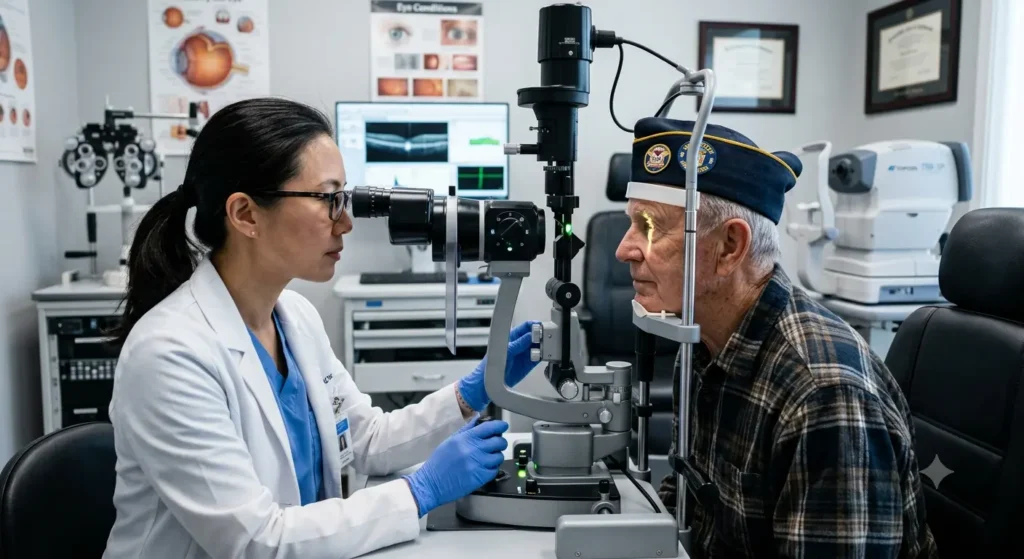
Proving service connection, and securing the dry eye syndrome VA rating you actually deserve, comes down to three things.
- A current diagnosis from an optometrist or ophthalmologist
- An in-service event or exposure — documented environmental exposure, an eye injury, or a service-connected condition that plausibly caused or worsened your dry eye
- A medical nexus — a written statement from a provider connecting your current condition to your service, or to another service-connected condition
Miss any one of these three, and your claim gets shakier.
Step-by-Step: Filing a Claim for Your Dry Eye Syndrome VA Rating
- Get diagnosed properly. Book an appointment with an eye care provider and make sure dry eye syndrome, or a related tear production disorder, ends up clearly documented in your records.
- Pull your in-service records. Search for any past documentation of eye complaints, environmental exposure, or treatment you received while on active duty.
- Request a nexus letter. Ask your treating provider if they’re willing to put a written opinion in writing that links your condition to service or to an existing service-connected disability.
- Track your treatment history. Log every clinic visit, prescription, and flare-up. Under the incapacitating episodes formula, this frequency directly shapes your rating.
- File your claim. Submit it through the VA’s online portal, by mail, or with help from a Veterans Service Organization or accredited representative.
- Prepare for the C&P exam. Don’t downplay anything. Be specific about how your symptoms interfere with reading, driving, or working.
Mistakes That Quietly Lower a Dry Eye Syndrome VA Rating
- Skipping documentation of treatment frequency. Since the general formula rates you based on visit counts, sporadic or undocumented care almost always drags your rating down.
- Ignoring secondary connections. A lot of veterans never realize dry eye syndrome can trace back to PTSD, depression, TBI, autoimmune disorders, or medications tied to other service-connected conditions.
- Assuming LASIK or PRK kills the claim automatically. Elective refractive surgery alone usually gets excluded, but complications or other contributing factors can still support a claim.
- Downplaying symptoms during the exam. Being vague about how often symptoms hit or how they affect your day gives examiners room to underrate your severity.
- Not appealing a low rating. Some veterans accept whatever number they’re handed first, without realizing they can push for a higher evaluation with more evidence.
Choosing the Right Approach for Your Dry Eye Syndrome VA Rating

- Mild, infrequent symptoms? Focus on locking down a clear diagnosis and any documented tie to service.
- A related service-connected condition, like PTSD, TBI, or an autoimmune disorder? Look into a secondary service connection claim. Veterans overlook this route constantly.
- Frequent treatment visits? Document every single one. This is exactly what supports a higher rating under the incapacitating episodes formula.
- Already denied, or your rating feels too low? Talk to a VA-accredited attorney or claims agent, especially if your case involves secondary conditions.
What Does a 70% VA Disability Get You?
Dry eye syndrome by itself rarely climbs to 70%. But this question comes up a lot because veterans are usually thinking about their combined rating across multiple conditions, not just one.
A 70% combined VA disability rating brings a noticeably higher monthly compensation than lower ratings. It can also act as a threshold that affects eligibility for other benefits, including consideration for Total Disability based on Individual Unemployability (TDIU) when combined with other factors. Compensation figures shift periodically, so check the VA’s current pay tables for exact numbers.
Frequently Asked Questions
Is dry eye syndrome a VA disability rating? Yes. A dry eye syndrome VA rating generally falls somewhere between 10% and 60%, depending on whether one eye or both eyes are affected and how often treatment is required.
What does a 70% VA disability get you? A 70% combined rating usually means a higher monthly compensation payment and may factor into eligibility for extra benefits, though dry eye syndrome on its own rarely reaches this level alone.
How do you prove dry eye syndrome for a VA claim? You generally need a current diagnosis, evidence of an in-service event or exposure (or a link to another service-connected condition), and a nexus statement tying the two together.
Is dry eye syndrome a disability? It can be recognized as a service-connected disability once you show a qualifying link between the condition and your military service, whether that connection is direct or secondary.
Can dry eye syndrome be rated for both eyes? Yes. Bilateral dry eye syndrome, meaning both eyes are affected, is generally rated higher than a single affected eye under the applicable diagnostic code.
Does LASIK or PRK during service affect a dry eye claim? Dry eye caused purely by elective refractive surgery is usually excluded from service connection. But complications or other contributing factors can sometimes still support a claim.
A Quick Note on Accuracy
This guide exists for general information only. It’s not personalized medical or legal advice, and it shouldn’t replace a real conversation with a licensed professional. Everything here reflects publicly available VA regulations and commonly reported veteran experiences, not a diagnosis or legal opinion from me or anyone else. If you’re dealing with symptoms, talk to a qualified eye care provider. If you’re building a claim, talk to a VA-accredited representative, claims agent, or attorney who can look at your specific situation.
This article was researched using guidance from the U.S. Department of Veterans Affairs, the American Academy of Ophthalmology (AAO), and peer-reviewed medical literature. It is intended for educational purposes only and is reviewed for factual accuracy before publication.
Final Thoughts
Dry eye syndrome gets underestimated constantly, but for a lot of veterans, it’s a daily grind that touches reading, driving, working, and basically every part of life that depends on comfortable vision. The VA does recognize this condition, and a dry eye syndrome VA rating gets built through the tear production disorder code or the broader eye conditions formula based on how often you need treatment.
Your claim’s strength almost always comes down to documentation. A clear diagnosis. Solid evidence tying your condition to service. Consistent treatment records that don’t leave gaps. If your current rating doesn’t match what you’re actually dealing with day to day, you have options. You can push for a higher evaluation. You can appeal a denial with new evidence. The dry eye syndrome VA rating you start with doesn’t have to be the one you’re stuck with.