

You wake up. You catch yourself in the mirror. One eye looks off — tight, puffy, maybe even a little sore. Your first thought isn’t scientific. It’s “why is my eyelid swollen, and did this just happen overnight?”
I get it. A swollen eyelid is one of those things that looks alarming way out of proportion to how serious it usually is. Most of the time, it’s nothing dangerous. Sometimes, it’s your body waving a flag that needs attention. The trick is knowing which one you’re dealing with.
I wrote this guide to walk you through exactly that. No fluff, no filler, no “in today’s fast-paced world” nonsense. Just what causes a eyelid swollen , what to do about it at home, what mistakes to skip, and when it’s genuinely time to call a doctor.
Table of Contents
So What Does “Eyelid Swollen” Actually Mean?
Your eyelid skin is thin. Thinner than almost anywhere else on your body — we’re talking less than a millimeter in places. Underneath that thin skin sits a mess of tiny oil glands, blood vessels, muscle fibers, and loose connective tissue.
Because that tissue is so loose and so thin, it doesn’t take much to make it puff up. A little extra fluid. A bit of inflammation. An allergic reaction. An infection. Any of these can turn your eyelid from flat and unremarkable into swollen and hard to ignore.
Here’s the important part: a swollen eyelid isn’t really its own condition. It’s a symptom. Your body is telling you something is happening in that tissue, and the swelling is just the visible sign of it.
A few things worth noting before we go further:
- Swelling can hit the upper lid, the lower lid, or both.
- It might show up in one eye only, or both at the same time.
- Pain — or the lack of it — tells you a lot about the cause.
- Some swelling appears within hours. Other types build slowly over days.
Whether you call it eyelid inflammation, a puffy eyelid, or just “my eye looks weird today,” you’re describing the same basic process: tissue reacting to something it doesn’t like.
Can Stress Cause Eyelid Swelling?
Yes, and more often than people realize. Here’s the chain reaction I usually see:
Stress leads to poor sleep. Poor sleep leads to more eye rubbing, since tired eyes itch and feel heavy. Eye rubbing irritates the thin eyelid skin. On top of that, stress and exhaustion both mess with how your body handles fluid, so you end up retaining more of it overnight. That fluid settles in the loosest, thinnest tissue on your face — your eyelids.
Put it together and you get puffy eyelids the next morning, with no infection or allergy in sight. The fix is boring but effective: sleep more, rub less, and manage the stress itself where you can.
The Usual Suspects Behind a Swollen Eyelid
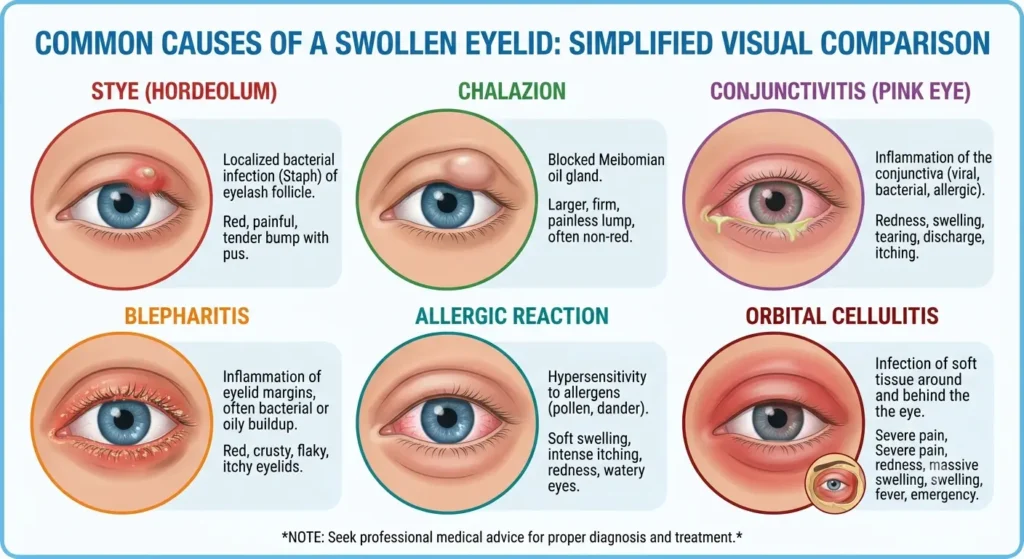
People often lump every swollen eyelid into one mental category, but the swollen eyelid causes are actually pretty distinct once you know what to look for. Here’s how the most common ones stack up against each other.
| Condition | Pain Level | One Eye or Both | Extra Clues | How Long It Lasts |
|---|---|---|---|---|
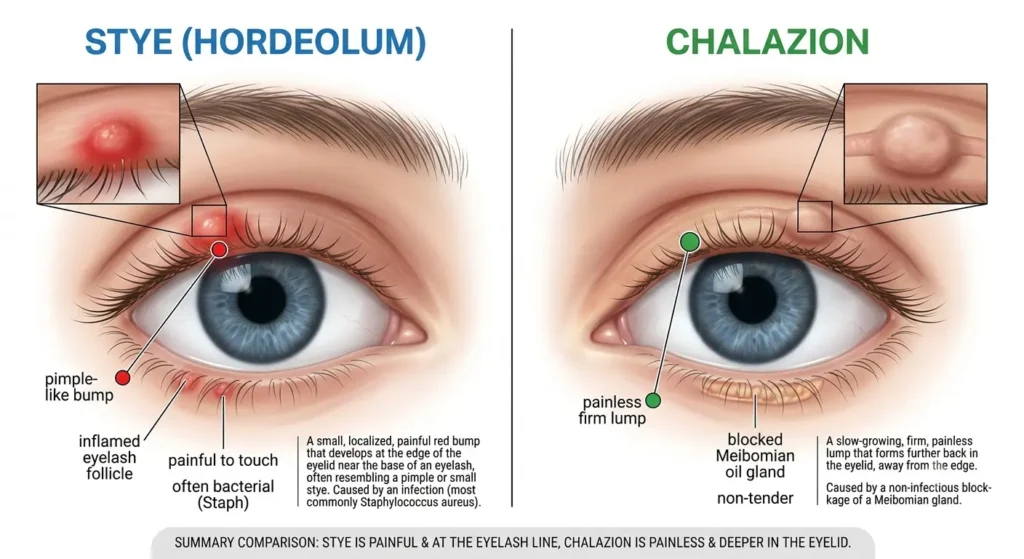
| Stye (hordeolum) | Tender, painful bump | Usually one | Small red lump near the lash line | A few days to two weeks |
| Chalazion | Usually painless | Usually one | Firm lump, appears slowly | Weeks; sometimes needs draining |
| Conjunctivitis (pink eye) | Mild irritation | Starts in one, often spreads | Redness, sticky discharge | One to three weeks |
| Blepharitis | Mild burning or itching | Usually both | Flaky, crusty lashes | Long-term, managed rather than cured |
| Allergic reaction | Itchy, not painful | Usually both | Watery eyes, sneezing | Hours to a few days |
| Orbital or periorbital cellulitis | Significant pain | Usually one | Fever, spreading redness | Needs medical treatment fast |
This table is a starting point, not a diagnosis. Symptoms overlap more than you’d think, so if you’re genuinely unsure, an eye doctor will sort it out faster than any article can.
Can a Swollen Eyelid Be Contagious?
Sometimes — but not for the reasons people usually assume. Only an actual eyelid infection can spread to someone else. Conjunctivitis is the classic example, along with some styes if bacteria transfer through shared towels or unwashed hands.
Everything else on that list stays with you. Allergies aren’t contagious. A chalazion isn’t contagious. Fluid retention definitely isn’t contagious. So if your eye is swollen and itchy but nobody else in your house is catching it, that’s actually a decent clue you’re not dealing with an infection at all.
What You Should Actually Expect
Let’s be honest instead of vague. A eyelid swollen caused by crying, poor sleep, or too much salt the night before? That usually calms down within a day. Sometimes it’s gone in a few hours once you rest and put something cool on it.
Allergy-driven swelling behaves differently. It comes and goes depending on what’s around you — pollen one day, new mascara the next. Once you remove the trigger, it settles.
Infections take longer. A stye or a case of conjunctivitis might stick around for several days, occasionally up to two weeks, and often need more than just a cold compress to clear.
Blepharitis is its own animal. It doesn’t really disappear. You manage it long-term with consistent eyelid hygiene rather than expecting a one-time fix.
One habit I’d genuinely recommend: jot down when your swelling started, whether it hurts, and whether it’s spreading. If you end up seeing a doctor, that small bit of tracking speeds up the diagnosis considerably.
Signs Worth Paying Attention To
Tracking your swollen eyelid symptoms matters more than staring at the swelling itself. Watch these details instead:
- Pain — Painless swelling usually points to fluid retention, allergies, or a chalazion. Pain usually means infection, like a stye or something more serious.
- Redness pattern — A small red patch around a bump suggests a stye or chalazion. Redness spreading across the whole lid and nearby skin is more concerning and can point toward cellulitis.
- Discharge — Watery discharge leans toward allergies or a viral infection. Thick, yellow, or sticky discharge usually means bacteria are involved. If your symptoms also include burning and excessive tearing, our guide on how to cure burning watery eyes explains the most common causes and effective treatments.
- How fast it appeared — Sudden swelling within hours often means allergies, an insect bite, or an injury. Slow swelling over days fits chalazion or chronic blepharitis better.
- Anything else going on — Fever, blurry vision, or trouble moving your eye are not “wait and see” symptoms. Those move you straight into “go get it checked” territory.
None of this replaces a real exam. But having these details ready makes any doctor’s visit faster and more useful.
Should You Actually Worry?
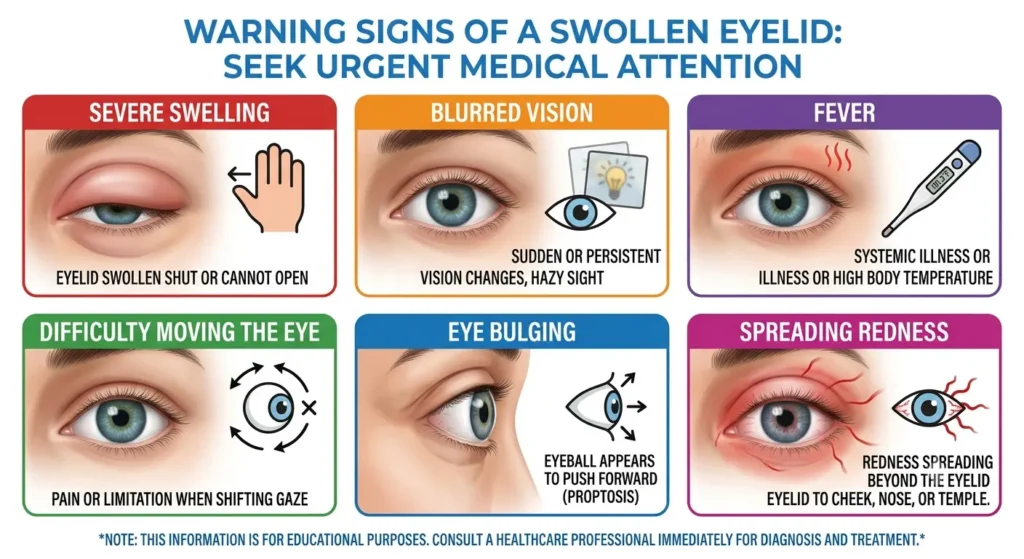
Honestly? It depends. Most swollen eyelid cases are manageable at home. A few genuinely need urgent care. Here’s how I’d break it down.
Probably fine on its own:
- Both eyes are mildly swollen after a rough night’s sleep, crying, or a salty meal.
- No pain, no fever, no vision changes.
- It’s already improving with basic home care.
Worth watching closely, maybe worth a doctor’s visit:
- There’s pain, especially with a visible bump.
- Only one eye is affected, and it’s getting worse.
- There’s discharge, crusting, or your eyelids are sticking shut in the morning.
- Nothing’s improved after 24 to 48 hours of trying home remedies.
Get medical help now:
- You’ve got fever, chills, or you just feel unwell overall.
- Your vision is blurry, doubled, or getting worse.
- If vision changes persist, an eye examination may be recommended. Learn what to expect during eye exams for floaters and other common vision concerns.
- Your eye is hard to move, or it looks like it’s bulging.
- The pain is severe, especially if it feels like it’s behind the eye.
Use this as a rough compass, not a diagnosis. If something feels seriously wrong, don’t wait around for an article to confirm it.
What Actually Helps at Home
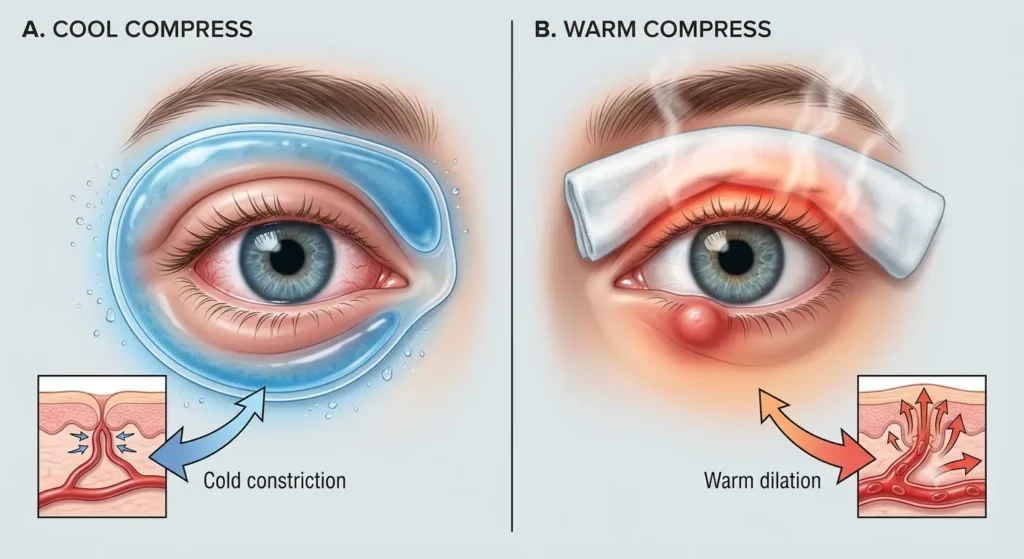
The right eyelid swollen treatment always starts with figuring out the cause. If your case looks mild and non-urgent, here’s where I’d start.
- Skip the contacts and eye makeup for now. Both irritate inflamed tissue, and makeup in particular can trap bacteria right where you don’t want it.
- Try a cool, clean compress. Soak a soft washcloth in cool water, wring it out, and hold it gently against your closed eye for 10 to 15 minutes. Cold beats heat for puffiness and fluid-related swelling.
- Switch to warm if you suspect a stye or chalazion. Warmth loosens blocked oil glands. Use a clean, warm — not hot — washcloth, several times a day.
- Prop your head up while sleeping. An extra pillow reduces the amount of fluid that pools around your eyes overnight.
- Rinse gently with saline if there’s discharge. Use a fresh cotton pad for each eye so you don’t spread anything between them.
- Consider an antihistamine for allergy-driven swelling. Check with a pharmacist first if you’re unsure what’s safe for you.
- Keep your hands off it. Rubbing or touching a swollen eyelid is one of the fastest ways to make things worse.
Mistakes I See People Make Constantly

- Using heat on everything. Heat helps a stye. It can make fluid- or allergy-related swelling worse. Match the treatment to the cause.
- Wearing makeup or contacts through it. This just extends the irritation and adds more bacteria to an already unhappy area.
- Popping a stye or chalazion. I know the urge is real. Resist it. Squeezing usually spreads infection instead of clearing it.
- Ignoring worsening one-sided swelling. People assume it’ll fade on its own. Sometimes it does. When it doesn’t, waiting only makes treatment harder later.
- Sharing towels or pillowcases during an active infection. Conjunctivitis spreads this way more easily than people expect.
- Riding out warning signs too long. Fever, vision changes, and severe pain are not things to sit on for days.
How to Pick the Right First Step
- Both eyes, itchy, no pain? Likely allergies. Start with a cool compress and consider an antihistamine.
- One eye, small tender bump near the lash line? Sounds like a stye. Warm compress, a few times a day, is your first move.
- Painless lump that grew slowly? Could be a chalazion. Warm compresses help, though stubborn ones sometimes need an in-office procedure.
- Redness, discharge, lids sticking together? That pattern fits conjunctivitis. Hygiene and avoiding contact with others matters here.
- Chronic flaking or itching along the lash line? That’s blepharitis territory, usually managed with regular lid scrubs.
If you’re shopping for lid scrubs, artificial tears, or a cold compress mask, go preservative-free if you’ll be using them often. A pharmacist can point you toward the right one for your specific symptoms.
Frequently Asked Questions
How do you treat a swollen eyelid? It depends on the cause. Mild, non-infectious swelling usually responds to a cool compress, skipping makeup and contacts, and sleeping with your head elevated. If you suspect a stye or infection, switch to a warm compress, and see a doctor if it doesn’t improve or seems to be getting worse.
What does it mean if only one eyelid is swollen? One-sided swelling usually points to something localized — a stye, a chalazion, a bug bite, or a minor injury — rather than something systemic like allergies, which typically hit both eyes. If a single swollen eyelid is painful, spreading, or paired with fever, get it looked at.
How do I get rid of swelling on my upper eyelid? For general puffiness, a cool compress for 10 to 15 minutes, avoiding rubbing, and elevating your head at night usually helps. If a blocked oil gland is behind it, a warm compress works better. Since the cause drives the treatment, ongoing swelling deserves a proper look.
How long will an inflamed eyelid last? It varies. Fluid-related swelling often clears within a day. Allergy swelling comes and goes with exposure. Infections like styes or conjunctivitis can take anywhere from a few days to two weeks. Blepharitis isn’t cured so much as managed, ongoing, through eyelid hygiene.
Is heat or cold better for a swollen eyelid? Cold works better for puffiness from fluid retention, allergies, or minor irritation. Heat works better for styes and blocked glands, since warmth loosens whatever’s trapped inside.
When should I see a doctor for a swollen eyelid? See one if the swelling is severe, doesn’t improve within 24 to 48 hours, comes with fever or vision changes, is limited to one eye and getting worse, or involves real pain — especially pain that feels like it’s behind the eye.
A Quick Note on This Guide
I put this together using widely accepted, publicly available health information about eyelid swollen and what typically causes them. I’m not a licensed doctor, and this isn’t a substitute for an actual eye exam. If your symptoms are severe, ongoing, or come with red flags like fever or vision changes, talk to an eye care provider directly. Don’t use this as your only source for a serious or unresolved issue.
Wrapping Up
A eyelid swollen can mean almost nothing — a rough night, a good cry, too much salt at dinner — or it can mean something that needs real treatment, like a style, conjunctivitis, or blepharitis. Most of the time, simple home care handles it: a cool or warm compress, skipping makeup for a few days, and a little patience.
But pay attention to the pattern. One eye swelling and getting worse, real pain, fever, or anything affecting your vision — those are your cue to stop treating it yourself and get an actual diagnosis. Track how it behaves over a day or two, and you’ll know exactly which path to take.