

My eyes used to burn every afternoon like clockwork. I’d rub them, blink hard, and somehow they’d start watering right after — as if my body couldn’t decide whether it wanted more moisture or less. Sound familiar? If you’ve typed “how to cure burning watery eyes” into a search bar at 11 PM, I get it. You want an answer that works, not a wall of medical jargon.
Here’s the honest truth: there’s no single fix. Burning and watery eyes happen for a dozen different reasons, and the right treatment depends entirely on what’s triggering yours. I’ve put together everything I’ve learned — causes, remedies, mistakes to avoid, and when it’s time to stop guessing and see a doctor.
Table of Contents
What’s Actually Happening When Your Eyes Burn and Water
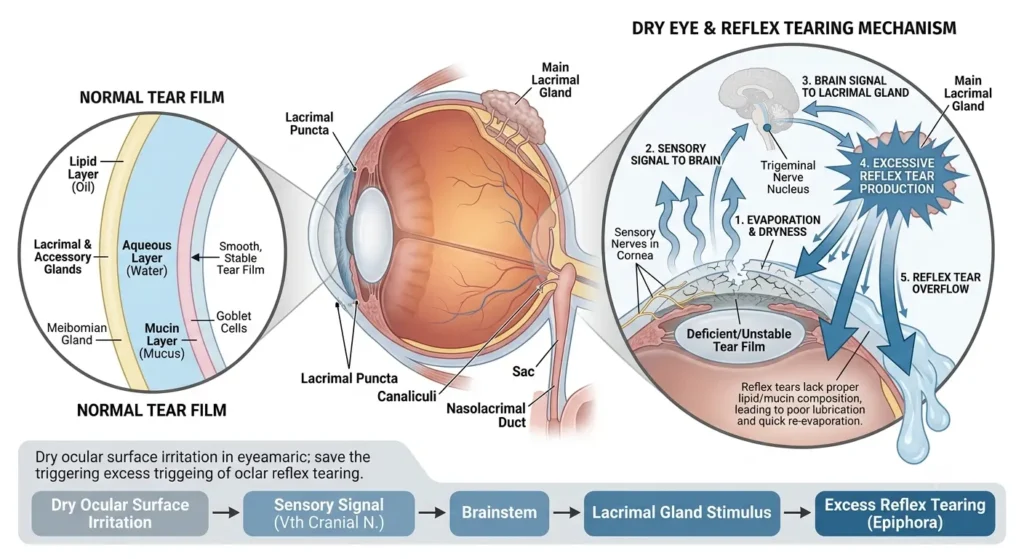
Burning watery eyes aren’t one condition. They’re two symptoms that show up together more often than you’d expect:
- A stinging, burning, or irritated feeling in one or both eyes
- Tears that won’t stop, sometimes for no obvious reason
It sounds contradictory. Burning usually means dryness, right? Not always. When your eyes get irritated — from dust, dry air, screens, whatever — they panic a little and flood themselves with tears. Those reflex tears are watery and thin. They don’t have the oils and proteins your eyes need to actually feel comfortable. So you end up with eyes that are both burning and dripping. Annoying, I know.
This combo can hit suddenly, like after walking through smoke, or build up slowly over weeks if something like dry eye syndrome is quietly getting worse.
Other symptoms that often tag along:
- Redness
- Itching
- Eye fatigue by mid-afternoon
- Light sensitivity
- Blurry vision that clears when you blink
- A gritty, sandy feeling
- Puffy eyelids
Burning and watery eyes often occur alongside other common eye symptoms, such as eye twitching, redness, or temporary blurred vision.
Why Do Eyes Burn and Water in the First Place?
Your eyes depend on a thin layer of tears — the tear film — every single time you blink. That film keeps the surface moist, flushes out debris, and blocks infection. Mess with that balance even slightly, and irritation follows fast.
Once irritation sets in, your eyes often overcorrect by making more tears. It’s protective, but it’s not efficient. This is why so many people insist “my eyes are watering, they can’t be dry” — and they’re wrong more often than they’d think.
The Most Common Causes (And How to Spot Them)
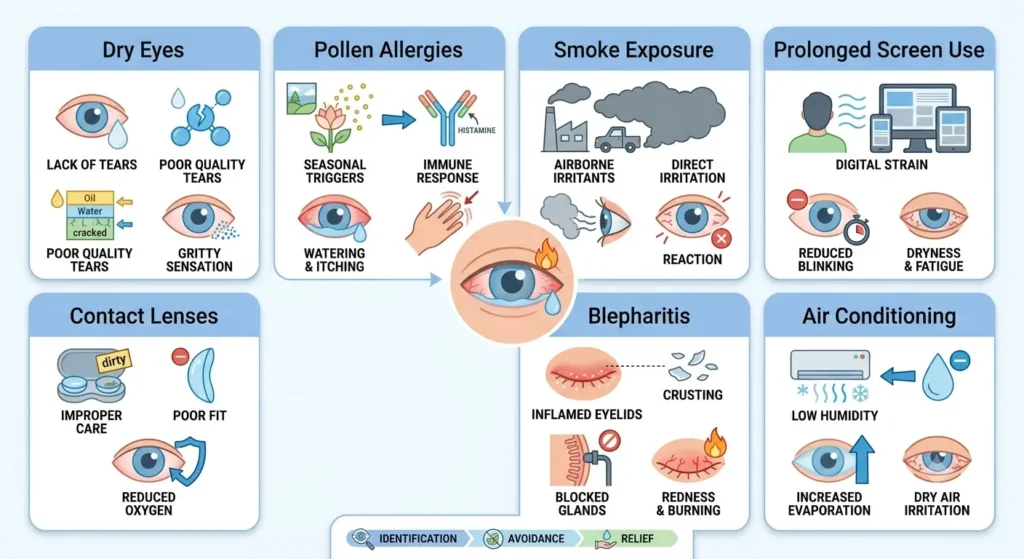
1. Dry Eye Syndrome
This is the big one. Dry eye happens when you’re not producing enough tears, your tears evaporate too fast, or the oil-water-mucus mix in your tear film is off balance. Despite the name, dry eye is one of the top reasons people get watery eyes. Look for burning, a scratchy feeling, blurry vision after reading, and symptoms that get worse as the day goes on.
2. Eye Allergies
Pollen, dust mites, pet dander, mold, grass, smoke — your immune system treats these like invaders and releases histamine. That triggers burning, intense itching, redness, watering, and puffy lids. One clue that separates allergies from an infection: allergy discharge is clear and watery, not thick.
3. Environmental Irritants
Smoke, pollution, chlorine, strong perfume, cleaning sprays, wind, sand — your eyes react to all of it. Usually the burning fades once you’re away from the source.
4. Digital Eye Strain
You blink less when you’re staring at a screen. Way less. Fewer blinks means your tears evaporate faster, and that leads straight to burning, dryness, and eventually watering as your eyes try to compensate. If your eyes feel worse by 3 PM at your desk, this is probably a big part of your story.
5. Blepharitis
This is inflammation along your eyelid edges, often from blocked oil glands, bacteria, or just not cleaning your lids well. You’ll notice crusty lashes in the morning, red lid margins, and burning that’s worse right after waking up.
6. Pink Eye (Conjunctivitis)
Viral, bacterial, or allergic — conjunctivitis inflames the clear tissue covering the white of your eye. Redness, burning, watering, and often crusting or discharge show up together. Bacterial pink eye tends to bring thicker, colored discharge.
7. Contact Lens Irritation
Wearing lenses too long, sleeping in the wrong type, letting protein build up, or just not cleaning them properly — all of this irritates the eye surface. Burning, redness, and blurry vision usually follow.
8. Low Humidity and Dry Air
Heaters, air conditioners, dry winter air — they all pull moisture out of the environment, and your eyes pay the price. Tears evaporate faster, and burning plus watering shows up, especially in winter.
9. Sun and UV Exposure
Too much UV light — from bright sun, snow glare, or unprotected welding — can actually damage the eye’s surface temporarily. Symptoms sometimes don’t show up for hours, then hit as burning, watering, and painful light sensitivity.
10. Underlying Medical Conditions
Ocular rosacea, Sjögren’s syndrome, autoimmune disorders, and certain viral infections can all cause chronic burning watery eyes. These need a proper eye exam, not a home remedy.
Quick Comparison: Is It Dry Eyes, Allergies, or Something Else?
| Condition | Burning | Watering | Itching | Thick Discharge | Typical Cause |
|---|---|---|---|---|---|
| Burning Watery Eyes | Yes | Yes | Sometimes | Usually no | Many possible causes |
| Dry Eye Syndrome | Yes | Sometimes | Mild | No | Poor tear quality |
| Eye Allergies | Mild to severe | Yes | Very common | No | Allergens |
| Pink Eye | Mild | Yes | Sometimes | Often yes | Viral or bacterial infection |
| Blepharitis | Yes | Mild | Mild | Crusting | Inflamed eyelids |
| Digital Eye Strain | Yes | Sometimes | Rare | No | Prolonged screen use |
Symptoms overlap enough that guessing isn’t reliable if things don’t improve on their own.
How It Feels — And When It Tends to Show Up
People describe it in all sorts of ways: a sharp sting, shampoo-in-the-eyes discomfort, a gritty sandy feeling, or tears that won’t stop even though the eyes feel dry underneath. Some notice the burning first, then the watering follows. Others feel it happen almost together.
It tends to flare during:
- Long computer or phone sessions
- High-pollen days outdoors
- Exposure to smoke, dust, or chemical fumes
- Swimming without goggles
- Time in dry, heated, or air-conditioned rooms
- Extended contact lens wear
- Poor sleep
- Windy or overly bright days
Notice the pattern in your own life. It’s the fastest way to figure out your actual trigger.
How to Cure Burning Watery Eyes: A Practical Step-by-Step Approach

Here’s where most guides get it backwards. Treating the symptom without figuring out the cause is like mopping the floor while the tap’s still running. Fix the source, and relief tends to stick.
Step 1: Figure Out What’s Triggering It
Ask yourself a few honest questions. Did this start after time outdoors? New makeup or skincare? Hours at your laptop? Does it flare during allergy season? Do you wear contacts? Is there thick yellow or green discharge? Your answers point you toward the right fix.
Step 2: Use Artificial Tears
This is usually my first move, and it works for a huge chunk of cases. Lubricating drops add moisture, rinse out irritants, and calm burning fast. Go for preservative-free versions if you’re using them often — they’re gentler on sensitive eyes. Skip the redness-relief drops for daily use, though. Overuse can cause rebound redness, which just traps you in a worse cycle.
Preservative-free Artificial tears can help lubricate the eye surface and reduce irritation
Step 3: Try a Cold Compress
Great for allergy flare-ups or general irritation. Wash your hands, soak a clean cloth in cool water, wring it out, and hold it over closed eyes for 10 to 15 minutes. Repeat as needed. It calms burning, puffiness, itching, and redness surprisingly well.
Step 4: Switch to a Warm Compress When It’s Blepharitis
If crusty lashes and inflamed lid edges are your issue, warmth works better than cold. It loosens debris and helps your oil glands function properly again. Use a warm — not hot — cloth over closed lids for 5 to 10 minutes, then gently clean the lid margins if your eye doctor has shown you how.
Step 5: Cut Down Irritant Exposure
Smoke, pollution, dust, wind, cleaning chemicals, strong perfume, chlorine — limiting contact with these makes a real difference. Sunglasses outdoors and better indoor ventilation go a long way.
Step 6: Manage Allergies Directly
Keep windows shut on high-pollen days. Wash your hands after being outside. Shower before bed during allergy season. Wash pillowcases often. Consider an air purifier. Sunglasses help here too. Depending on severity, an antihistamine eye drop from your doctor may be worth discussing.
Step 7: Fix Your Screen Habits

Try the 20-20-20 rule: every 20 minutes, look at something 20 feet away for 20 seconds. Blink deliberately — most people blink half as often while staring at screens. Lower your monitor slightly below eye level, cut glare, and take real breaks.
Step 8: Improve Indoor Humidity
Run a humidifier, especially in winter. Avoid sitting directly under a fan or AC vent. Drink enough water throughout the day. Small changes here reduce tear evaporation more than people expect.
Best Home Remedies at a Glance
| Home Remedy | How It Helps | Best For |
|---|---|---|
| Artificial tears | Lubricates the eye surface | Dry eyes |
| Cold compress | Cuts swelling and burning | Allergies, irritation |
| Warm compress | Supports healthy eyelids | Blepharitis |
| Humidifier | Adds moisture to indoor air | Dry environments |
| Proper hydration | Supports natural tear production | Mild dryness |
| Screen breaks | Reduces tear evaporation | Digital eye strain |
Nutrition That Supports Eye Comfort
Food won’t cure irritated eyes on its own, but it genuinely helps your body maintain a healthier tear film over time.
| Nutrient | Food Sources | Why It Matters |
|---|---|---|
| Vitamin A | Carrots, sweet potatoes, spinach | Supports the eye surface |
| Omega-3s | Salmon, sardines, walnuts, flaxseed | Improves tear quality |
| Vitamin C | Citrus fruits, strawberries, bell peppers | Antioxidant support |
| Vitamin E | Almonds, sunflower seeds | Protects eye tissue |
| Zinc | Beans, seafood, lean meats | Supports normal eye function |
A varied diet full of fruits, vegetables, healthy fats, and lean protein pays off for your eyes just like it does for everything else.
When Home Care Isn’t Enough
Mild, short-lived symptoms tied to allergies or dry air usually respond well to self-care within a day or two. But some situations need a doctor, not a compress.
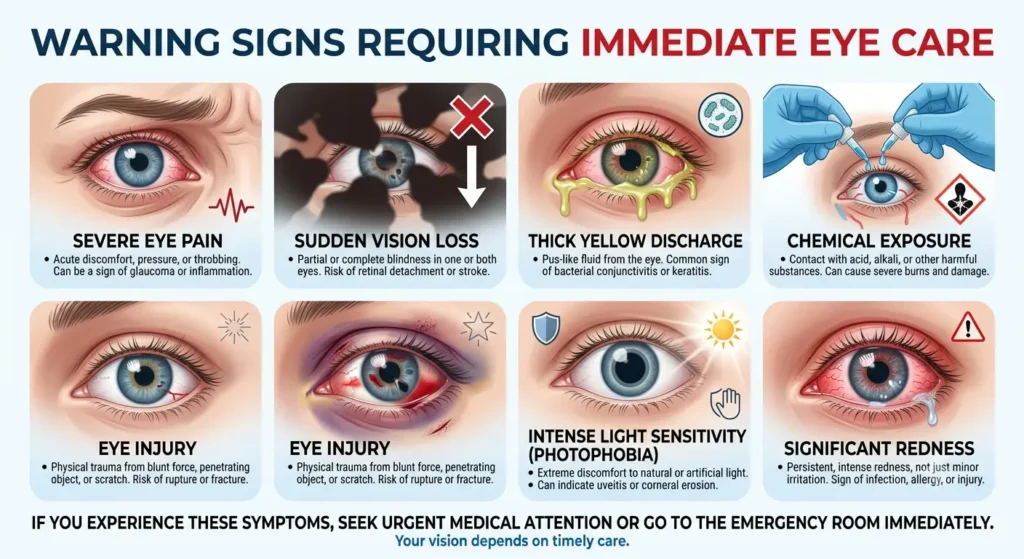
Get medical care right away if you notice:
- Sudden vision loss
- Severe eye pain
- Chemical exposure to the eye
- An eye injury
- Thick yellow or green discharge
- Intense light sensitivity
- Fever along with eye symptoms
- A rash near the eye
- Symptoms that keep going despite home treatment
- One eye much worse than the other
None of these are “wait it out” situations. Get seen.
If symptoms persist or worsen, it’s important to know When to see an eye doctor for a proper evaluation.
Mistakes That Make Things Worse
Rubbing your eyes. It feels good for two seconds, then spreads allergens, increases inflammation, and can introduce bacteria. Use a cold compress instead.
Overusing redness-relief drops. They mask the problem and can cause rebound redness with regular use. Find the cause instead of hiding it.
Ignoring dry eye because your eyes are watering. This trips up almost everyone. Watery eyes are frequently a dry-eye symptom in disguise.
Wearing contacts too long. Stick to recommended wear times, cleaning routines, and replacement schedules. If your eyes get red or painful in lenses, take them out.
Borrowing someone else’s eye drops. Eye medications target specific problems. Using the wrong one can delay treatment or introduce bacteria.
Waiting too long to get checked. Dry eye disease, blepharitis, allergic conjunctivitis, infections, and even autoimmune conditions respond much better to early treatment.
Matching Treatment to Cause
| Likely Cause | What Tends to Help |
|---|---|
| Dry eyes | Artificial tears, humidifier, screen breaks |
| Allergies | Avoiding allergens, allergy drops, cold compress |
| Blepharitis | Warm compresses, eyelid hygiene |
| Screen fatigue | 20-20-20 rule, deliberate blinking |
| Environmental irritation | Removing the irritant, rinsing, lubricating drops |
| Contact lens irritation | Removing lenses, proper lens care |
If you genuinely don’t know what’s causing it, or symptoms drag on past a few days, book an eye exam. Guessing wastes time your eyes don’t need to lose.
Daily Habits That Keep This From Coming Back
- Blink often, especially during screen time
- Wear UV-protective sunglasses outdoors
- Wash your hands before touching your eyes
- Take off eye makeup before bed
- Replace old eye makeup on schedule
- Stay hydrated
- Get enough sleep
- Clean contact lenses the right way, every time
- Keep indoor air humid if your space runs dry
- Book regular eye exams, especially if you wear contacts or deal with recurring irritation
None of this is glamorous. It’s just consistent, and consistency is what actually prevents flare-ups.
Frequently Asked Questions
How can I stop my eyes from watering and burning? Find the trigger first. For most people, preservative-free artificial tears, avoiding allergens, taking screen breaks, and using the right compress bring real relief. If it drags on for days or comes with pain or vision changes, get an eye exam.
What illness starts with burning eyes? Several conditions can start this way — dry eye disease, allergic conjunctivitis, viral or bacterial pink eye, blepharitis, ocular rosacea, Sjögren’s syndrome, and photokeratitis from UV exposure. Burning alone doesn’t tell you which one, since the symptom overlaps across all of them.
What’s the fastest way to heal irritated eyes? Preservative-free artificial tears, a cold compress, removing contact lenses if they’re the culprit, resting your eyes, and rinsing with clean water or saline after dust exposure. If it follows a chemical splash, injury, severe pain, or vision loss, skip the home remedies and get help immediately.
What’s the best home remedy for eyes? There isn’t one universal answer — it depends on your cause. Artificial tears for dryness, cold compress for allergies, warm compress for blepharitis, a humidifier for dry air, good hydration, and the 20-20-20 rule for screen fatigue. These are meant for mild, temporary symptoms, not ongoing problems.
Can dehydration cause burning watery eyes? Yes, it can play a role. Dehydration can reduce normal tear production, and when your eyes dry out, they often respond with excess reflex tearing — burning and watering together. Staying hydrated helps, though it’s rarely the only factor at play.
Are burning watery eyes a sign of allergies? Often, yes. Allergies are one of the most common causes, especially with itching, redness, and clear watery discharge during pollen season. But similar symptoms show up with dry eyes, infections, and irritants too, so persistent cases deserve a proper look.
Can screen time cause burning watery eyes? Definitely. Staring at screens cuts your blink rate, which speeds up tear evaporation and leads to burning, dryness, fatigue, and reflex watering. Regular breaks and conscious blinking usually help within days.
Should I see a doctor for burning watery eyes? Yes, if symptoms last more than a few days, home care isn’t helping, you develop severe pain, your vision changes, light sensitivity gets intense, discharge turns thick and colored, or you’ve had an injury or chemical exposure. Don’t wait these out.
Quick Reference Summary
| Common Cause | Symptoms | What Helps |
|---|---|---|
| Dry eye syndrome | Burning, dryness, watering | Artificial tears, humidifier, screen breaks |
| Eye allergies | Itching, burning, watery eyes | Cold compress, allergy management, avoiding triggers |
| Digital eye strain | Burning, tired eyes, blurred vision | 20-20-20 rule, deliberate blinking |
| Blepharitis | Burning, crusty eyelids | Warm compress, eyelid hygiene |
| Environmental irritants | Stinging, redness, watering | Remove irritant, rinse eyes, lubricating drops |
| Contact lens irritation | Burning, redness, discomfort | Remove lenses, proper lens care |
Who This Is For
I wrote this for adults trying to understand why their eyes burn and water, and for anyone helping a parent, partner, or kid deal with mild eye irritation. It’s meant to inform, not diagnose. Because so many eye conditions share the same symptoms, a real diagnosis usually needs an actual eye exam, not a search engine.
A Note on Accuracy
This article draws on widely accepted eye care knowledge and clinical guidance available at the time of writing. I’ve tried to keep it balanced, clear, and genuinely useful — but eye symptoms have a lot of possible causes, and what works for one person won’t always work for another. This isn’t a diagnosis or a prescription. If your symptoms are severe, persistent, or paired with vision changes, please see an eye care professional soon.
Final Thoughts
If you came here searching for how to cure burning watery eyes, here’s the short version: figure out the trigger first, then treat that — not just the symptom. Dry eyes, allergies, screen strain, irritants, eyelid inflammation, infections — each one calls for a slightly different fix, and most of them respond well once you match the treatment to the cause.
Artificial tears, the right compress, cutting back on irritants, staying hydrated, and better screen habits solve the majority of mild cases. But don’t tough out symptoms that keep getting worse. Eye pain, vision changes, thick discharge, or anything lasting more than a few days deserves a real exam.
Your eyes do a lot of work every single day. Taking them seriously now is a lot easier than dealing with a bigger problem later.