
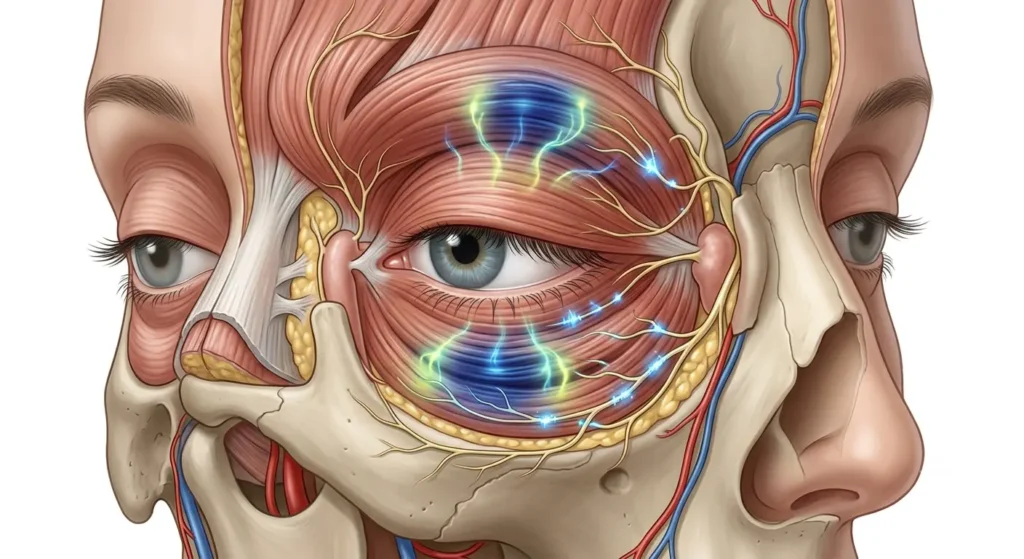
You’re mid-sentence, scrolling your phone, or just sitting quietly, and suddenly your right eyelid starts jumping. It’s not painful. It’s just… annoying. And a little unsettling, if I’m honest.
I get why you searched “why do my right eye twitch.” It’s one of those small body glitches that feels bigger than it is, mostly because it’s happening somewhere you can’t ignore — your face.
Here’s the short answer: it’s almost always harmless. It’s usually a muscle spasm caused by stress, tiredness, too much screen time, or too much coffee. Rarely, it points to something that needs a doctor’s attention. I’ll walk you through both sides so you know exactly where you stand.
Table of Contents
What’s Actually Happening When Your Eyelid Twitches
Doctors call this eyelid myokymia. Say that three times fast — or don’t, it doesn’t matter. What matters is what it means: small, repeated contractions of the muscle around your eyelid, happening without you asking them to.
Your eyelid muscles get their marching orders from nerves. When those nerves get irritated, tired, or overstimulated, they misfire a little. The result is that fluttering feeling you know too well.
A few things worth knowing right away:
- It’s usually only one eye at a time.
- It doesn’t hurt.
- It won’t damage your eyesight.
- It often clears up completely on its own.
- It tends to come back when you’re run down or stressed.
And no, the right eye isn’t special. Twitching happens on the left just as often. There’s no hidden meaning in which side jumps.
Right Eye Twitch vs. Other Eyelid Problems
Not all eyelid movement is created equal. A light flutter is one thing. Forceful, uncontrollable blinking is another. Here’s how to tell them apart.
| Condition | What It Feels Like | Severity | Needs a Doctor? |
|---|---|---|---|
| Eyelid Myokymia | Light flutter or twitch | Usually mild | Usually not |
| Benign Essential Blepharospasm | Frequent forceful blinking or eyelid clamping shut | Moderate to severe | Yes |
| Hemifacial Spasm | Twitching spreads across one side of the face | Can persist | Yes |
| Dry Eye Syndrome | Burning, irritation, occasional twitching | Mild to moderate | Sometimes |
| Eye Strain | Tired eyes, headaches, blurry vision | Usually temporary | Rarely |
| Neurological Issues | Twitching plus facial weakness or numbness | Potentially serious | Immediate |
If you’re dealing with a simple flutter and nothing else, you’re almost certainly looking at plain old myokymia. Keep reading.
What the Twitch Actually Feels Like
Ask ten people to describe an eye twitch and you’ll get ten slightly different answers. Common ones include:
- A flutter just under the skin
- Small pulses, like a tiny heartbeat in your eyelid
- A gentle tugging sensation
- Blinking you can’t control
- A faint buzzing or vibration
It might fire every few seconds. It might vanish for an hour, then come back the moment you sit down to relax. Funny thing — a lot of people notice their own twitch is invisible to everyone else. You feel it. Nobody around you sees it.
Twitching tends to show up during specific situations: long computer sessions, marathon reading, long drives, exam week, deadline crunches, emotional stress, or a string of bad nights’ sleep. Notice a theme? Fatigue and overuse are the common threads.
Why Do My Right Eye Twitch? The Real Causes
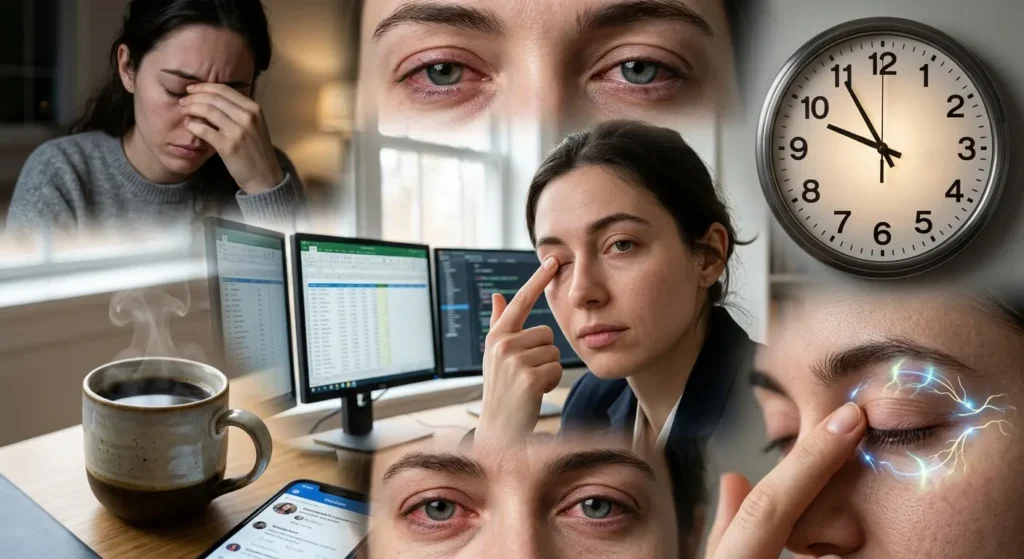
Most of the time, more than one of these is stacking up at once. Let’s go through them.
1. Stress
This is the big one. Stress revs up your nervous system, and an overactive nervous system makes muscles — including the tiny ones around your eyes — twitchier than usual.
Work deadlines, money worries, family pressure, big life changes — any of these can set it off. The good news? Once stress eases, most people notice the twitch fades right along with it.
2. Not Enough Sleep
Sleep is repair time for your nervous system. Skimp on it night after night, and your eyelid muscles get more sensitive to random misfires. Poor sleep also raises stress hormones, which just piles onto the problem. Aim for real, consistent rest — your eyes will thank you.
3. Too Much Screen Time
We blink less when we stare at screens. Less blinking means drier, more tired eyes, and that combination is a classic trigger for twitching. If your job glues you to a monitor all day, this is worth looking at first.
4. Too Much Caffeine
Coffee, energy drinks, strong tea — caffeine revs up your nervous system too. Most people handle it fine. Some don’t, and their eyelids let them know. If your twitch showed up around the same time you upped your coffee intake, that’s not a coincidence worth ignoring.
5. General Eye Fatigue
Small print, detailed handwork, long drives, dim lighting — anything that makes your eyes work overtime can leave the surrounding muscles tired and twitchy.
6. Dry Eyes
When your eyes don’t have enough tears coating the surface, irritation sets in, and that irritation can trigger the eyelid muscles. Dry eyes get worse with age, air conditioning, wind, heavy screen use, contact lenses, and certain medications. Watch for burning, stinging, grittiness, or ironically, watery eyes — that’s your eye overcompensating for dryness.
7. Allergies
Itchy eyes lead to eye rubbing, and eye rubbing irritates the eyelid. Add in allergy-related inflammation, and you’ve got a recipe for twitching. Treat the allergy, and the twitch often follows suit.
8. Alcohol and Nicotine
Both can rattle your nervous system in ways that make muscles more irritable, eyelids included. If you drink or smoke and the twitching is frequent, cutting back is worth testing.
9. Nutrition
People ask a lot about magnesium deficiency and eye twitching. The honest answer: the science here is mixed. Low magnesium gets mentioned as a possible factor, but it’s not proven to be a major cause. Eat well, stay balanced, and don’t jump straight to supplements without talking to a doctor first.
10. Underlying Eye or Medical Conditions
Less commonly, ongoing twitching links to things like blepharitis, chronic dry eye disease, benign essential blepharospasm, hemifacial spasm, corneal irritation, or medication side effects. Very rarely, twitching paired with facial weakness, numbness, slurred speech, or double vision signals a neurological issue that needs urgent care. I’ll cover exactly when to worry further down.
How Long Does It Usually Last?
This varies. Some twitches last a few seconds and disappear forever. Others come and go for days, especially during a stressful week. Occasional, short-lived twitching is normal and nothing to lose sleep over.
If it’s been going on for weeks, or it’s getting more frequent instead of less, that’s your cue to get it checked.
Is It a Bad Sign, or Nothing at All?
Most of the time, an eye twitch isn’t good or bad — it’s just noise from an overworked nervous system. Once you address whatever’s triggering it, sleep, stress, screens, caffeine, it typically settles down on its own.
If anything, treat it as a nudge. Your body’s way of saying: sleep more, drink more water, take a screen break, chill out a little. Not a diagnosis. Just a nudge.
How Do I Stop My Eye From Twitching?

There’s no magic switch, but these steps genuinely help most people:
Sleep properly. Keep a consistent bedtime. Cut screens before bed. Make your room quiet and dark.
Cut screen time. Try the 20-20-20 rule: every 20 minutes, look at something 20 feet away for 20 seconds. It sounds too simple to work. It works.The American Optometric Association also recommends healthy screen habits to reduce digital eye strain.
Watch your caffeine. You don’t have to quit coffee. Just notice if the twitching lines up with heavier caffeine days, and dial it back if it does.
Manage stress. Walks, breathing exercises, stretching, music, actual breaks during your workday — pick whatever fits your life and use it consistently.
Treat dry eyes. Blink more on purpose during screen time. Try a humidifier. Wear sunglasses on windy days. Ask an eye doctor about artificial tears if things feel persistently dry.
Eat well and hydrate. A balanced diet supports normal muscle and nerve function. Water matters more than people think — mild dehydration alone can leave muscles jumpy and tired.
A Simple Routine to Try Tonight
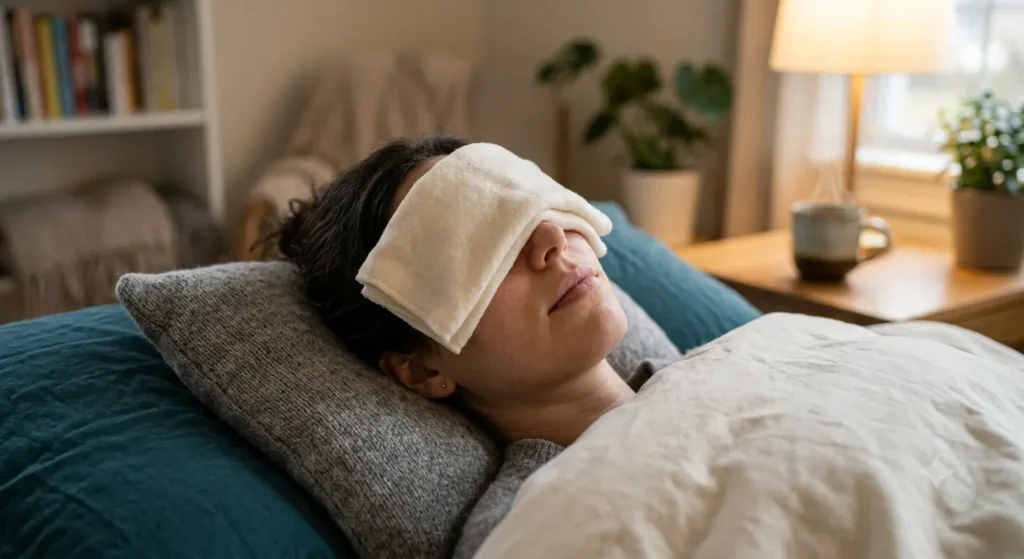
- Rest your eyes. Close them for a few minutes after a long stretch of reading or screen work.
- Warm compress. A clean, warm cloth over closed eyes for a few minutes feels genuinely soothing.
- Fix your setup. Brighten dim rooms, adjust screen brightness, sit at a sensible distance, enlarge tiny text.
- Take real breaks. Short, frequent breaks beat waiting until your eyes are exhausted.
- Track the pattern. Is it improving? Happening less? Any new symptoms? This helps a doctor if you need one later.
Mistakes That Make It Worse
I see the same handful of mistakes over and over:
Pushing through exhaustion instead of sleeping. Reaching for more coffee to fight tiredness, which can backfire. Rubbing your eye constantly when it’s itchy or dry, which just adds irritation. Working through screen time for hours without blinking normally. Assuming every twitch means a rare disease (it almost never does). And ignoring a twitch that’s dragged on for weeks, which is the one mistake that actually matters.
When You Should Actually See a Doctor
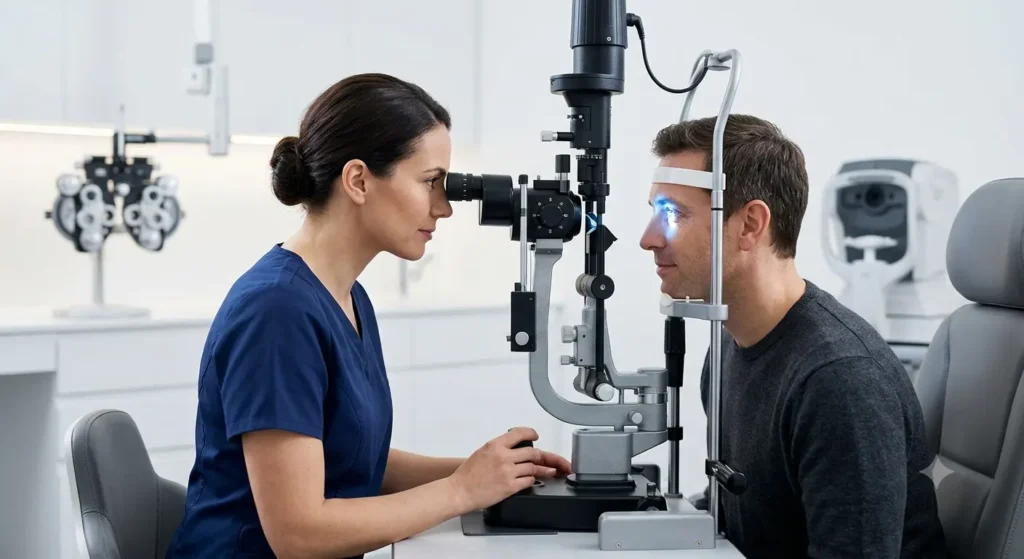
Book an appointment if:
- The twitch has lasted more than one to two weeks
- Your eyelid fully closes during each spasm
- It’s spreading to your cheek, mouth, or other facial muscles
- Your eye is red, swollen, or has discharge
- Your vision blurs or doubles
- The eyelid starts drooping
- It’s interfering with work, driving, or daily life
Get medical care immediately if you notice sudden facial weakness, trouble speaking, a severe headache with vision changes, vision loss, confusion, numbness, or twitching that follows an eye injury. These are rare. But they’re not something to wait out.
Frequently Asked Questions
How do I stop my eye from twitching? Start by finding the trigger. Sleep 7–9 hours, cut back on caffeine if it’s excessive, take screen breaks with the 20-20-20 rule, manage stress, stay hydrated, and avoid rubbing your eye. Most mild twitches clear up within days. If it drags on for weeks, see an eye doctor.
What deficiency causes eye twitching? Low magnesium sometimes gets blamed, but the evidence isn’t strong enough to call it a proven, common cause. Eat a varied diet, stay hydrated, and talk to a doctor before assuming a deficiency is behind it. Stress, poor sleep, and screen fatigue are far more common culprits.
Should I worry about eye twitching? Usually not. Occasional twitching tied to stress, tiredness, screens, or caffeine is normal and self-resolving. Worry, and get checked, if it lasts over two weeks, closes your eyelid completely, spreads to your face, or comes with vision changes, swelling, or facial numbness.
What does eye twitching symbolize? Different cultures attach meanings to it — good luck, bad news, upcoming events. It’s interesting folklore, but there’s zero scientific backing for any of it. Medically, it’s just a muscle spasm.
Why does only my right eye twitch? No special reason. The nerves and muscles around that particular eyelid happen to be more irritated at that moment. It’s not linked to gender, age, or fate. Left or right, the causes are the same.
Can stress really cause this? Yes, genuinely. Stress ramps up your nervous system, and that extra activity can trigger small involuntary muscle contractions around your eyes. Better sleep, regular breaks, relaxation habits, and lighter workloads tend to calm it down.
If your eye twitch doesn’t improve or your eye doctor recommends further testing, modern technology can play an important role in finding the cause. Learn how AI in Eye Care: How It’s Transforming Vision Care Today is helping eye care professionals detect and monitor eye conditions with greater accuracy.
Bottom Line
If you’ve been wondering why your right eye keeps twitching, take a breath. In almost every case, this is your body flagging fatigue, stress, screen overload, or too much caffeine, not a hidden warning sign. Fix the trigger, and the twitch usually fixes itself.
Still, don’t brush off a twitch that won’t quit. Weeks of nonstop twitching, spreading to your face, or showing up with vision changes deserves a real exam, not a guess. Most people land somewhere simple: get more sleep, step away from the screen, drink some water, and give it time. Your eyelid will settle down.
This article is for general information only and isn’t a substitute for personalized medical advice. If your symptoms are persistent, worsening, or unusual, talk to an optometrist, ophthalmologist, or another qualified healthcare provider.
Although a simple eyelid twitch is rarely linked to glaucoma, it’s still important to recognize the symptoms of serious eye diseases. Read our guide on Early Signs of Glaucoma in Women: 7 Symptoms You Should Never Ignore to understand the warning signs that should never be overlooked.