
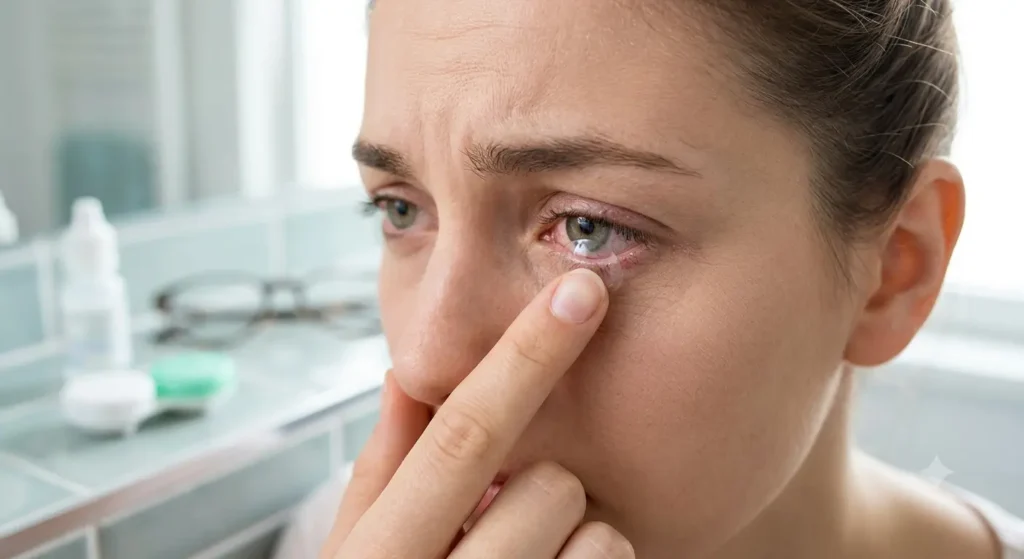
I know that feeling. You put your contacts in, everything’s crisp and clear, and by 3 PM your eyes feel like sandpaper. You blink and blink, but it doesn’t help. By the time you get home, you’re ripping those lenses out and sighing with relief. If this sounds like your daily routine, you already understand why dry eye syndrome and contacts don’t always play nice together.
I’ve talked to enough lens wearers to know this isn’t a rare complaint. It’s one of the most common reasons people either switch lens types, cut back on wear time, or give up on contacts altogether. And honestly, a lot of people quit too early. They assume dry eyes and contacts are a lost cause without ever trying the fixes that actually work.
So let’s get into it. I’ll walk you through what dry eye syndrome really is, why it clashes with contact lens wear, how lenses stack up against other vision options, and what you can actually do about it. I’ll also answer the questions I see people ask most often about this exact topic American Academy of Ophthalmology Dry eye disease
Table of Contents
What Happens When Dry Eye Syndrome and Contacts Collide
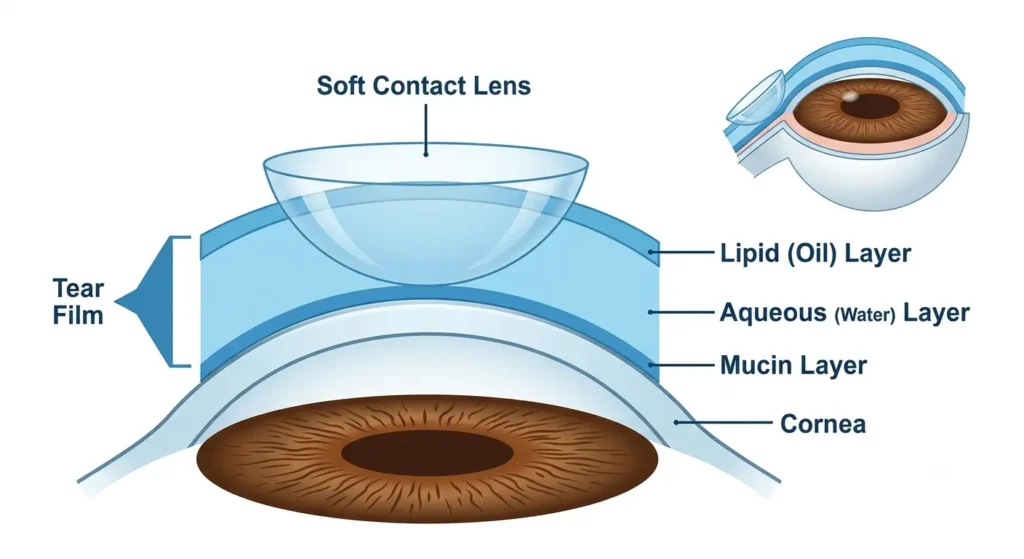
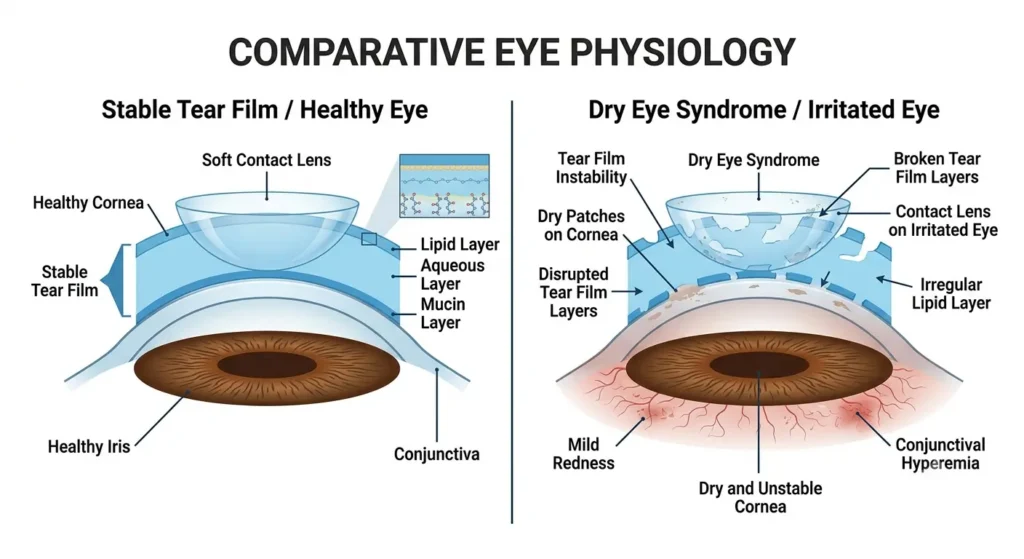
Here’s the basic mechanism. Your eyes need tears to stay healthy, and I don’t just mean water. Tears are made of three layers: oil, water, and mucus. Each layer does a job. The oil stops the water from evaporating too fast. The water hydrates and washes away debris. The mucus helps everything spread evenly across your eye. When even one of these layers is off balance, you get dry eye syndrome.
Now add a contact lens into that mix. A lens sits right on top of your tear film. When your tear film is healthy, the lens glides with each blink and you barely notice it’s there. When your tear film is thin, unstable, or low in quality, that same lens has almost nothing to glide on. Friction goes up. Comfort goes down.
This is exactly why dry eye syndrome and contacts create such a noticeable problem for so many people. Symptoms that you might barely register without lenses in suddenly become impossible to ignore once a lens is added to the equation. Common signs include:
- A gritty, sandy feeling that gets worse as the day goes on
- Burning, stinging, or itching around the eyes
- Redness that shows up more by afternoon or evening
- Blurry vision that clears up temporarily when you blink
- Extra sensitivity to wind, light, or air conditioning
- Watery eyes, which sounds backwards but is often your eye overcorrecting for dryness
I want to be clear about something. Feeling one or two of these once in a while doesn’t necessarily mean you have chronic dry eye syndrome. But if this is a daily pattern, it’s worth paying attention to.
Dry Eye Syndrome and Contacts vs. Other Vision Correction Options
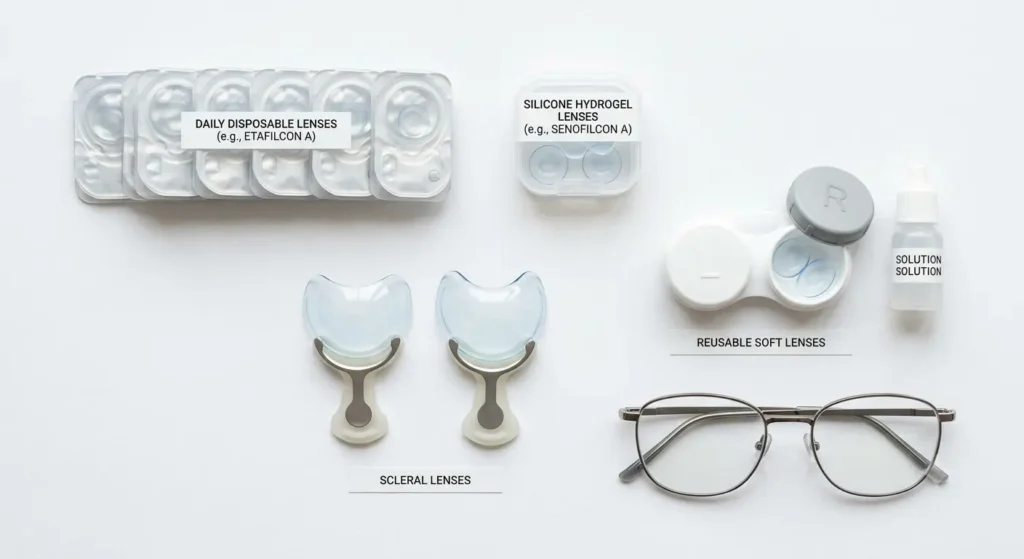
I get asked a lot whether contacts are even worth it if you struggle with dryness. The honest answer is: it depends on the option you’re comparing them to.
| Option | Comfort With Dry Eyes | Convenience | Maintenance | Long-Term Fit for Dry Eye |
|---|---|---|---|---|
| Standard soft contact lenses | Can get uncomfortable during long wear | High | Daily cleaning or daily disposal | Moderate, depends heavily on material |
| Daily disposable lenses | Usually more comfortable overall | Very high | None, single use | Often the best-tolerated option |
| Silicone hydrogel lenses | Better oxygen transmission, which may improve comfort for some wearers. | High | Regular cleaning | Frequently a solid middle ground |
| Scleral lenses | Built to trap moisture against the eye | Moderate, needs specialty fitting | More involved | Often recommended for moderate to severe cases |
| Eyeglasses | No lens touching the tear film at all | High | Minimal | Usually the most comfortable baseline |
No single choice wins for everyone. It comes down to how bad your symptoms are, how your eyes react to different materials, and how much effort you’re willing to put into care and maintenance. That’s really the heart of the dry eye syndrome and contacts debate. It’s not about which option is objectively “best.” It’s about which one fits your actual eyes.
What This Actually Feels Like Day to Day
Most people I’ve heard from describe a familiar arc. Mornings are fine. Lenses feel comfortable, vision is sharp, no complaints. Then somewhere around midday, things shift. The lens starts feeling tight. Blinking feels a little sticky. Some people notice debris building up on the lens surface, which only adds to the irritation.
I’ll be straight with you here. Switching lens types or improving your care routine usually helps a lot. It doesn’t always fix things completely, especially if your dry eye is more chronic. A lot of people land on a workable middle ground rather than a perfect solution, and that’s a completely normal outcome. Managing dry eye syndrome and contacts together is often about reducing discomfort, not eliminating it entirely.
What Makes It Worse: Key Contributing Factors
A few things tend to show up again and again when people describe worsening dry eye syndrome and contacts symptoms:
Age. Tear production naturally slows down over time, and this becomes more noticeable after 50.
Hormonal shifts. Pregnancy, menopause, and certain medications can all change tear quality.
Screen time. When you’re staring at a screen, you blink less. Less blinking means faster tear evaporation.
Environment. Dry air, wind, heating systems, and air conditioning all pull moisture away from your eyes faster than normal.
Wear duration. Keeping lenses in longer than recommended, or past their replacement schedule, tends to make dryness worse.
Underlying health conditions. Some conditions are linked to reduced tear production, but only an eye doctor can properly diagnose this.
These are patterns, not guarantees. Your eyes might react completely differently than someone else’s dealing with dry eye syndrome and contacts, even with the same lifestyle.
Is Wearing Contacts With Dry Eye Syndrome Actually Safe?
This is the question that matters most about dry eye syndrome and contacts, and I’ll give you a straight answer: it depends on how severe your dryness is and how well you manage it.
Reasons to stick with contacts:
- You keep the wider field of vision and convenience that glasses can’t match
- Newer lens materials are genuinely better tolerated than older designs
- Daily disposables cut down on the buildup that makes dryness worse
Reasons to be cautious:
- Mild to moderate dryness often gets more noticeable the longer you wear lenses
- Poor hygiene combined with dry eyes raises your risk of irritation or infection
- Severe dry eye can make consistent all-day wear genuinely impractical
In general, contacts aren’t automatically off the table just because you have dry eye syndrome. Plenty of people manage it successfully with the right lens, proper hydration, and a consistent routine. But when lenses are worn too long, cleaned inconsistently, or made from the wrong material for your eyes, symptoms tend to snowball.
How to Manage Dry Eye Syndrome and Contacts Together
- Get your tear film checked. Before blaming your current lenses for your dry eye syndrome and contacts trouble, have an eye doctor assess whether your dryness is mild, moderate, or more significant. This changes everything about what comes next.
- Rethink your lens material. Silicone hydrogel and daily disposable lenses tend to hold moisture more consistently, which makes a real difference for dry-prone eyes.
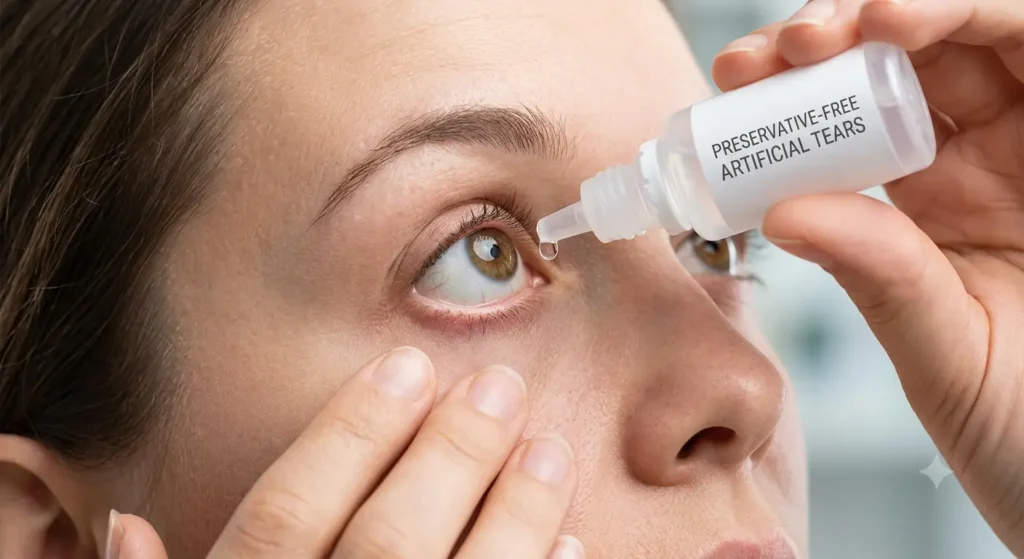
- Use preservative-free lubricating drops. Look for drops labeled safe for contact lens use. Apply them before you put lenses in, and again through the day as needed.
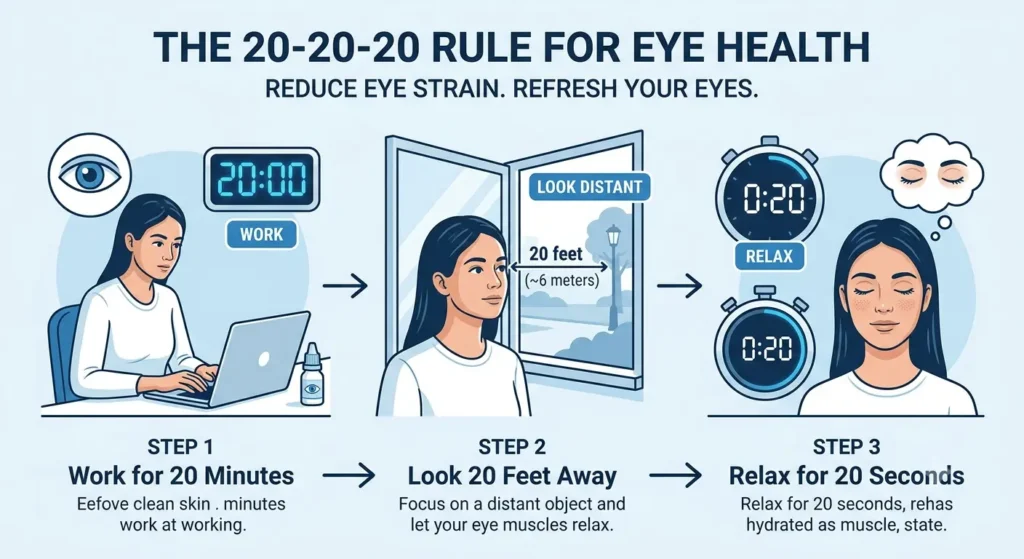
- Try the 20-20-20 rule. Every 20 minutes, look at something 20 feet away for 20 seconds. It sounds small, but it forces more complete, more frequent blinking.
- Cut down total wear time. Swap to glasses in the evening. Give your tear film a chance to recover after a full day under a lens.
- Pay attention to hydration and environment. Drink enough water. Run a humidifier if your space is dry. Small changes add up here.
- Replace lenses on schedule. Stretching disposable lenses past their intended life is one of the fastest ways to worsen irritation.
Mistakes I See People Make Constantly
- Ignoring early symptoms. Waiting until things get bad before treating your dry eye syndrome and contacts issue makes the whole situation harder to fix later.
- Sleeping in lenses not approved for overnight wear. This dramatically increases both dryness and infection risk.
- Using lenses past their replacement date. This is probably the single most common, most avoidable mistake I see.
- Relying only on eye drops. Drops help in the short term, but they’re not a substitute for figuring out the actual cause.
- Assuming every lens is basically the same. Material and design genuinely change the experience for dry-prone eyes.
- Rubbing irritated eyes. This makes inflammation worse and can even damage the eye’s surface.
Choosing and Managing Contacts the Right Way
- Some people do better with higher-water lenses, while others are more comfortable in silicone hydrogel lenses. Your eye care professional can recommend the best option based on your tear film you can also learn form Ai
- If you already notice dryness without lenses in, say so during your fitting appointment. It changes which lens gets recommended from the start.
- Keep a simple symptom log for one or two weeks. Note when discomfort kicks in. This helps you spot patterns tied to screen use, weather, or wear time.
- Ask about scleral lenses if standard soft lenses keep bothering you even after adjustments. They’re built specifically to trap moisture.
When You Should Stop Wearing Contacts Immediately
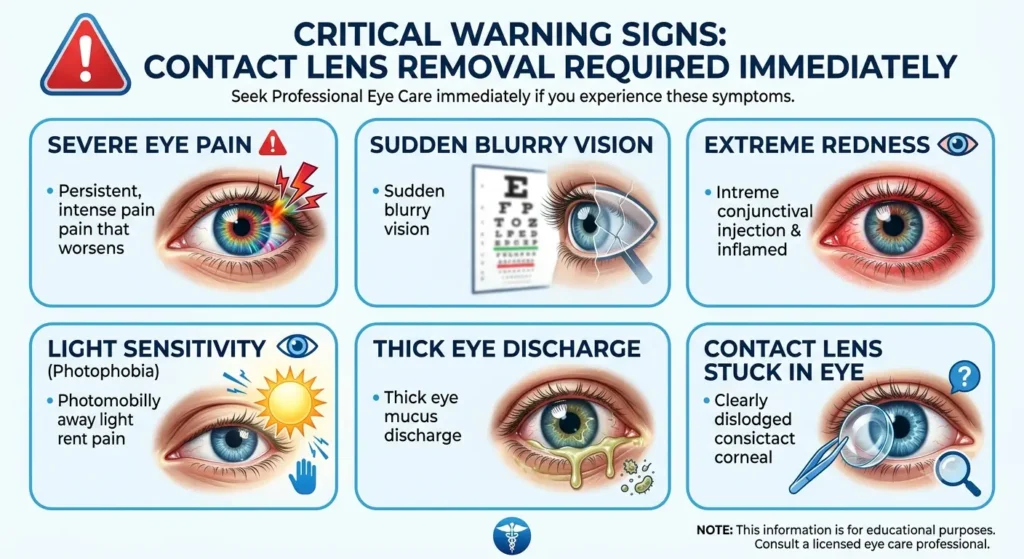
Most dry eye discomfort is manageable and not an emergency. But there are times when you need to take your lenses out right away and call an eye doctor, no waiting around. Watch for:
- Severe pain. Ordinary dryness is annoying. Sharp or intense pain is not normal and shouldn’t be ignored.
- Light sensitivity. A sudden, strong reaction to light can signal something more serious than dry eye syndrome and contacts irritation.
- Thick discharge. Watery eyes from dryness are one thing. Thick, colored, or pus-like discharge points to infection.
- Sudden vision loss. Any abrupt drop in vision, even temporary, needs immediate attention.
- Eye injury. Scratches, trauma, or anything that hits the eye directly means the lens comes out first, questions later.
- Contact lens stuck. If a lens won’t move or come out with normal methods, don’t force it. Get help instead of risking damage to your eye.
If you notice any of these, don’t try to push through the discomfort or wait until your next appointment. Take the lens out, and get seen as soon as you can. if you are also trying to find how to prevent cataracts naturally there are 8 Proven Ways to Protect Your Vision
Frequently Asked Questions
Can I wear contacts if I have dry eye syndrome? In most cases, yes. Mild to moderate dry eye doesn’t automatically rule out contacts. With the right lens, a solid care routine, and guidance from an eye doctor, plenty of people wear contacts comfortably despite having dry eyes.
How do you treat dry eyes with contacts? Start with preservative-free, contact-safe lubricating drops. Consider switching to daily disposable or silicone hydrogel lenses. Cut down wear time when you can, and address environmental triggers like screen time and dry indoor air. If symptoms stick around, get a professional evaluation.
Why do my dry eyes feel better with contacts? This is less common, but it happens. Some moisture-retaining lenses act like a barrier that holds a thin layer of fluid against your eye, which can temporarily ease irritation. It’s more noticeable with certain specialty lenses and isn’t something everyone experiences.
Are daily contacts better for dry eyes? For a lot of people, yes. There’s no solution residue, no buildup, no leftover debris from the day before. Starting fresh every single day removes some of the most common triggers tied to dry eye syndrome and contacts.
Does screen time make dry eyes worse with contacts? Yes, generally. Staring at a screen cuts your blink rate significantly, which lets your tear film break down faster than normal. Wearing contacts on top of that only makes the effect more noticeable.
Should I stop wearing contacts completely if I have dry eyes? Not necessarily. Most people manage dry eye syndrome and continue wearing contacts by changing lens type, cutting wear time, and tightening up their care routine. Stopping entirely is usually reserved for more severe or persistent cases, and that call is best made together with an eye doctor.
A Quick Note on Accuracy
I wrote this to help you understand the general relationship between dry eye syndrome and contacts, based on widely accepted knowledge on the topic. It’s not a replacement for a real eye exam or personalized medical advice, and I’m not a licensed optometrist or ophthalmologist. If your symptoms are persistent or severe, please talk to a qualified eye care professional who can actually look at your eyes.
Where This Leaves You
Dry eye syndrome and contacts can absolutely coexist. It usually comes down to the details: picking the right lens material, being honest about wear time, and paying attention to the small daily habits that either protect or strain your tear film. For some people, switching to daily disposables or silicone hydrogel lenses solves most of the problem. For others, especially with more stubborn symptoms, a real evaluation and maybe specialty lenses make the bigger difference.
You don’t have to assume dry eyes and contacts are automatically incompatible. But there’s also nothing wrong with deciding glasses are the more comfortable choice, at least part of the time. The goal was never to force a fit that doesn’t work. It’s to find what actually lets your eyes feel as good as your vision looks.