
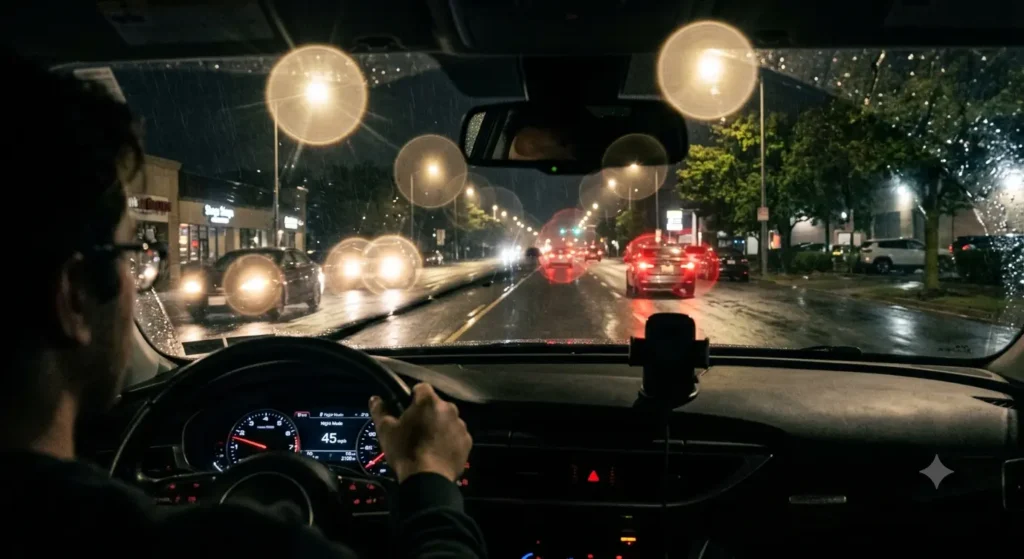
Halos around lights at night happen when light entering your eye scatters instead of focusing into one sharp point. This usually happens because your pupils widen in the dark, letting in light through imperfect parts of the cornea or lens. Common causes include dry eyes, an outdated prescription, cataracts, or corneal swelling. Most cases are harmless. Sudden colored halos with eye pain need urgent attention.
Table of Contents
Let Me Guess Why You’re Here
You’re driving home. It’s dark. Every streetlamp looks like it’s wearing a fuzzy crown of light. Oncoming headlights seem bigger than they should be, almost bleeding into the darkness around them.
You’re not imagining it. You’re not losing your mind. And your windshield is probably fine.
I get why this freaks people out. Halos around lights at night sneak up on you. One evening you notice it, and suddenly you can’t unsee it. I’ve talked to enough people about this to know the reaction is almost always the same: quiet confusion, followed by a Google search at 11 PM.
This article breaks down what halos around lights at night actually are, why your eyes do this, when it’s nothing to worry about, and when it’s a signal to book an eye exam sooner rather than later. I’ll keep it practical. No fluff, no scare tactics, just the straight story.
One thing upfront: I’m a writer, not your eye doctor. Think of this as a solid starting point, not a diagnosis.
What Are Halos Around Lights at Night, Exactly?
A halo is that glowing ring you see wrapped around a light source in the dark. Streetlights. Headlights. Porch lamps. Anything bright against a black sky can trigger it.
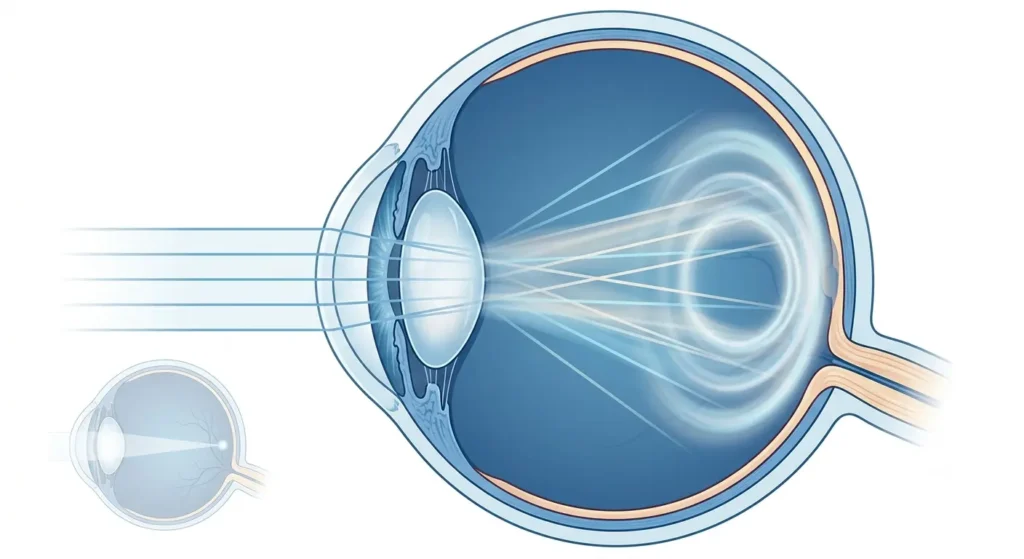
Here’s the mechanism in plain terms. Light is supposed to land on your retina as one crisp point. When it doesn’t — when it scatters a bit on the way in — your brain reads that scattered light as a ring circling the original source.
Why does this mostly happen after dark? Three reasons, and they stack on top of each other.
Your pupils get bigger at night. A wider pupil means light sneaks in through the outer edges of your lens and cornea, not just the clean center.
Small flaws in your eye’s surface matter more when your pupil is wide open. During the day, your pupil is small and mostly ignores those flaws.
Contrast plays tricks too. A bright light against total darkness makes any scattering wildly obvious. That same scattering during daylight would go completely unnoticed.
Sometimes the halo is just a soft white blur. Sometimes it has a faint rainbow tint. That difference actually matters, and I’ll get into why shortly.
White Halos vs. Colored Halos: A Side-by-Side Look
Not every halo is telling you the same story. Here’s how the two main types stack up.
| Feature | Clear / White Halos | Colored (Rainbow) Halos |
|---|---|---|
| Look | Soft, hazy glow | Faint rainbow ring |
| Usual trigger | Dry eyes, outdated prescription, tired eyes | Corneal swelling, spiked eye pressure |
| How it shows up | Builds slowly, worse after screen time | Can appear out of nowhere |
| Risk level | Generally low, still worth watching | Higher, especially with pain or nausea |
| What to do | Get checked if it’s persistent | Get checked soon, don’t wait it out |
I want to be clear about something: this table is a pattern, not a verdict. Plenty of people with white halos are perfectly fine. Occasionally a colored halo turns out to be nothing serious too. Only an actual eye exam settles the question.
What This Actually Feels Like for Most People
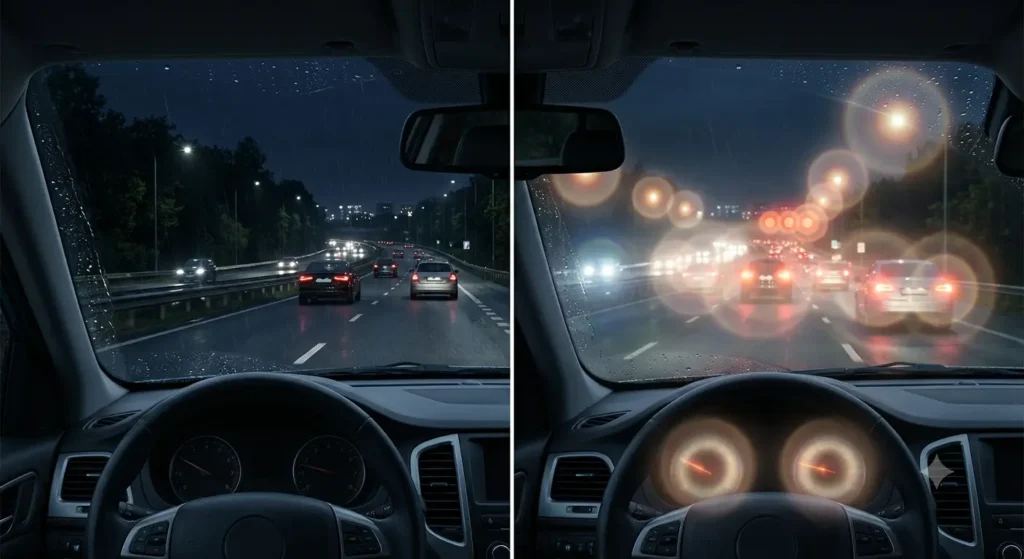
Halos around lights at night rarely show up as one dramatic moment. For most people, it’s a slow creep. Here’s what that usually looks like:
- A bit of extra glare around headlights on long drives
- Night driving suddenly feels like it takes more focus than it used to
- Lights look soft or fuzzy, especially by the end of a long day
- Things improve after resting your eyes, blinking a lot, or using drops
Good news if your glasses or contacts are doing their job — correcting a refractive error often shrinks halos dramatically. Don’t expect miracles from a new prescription if the real problem is structural, though. Something like a cloudy lens won’t respond to glasses the same way blurry vision does.
Also worth flagging: halos are a known, usually temporary side effect after LASIK or cataract surgery. Most people see this settle within a few weeks as the eye heals. Everyone’s timeline is a little different.
What’s Actually Causing the Halo
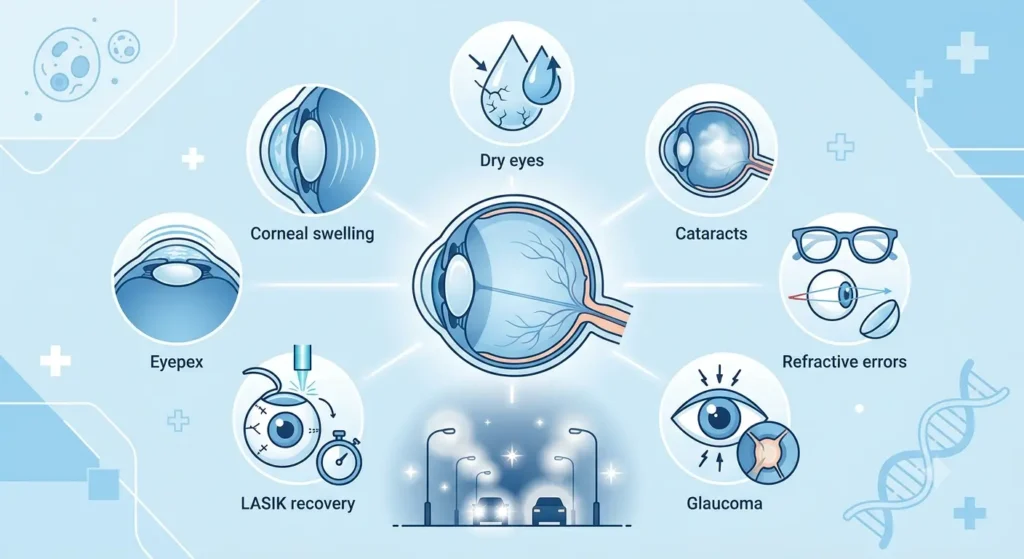
Based on general eye-health knowledge, here’s what tends to be behind halos around lights at night. Treat this as a map, not a diagnosis.
Refractive errors. Nearsightedness, farsightedness, astigmatism — any of these can stop light from landing precisely on your retina, and it gets worse when your pupils dilate at night.
Dry eyes. An uneven tear film scatters light the same way a smudged camera lens does. This one often fluctuates throughout the day, worse by evening.
Cataracts. A gradual clouding of your natural lens, usually tied to aging. This is one of the most common halo causes reported by older adults.
Corneal irregularities. Conditions like keratoconus or corneal swelling change the shape or clarity of your cornea, bending light unpredictably.
Spiked eye pressure. Sudden pressure jumps inside the eye can swell the cornea, sometimes producing colored halos specifically.
Recovery from eye surgery. LASIK and cataract surgery reshape parts of your eye. Temporary halos while everything heals are common and expected.
Multifocal lenses. These pack several prescriptions into one lens. The seams between zones can occasionally split light and create a halo effect.
None of these are guaranteed outcomes. Your eyes are your eyes. A professional exam is the only way to know which one applies to you. If halos are accompanied by sudden flashes of light in your vision, new floaters, or a shadow over your field of view, seek urgent eye care.
Is Seeing Halos Around Lights Actually a Problem?
Honest answer: it depends on the halo.
Probably nothing urgent:
- Halos that come and go, worse when you’re tired or after long screen sessions
- Halos that ease up with rest or lubricating drops
- Mild halos that have stayed the same for years and don’t interfere with daily life
Worth calling your eye doctor soon:
- Halos that show up suddenly, especially colored ones
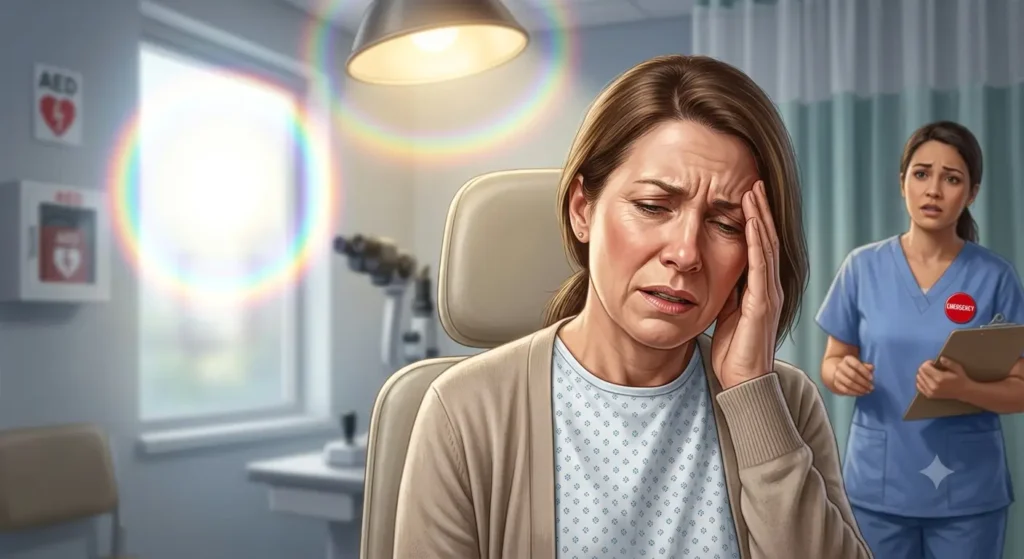
- Halos paired with eye pain, redness, nausea, vomiting, or a headache
- Any sudden shift in your vision alongside the halo
- Halos that keep getting worse week over week
Occasional, mild halos around lights at night are common and usually not a red flag on their own. But new, intense, or symptom-heavy halos deserve real attention. A few of the conditions behind them, while less common, can genuinely affect your vision if you sit on them too long. Don’t panic over every glowing streetlamp, but don’t shrug off a sudden, painful change either.
What I’d Actually Do About It
If halos are annoying rather than an emergency, here’s a practical path forward.
Step 1: Book an eye exam. Refractive errors are one of the biggest contributors, so this rules a lot out fast.
Step 2: Tackle dry eye symptoms. Preservative-free artificial tears, used correctly, stabilize your tear film. Screen breaks and drinking enough water help too.
Step 3: Check your glasses or contacts fit. A poorly fitted lens or old prescription makes halos worse, especially in low light. A proper fit can change everything.
Step 4: Cut down glare. Anti-reflective coatings, a clean windshield, and properly angled headlights all reduce how intense halos feel while you’re driving.
Step 5: Track what’s happening. Jot down when halos show up, how long they stick around, and what else you’re feeling. This makes your next eye appointment far more useful.
Step 6: Stick to your surgeon’s aftercare plan. If halos showed up post-LASIK or post-cataract surgery, follow-up visits and aftercare instructions matter more than you’d think.
Mistakes I See People Make Constantly
- Brushing off sudden, painful halos. Telling yourself it’ll pass when it’s paired with nausea or a headache can cost you time you didn’t need to lose.
- Diagnosing yourself off internet searches. Symptoms overlap across a lot of different conditions. This article included — it’s a starting point, not a verdict.
- Skipping regular eye exams. Some causes, especially pressure-related ones, barely show symptoms early on.
- Overdoing eye drops. Drops help dryness-related halos. They do nothing for halos caused by structural eye changes.
- Driving through serious night-vision trouble. If reading signs or judging distance at night feels genuinely hard, cut back on night driving until you’ve been checked.
Picking the Right Eye Care Provider
A few pointers if you’re not sure where to start:
- Start with a general eye exam instead of assuming worst-case scenarios. Optometrists handle refractive errors and dry eye extremely well.
- Ask for a slit-lamp exam and an eye pressure check. Both are quick, low-risk, and rule out several causes at once.
- Find a provider who actually explains what they’re seeing instead of rushing you out the door. Understanding the “why” matters as much as fixing the symptom.
- Bring notes. When did the halos start? Colored or clear? Anything else going on?
- Had recent eye surgery? Loop in your surgeon first — they know your eye’s recent history better than anyone else.
Questions People Keep Asking
How do I get rid of halos at night? Depends on the cause. An updated prescription, better-managed dry eyes, and anti-reflective coatings solve it for a lot of people. If cataracts or another structural issue is behind it, you’re looking at treating that condition directly, sometimes through a procedure your eye doctor recommends.
Do halos always mean glaucoma? No. Colored halos can be an early sign of acute angle-closure glaucoma, but most halos trace back to far more common stuff, like refractive errors or dry eyes. Sudden colored halos with pain, nausea, or a headache are the combination that needs urgent care.
Is it normal to see halos around lights at night? Occasional, mild halos are pretty common, especially with tired or dry eyes, or a prescription that’s overdue for an update. Frequent, worsening, or sudden halos aren’t something to just wave off, though. Mention them to your eye doctor.
What vitamin deficiency causes light sensitivity? Vitamin A deficiency is commonly linked to vision trouble, including difficulty adjusting in low light and heightened light sensitivity. Light sensitivity has plenty of other causes too, so don’t assume — get it tested properly.
Can dry eyes cause halos around lights? Yes. An uneven tear film scatters light as it enters your eye. Lubricating drops and blinking more often during screen time usually cut this down.
Are halos around lights permanent? Usually not. Halos tied to dryness, fatigue, or recent surgery tend to fade with time or proper care. Halos tied to cataracts or corneal disease can stick around or worsen without treatment, which is exactly why ongoing symptoms deserve a real evaluation.
A Quick Note on Accuracy
I’ve written this for general understanding, pulling from widely available, publicly accessible eye-health information. I’m not a licensed medical or eye care professional, and this isn’t a substitute for an actual eye exam or personalized medical advice. If your symptoms are new, worsening, or genuinely concerning, talk to a qualified optometrist or ophthalmologist. Don’t wait on my article to make that call for you.
Where I Land on This
Seeing halos around lights at night is genuinely common, and most of the time it traces back to ordinary stuff — tired eyes, dry eyes, or a prescription that needs an update. Still, I wouldn’t dismiss it outright. A smaller share of cases point toward something that benefits from earlier care rather than later care.
My honest take: if your halos are mild, occasional, and not dragging along pain or other symptoms, don’t lose sleep over it — just mention it at your next eye exam. If they show up suddenly, get worse fast, or arrive with pain, nausea, or blurred vision, get checked promptly. Either way, regular eye exams remain one of the simplest ways to actually stay on top of your eye health, instead of guessing in the dark.
Some eye conditions affect the appearance of the eyes rather than how you see. Learn more about orbital fat loss and why eyes may appear sunken.