

When one eye looks in a different direction than the other, even for a short time, everyday tasks become more difficult. Reading may feel tiring. Driving can become stressful. Some people struggle with double vision, while others worry about how their eyes look when talking to friends or coworkers. If you have been searching for eye exercises for strabismus, you are probably hoping to find a treatment that does not involve surgery.
Table of Contents
Introduction
I understand that hope. Many people want to know whether simple exercises can train the eyes to work together again. The good news is that eye exercises can help some people. The important part is understanding who is likely to benefit and what these exercises can realistically achieve.
Eye exercises are not a miracle cure. They cannot fix every type of strabismus. However, they can improve how the eyes and brain work together in certain cases. When used as part of a treatment plan created by an eye care professional, they may improve eye coordination, reduce eye strain, and make daily activities more comfortable.
In this guide, I will explain how eye exercises for strabismus work, who should use them, which exercises are most commonly recommended, and what results you can expect. I will also cover their limits, because having realistic expectations is just as important as choosing the right treatment.
What Is Strabismus?
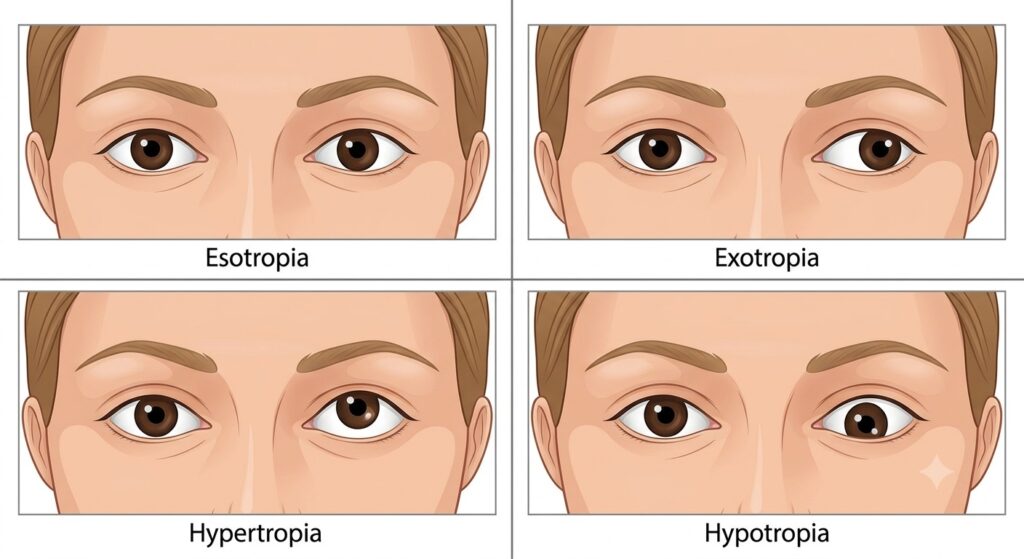
Strabismus is a condition where the eyes do not point in the same direction at the same time. One eye focuses on the object you are looking at, while the other turns inward, outward, upward, or downward.
This problem can happen all the time or only occasionally. Some people notice it only when they are tired, sick, or focusing on something close for a long period.
Although many people think of strabismus as a childhood condition, adults can develop it too. It may appear after an injury, stroke, nerve damage, or another medical condition. In some cases, it develops slowly over many years.
Common types of strabismus include:
- Esotropia – the eye turns inward toward the nose.
- Exotropia – the eye turns outward away from the nose.
- Hypertropia – one eye drifts upward.
- Hypotropia – one eye points downward.
The cause is not always weak eye muscles. In many cases, the problem involves how the brain controls eye movement. That is why treatment often focuses on improving communication between the eyes and the brain instead of simply strengthening muscles.
Learn more about strabismus from the American Association for Pediatric Ophthalmology and Strabismus
What Causes Strabismus?
Several different conditions can lead to strabismus. Finding the exact cause is important because treatment depends on the diagnosis.
Some of the most common causes include:
- Family history of eye misalignment
- Uncorrected vision problems
- Problems with the nerves controlling eye muscles
- Brain injuries
- Stroke
- Diabetes-related nerve damage
- Thyroid eye disease
- Certain neurological disorders
- Congenital conditions present from birth
Children are often diagnosed during routine eye examinations, but adults may suddenly notice double vision or one eye drifting out of alignment. A sudden change should never be ignored because it may signal an underlying medical problem that requires immediate attention.
What Are Eye Exercises for Strabismus?
Many people imagine these exercises as a workout for the eye muscles. That idea sounds logical, but it is not completely accurate.
Eye exercises for strabismus are visual training activities designed to improve how the eyes and brain work together. Instead of building stronger muscles, they help improve coordination, focus, and teamwork between both eyes.
Think of it like learning to play a musical instrument. Your fingers already have enough strength. What improves with practice is timing, accuracy, and coordination. Eye exercises work in a similar way.
These exercises are usually part of a larger vision therapy program supervised by an optometrist or ophthalmologist. Depending on your diagnosis, you may perform them in the clinic and continue practicing at home.
The main goals are to improve:
- Eye teaming
- Binocular vision
- Convergence
- Visual tracking
- Focus control
- Depth perception
- Eye movement accuracy
For the right person, these improvements can make reading, computer work, and close-up tasks much more comfortable.
How Do Eye Exercises Actually Work?
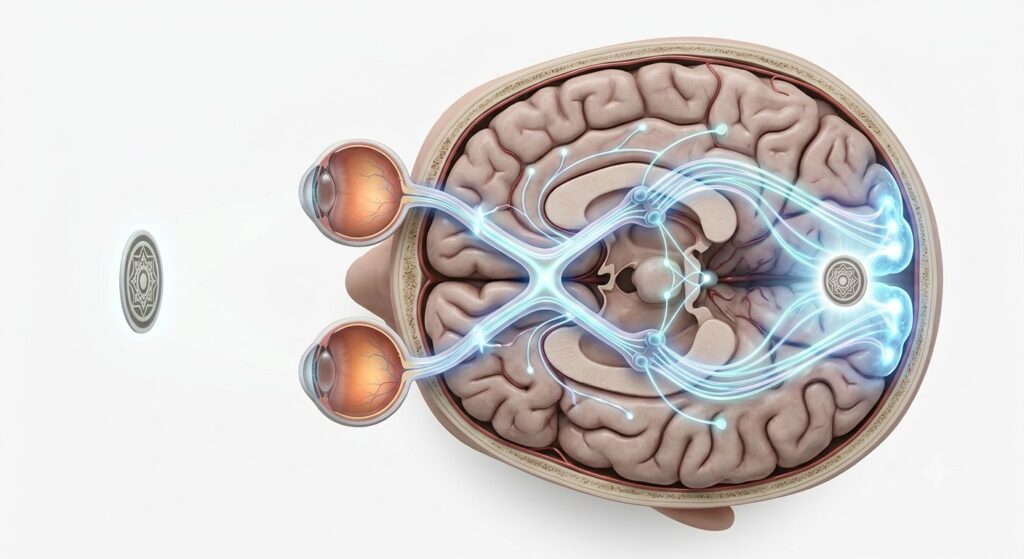
Your eyes and brain constantly exchange information. Every second, both eyes send slightly different images to the brain. The brain combines those images into one clear picture, allowing you to judge distance and see depth.
When strabismus develops, this teamwork becomes disrupted.
Sometimes the brain begins ignoring the image from one eye to avoid double vision. This process is called suppression. Over time, poor coordination can become even more noticeable.
The purpose of eye exercises for strabismus is to retrain this visual system.
Rather than forcing the eyes into position, the exercises encourage both eyes to work together during specific tasks. Repeated practice helps strengthen the brain’s ability to coordinate eye movements more efficiently.
Some exercises focus on:
- Bringing both eyes inward toward a nearby object
- Following moving targets smoothly
- Switching focus between near and distant objects
- Maintaining single vision during close work
- Improving awareness of both visual fields
Progress usually happens slowly. Most people notice small improvements over weeks or months instead of overnight changes.
Who Can Benefit from Eye Exercises?
Not everyone with strabismus will respond in the same way. The success of vision therapy depends on several factors, including the type of eye misalignment, age, overall eye health, and how consistently the exercises are performed.
People who may benefit include:
- Individuals with convergence insufficiency
- People with intermittent exotropia
- Adults experiencing eye strain during reading
- Patients enrolled in a supervised vision therapy program
- Children whose eye specialist recommends exercises as part of treatment
Many adults are surprised to learn that the brain can continue adapting throughout life. While treatment often works faster in children, adults can still improve eye coordination with consistent practice and proper guidance.
Who Should Not Start Exercises Without Medical Advice?
Although eye exercises for strabismus are generally safe, they should never replace a proper eye examination.
You should see an eye specialist before starting any exercise program if you experience:
- Sudden double vision
- A newly turned eye
- Loss of vision
- Severe headaches with vision changes
- Eye movement problems after a head injury
- Symptoms following a stroke
These signs may indicate a medical condition that requires urgent treatment rather than home exercises.
Even if your symptoms seem mild, getting the correct diagnosis first is one of the smartest decisions you can make. Some forms of strabismus improve with vision therapy, while others respond better to glasses, prism lenses, medication, or surgery.
What Results Should You Expect?
One of the biggest mistakes people make is expecting immediate improvement.
Vision therapy is a gradual process. Just as learning a new skill takes time, your visual system needs repeated practice to build better coordination.
During the first few weeks, you may notice:
- Mild eye fatigue
- Temporary blurry vision
- Increased awareness of eye movements
- Difficulty keeping both eyes focused
These early changes are often part of the adjustment process.
With steady practice, many people report improvements such as:
- Less eye strain while reading
- Better focus during computer work
- Improved depth perception
- Easier near-vision tasks
- Better control over intermittent eye drifting
The degree of improvement varies from person to person. Some people achieve significant gains, while others need additional treatments to obtain the best results. That is why eye exercises should always be viewed as one part of a complete treatment plan rather than a standalone cure. ## The Best Eye Exercises for Strabismus
Once an eye specialist confirms that exercises are suitable for your condition, the next step is learning the right techniques. Not every exercise works for every type of eye misalignment. That is why a personalized plan is always better than copying random routines from the internet.
The following eye exercises for strabismus are among the most commonly used in vision therapy. They are designed to improve eye coordination, convergence, and binocular vision. They are not meant to replace medical care, but they can become an important part of your overall treatment.
1. Pencil Push-Ups
Pencil push-ups are one of the simplest and most widely recommended exercises for people who have trouble keeping both eyes focused on nearby objects.
The goal is to train your eyes to move inward together while staying focused on a single target.
How to do it
- Sit comfortably in a well-lit room.
- Hold a pencil at arm’s length.
- Choose a small letter or symbol printed on the pencil.
- Keep your eyes fixed on that point.
- Slowly move the pencil toward the tip of your nose.
- Stop if the image becomes double or blurry.
- Move the pencil back to the starting position.
- Repeat as instructed by your eye doctor.
Possible benefits

- Improves convergence
- Encourages both eyes to work together
- May reduce eye strain during reading
- Helps some people with intermittent exotropia
This exercise should feel challenging but not painful. If you develop severe headaches or lasting double vision, stop and contact your eye care provider.
2. Brock String Exercise
Many vision therapists consider the Brock String one of the most useful tools for improving binocular vision.
It looks simple, but it provides immediate feedback about how both eyes are working together.
What you need
- A long string
- Three colored beads placed at different distances
How to perform it
Attach one end of the string to a fixed object.
Hold the other end gently against the bridge of your nose.
Focus on the bead closest to you.
If both eyes are working together correctly, the string should appear as two lines crossing at the bead to form the shape of the letter “X.”
Shift your attention to the middle bead.
Then move your focus to the farthest bead.
Repeat the process slowly without rushing.
Benefits
- Improves binocular vision
- Strengthens eye coordination
- Increases awareness of eye alignment
- Supports better depth perception
- Trains accurate convergence
Because the Brock String provides visual feedback, many patients find it easier to understand how their eyes are working during the exercise.
3. Barrel Card Exercise
The Barrel Card exercise is commonly recommended for some people with exotropia, where one eye tends to drift outward.
It encourages both eyes to turn inward while maintaining a single image.
How to use it
Hold the card vertically against your nose.
Look at the largest barrel first.
Try to combine the red and green images into one barrel.
Maintain focus for several seconds.
Repeat the process with the middle barrel.
Finish by focusing on the smallest barrel.
Take your time. Accuracy matters much more than speed.
Potential advantages
- Encourages inward eye movement
- Improves convergence skills
- Helps reduce suppression in selected patients
- Builds better binocular coordination
Many people find this exercise difficult at first. That is completely normal. Like any new skill, coordination improves with practice.
4. Smooth Pursuit Training
Smooth pursuit exercises help your eyes follow moving objects without making sudden jumps.
This skill is important for everyday activities such as driving, reading moving text on screens, and watching sports.
Simple practice method
Move a small object slowly from side to side.
Keep your head still.
Follow the object using only your eyes.
Repeat the movement vertically and diagonally.
Start with short sessions and increase the time only if your eyes remain comfortable.
Benefits
- Improves visual tracking
- Supports smoother eye movements
- Reduces unnecessary eye strain
- Helps develop better coordination
5. Near and Far Focus Exercise
Changing focus between different distances helps your eyes become more flexible.
This exercise is especially helpful for people who spend many hours working on computers or reading.
Instructions
Hold your thumb about 10 inches from your face.
Focus on it for five seconds.
Next, look at an object several feet away.
Keep your attention there for another five seconds.
Continue switching between the two targets.
Why it helps
- Improves focusing ability
- Trains quick visual adjustment
- Reduces fatigue from prolonged near work
- Supports better eye coordination
How Often Should You Practice?
One question I hear often is, “How many times should I do these exercises?”
There is no single answer because every treatment plan is different.
In many vision therapy programs, short sessions performed consistently are more effective than long sessions completed only once in a while.
Your eye specialist may recommend:
- Five to fifteen minutes per session
- Several sessions each week
- Daily practice for specific exercises
- Regular progress checks
Doing more is not always better. Overworking your eyes can lead to unnecessary fatigue without improving results.
Consistency is usually the biggest factor behind long-term success.
What Should You Feel During the Exercises?
It is normal to notice some mild discomfort when you first begin eye exercises for strabismus.
Many people experience:
- Mild eye fatigue
- Temporary blur
- Difficulty keeping one clear image
- Increased awareness of eye movement
These symptoms often improve as your visual system adapts.
However, you should stop the exercise and seek professional advice if you experience:
- Severe eye pain
- Sudden vision loss
- Persistent double vision
- Intense headaches
- Dizziness that continues after resting
Exercises should challenge your eyes, not cause lasting discomfort.
Tips to Get Better Results
The way you practice can make a big difference.
I always recommend keeping your routine simple and consistent instead of trying to complete every exercise in one session.
Here are a few habits that can improve your progress:
- Practice in a bright, quiet room.
- Sit with good posture.
- Follow your eye specialist’s instructions exactly.
- Wear your prescribed glasses if instructed.
- Avoid rushing through the movements.
- Take short breaks if your eyes become tired.
- Record any changes in your symptoms.
Even small improvements are worth noting. Better reading comfort, fewer headaches, or improved focus may indicate that your eyes are responding to treatment.
Can Adults Improve with Eye Exercises?
Yes, many adults can benefit from eye exercises for strabismus, although the results vary.
Years ago, experts believed vision therapy worked only for children. Research and clinical experience have shown that the adult brain also has the ability to adapt. This ability, known as neuroplasticity, allows the brain to build new visual pathways through repeated practice.
Adults with convergence insufficiency or intermittent eye misalignment often notice improvements in:
- Reading comfort
- Computer work
- Eye coordination
- Visual endurance
- Depth perception
That said, adults with long-standing or severe strabismus may still need additional treatments such as prism glasses or surgery. Exercises work best when they are matched to the correct diagnosis and monitored by an experienced eye care professional.
The key is patience. Vision changes rarely happen overnight, but steady practice can lead to meaningful improvements over time. ## Benefits and Limitations of Eye Exercises for Strabismus
One of the biggest questions people ask is whether eye exercises for strabismus actually work. The answer depends on the cause of the eye misalignment.
For some people, these exercises can improve how well the eyes work together. They may make reading easier, reduce eye strain, and improve depth perception. For others, the exercises provide only limited benefit because the underlying problem requires a different treatment.
Possible Benefits
When recommended by an eye care professional, eye exercises may help:
- Improve eye coordination
- Increase convergence for close-up tasks
- Enhance binocular vision
- Reduce eye fatigue during reading or computer work
- Improve visual comfort in some adults and children
- Support other treatments, such as glasses or prism lenses
These improvements often develop gradually. Many people notice small changes first, such as being able to read longer without discomfort or feeling less tired after screen time.
f your main concern is the appearance of the under-eye area rather than eye alignment, learning about PRF under eyes treatment can help you understand another non-surgical option used to improve skin quality and reduce dark circles.
Understanding the Limitations
Eye exercises are not a cure for every form of strabismus.
If the eye misalignment is caused by nerve damage, significant muscle problems, or certain medical conditions, exercises alone are unlikely to correct it. In these cases, your eye specialist may recommend glasses, prism lenses, medication, surgery, or a combination of treatments.
That is why a proper diagnosis is so important before starting any home program.
Can You Treat Strabismus at Home?
Many people hope to manage strabismus without surgery. Home practice can play a role, but it works best when it follows a professional treatment plan.
Safe home care may include:
- Practicing prescribed eye exercises
- Wearing your glasses as directed
- Completing vision therapy assignments
- Attending follow-up appointments
- Monitoring changes in your symptoms
Home exercises should support your treatment, not replace regular eye examinations.
If your symptoms suddenly become worse or you develop new double vision, contact an eye care professional promptly.
Common Mistakes to Avoid
Even the best exercise program can be less effective if it is not performed correctly.
Expecting Immediate Results
Vision therapy takes time. Most people need weeks or months of consistent practice before noticing meaningful improvement.
Following Random Online Advice
Not every exercise is suitable for every type of strabismus. Using the wrong exercise may provide little benefit and could delay proper treatment.
Skipping Practice Sessions
Consistency matters more than long, occasional workouts. Short sessions completed regularly are usually more effective.
Ignoring Prescribed Glasses
If your treatment plan includes corrective lenses, continue wearing them unless your eye specialist advises otherwise.
Pushing Through Pain
Mild fatigue can be normal, but severe pain, persistent headaches, or worsening double vision should never be ignored.
Choosing the Right Treatment Plan
Every case of strabismus is different.
Your eye care professional will consider several factors before recommending treatment, including:
- The type of strabismus
- Your age
- How often the eye turns
- Whether double vision is present
- Overall eye health
- Any underlying medical conditions
Based on these findings, your treatment plan may include one or more of the following:
- Vision therapy
- Eye exercises
- Prescription glasses
- Prism lenses
- Eye patching (mainly for children with amblyopia)
- Surgery
- Other medical treatments when appropriate
A combination of treatments often provides the best outcome.
Practical Tips for Success
If your specialist recommends eye exercises for strabismus, these habits can help you stay on track:
- Practice at the same time each day.
- Work in a comfortable, well-lit space.
- Follow the instructions carefully.
- Stop if you experience significant pain or vision changes.
- Keep a simple journal of your progress, including improvements in reading comfort or eye strain.
Small improvements can add up over time. Staying consistent and attending follow-up appointments gives your eye care provider the information needed to adjust your treatment if necessary. ## Frequently Asked Questions
Can eye exercises for strabismus cure the condition?
Not always. Eye exercises for strabismus can improve eye coordination and binocular vision in certain cases, especially when the problem involves convergence or intermittent eye misalignment. However, they are not a cure for every type of strabismus. Some people may also need glasses, prism lenses, vision therapy, or surgery.
How long does it take to see results?
There is no fixed timeline. Some people notice small improvements within a few weeks, while others need several months of regular practice. Progress depends on the type of strabismus, the severity of the condition, and how consistently the exercises are performed.
Are eye exercises safe for children?
Yes, when they are recommended by an eye care professional. Children with certain forms of strabismus may benefit from vision therapy and home exercises. In other cases, glasses, patching, or surgery may be more appropriate. A complete eye examination is the best way to determine the right treatment.
Can adults benefit from eye exercises for strabismus?
Yes. Adults can improve eye coordination, focusing ability, and visual comfort through supervised vision therapy. While the results vary from person to person, many adults experience less eye strain and better control of intermittent eye misalignment after consistent practice.
Should I stop wearing my glasses while doing eye exercises?
No. If your eye specialist has prescribed glasses, continue wearing them unless you are told otherwise. Corrective lenses often work together with eye exercises to improve overall visual function.
When should I see an eye doctor immediately?
Seek prompt medical care if you notice:
- Sudden double vision
- A new eye turn
- Loss of vision
- Severe eye pain
- Eye movement problems after a head injury
- Vision changes along with symptoms of a stroke
These symptoms require medical evaluation and should not be treated with home exercises alone.
Key Takeaways
If you only remember a few things from this guide, let them be these:
- Eye exercises for strabismus can improve eye coordination in selected cases, but they are not a universal cure.
- A proper diagnosis is essential because different types of strabismus require different treatments.
- Exercises such as Pencil Push-Ups, the Brock String, and Barrel Card are commonly used as part of supervised vision therapy.
- Consistency is more important than long practice sessions. Small improvements often build over time.
- Glasses, prism lenses, patching, or surgery may still be necessary depending on the cause of the eye misalignment.
- Regular follow-up with an eye care professional helps ensure that your treatment plan continues to meet your needs.
Final Thoughts
Living with strabismus can affect much more than eyesight. It can make reading, driving, working on a computer, and even social interactions more challenging. The encouraging news is that effective treatment options are available, and for many people, eye exercises for strabismus are one piece of that solution.
These exercises are designed to improve how the eyes and brain work together. They can enhance eye coordination, support binocular vision, and reduce visual discomfort in people who are good candidates for vision therapy. While they are not suitable for every type of strabismus, they may offer meaningful benefits when used under professional guidance.
Remember that successful treatment starts with an accurate diagnosis. Before beginning any exercise program, schedule a comprehensive eye examination with an optometrist or ophthalmologist. They can identify the underlying cause of your eye misalignment and recommend the safest and most effective treatment plan for your individual needs.
With realistic expectations, regular practice, and ongoing professional support, many people are able to improve visual comfort and strengthen the way their eyes work together. Even when additional treatments are needed, eye exercises can often play a valuable role in achieving the best possible outcome.