

Table of Contents
Introduction
I know how annoying dry eyes can be. You’re trying to read a book, finish a work report, or just drive home, and your eyes start burning. Or stinging. Or feeling like there’s sand stuck under your eyelid. It’s distracting, and honestly, it can ruin your whole day.
That’s why so many people search for home remedies for dry eye instead of jumping straight to a doctor’s office. And here’s the good news: mild dry eye often responds well to simple changes. No fancy equipment. No expensive treatments. Just consistent habits that support your eyes the way they’re meant to work.
In this guide, I’ll walk you through what’s actually happening when your eyes feel dry, why it happens, and which remedies genuinely help. I’ll also cover mistakes people make without realizing it, answer common questions, and tell you honestly when it’s time to stop self-treating and see a professional.
What Are Home Remedies for Dry Eye, Really?
Home remedies for dry eye are everyday habits and simple treatments you can do without a prescription. They won’t fix every cause of dry eye. Nobody should pretend otherwise. But they can support your tear film, calm irritation, and make your eyes feel a lot more comfortable day to day.
Here’s what’s going on biologically. Dry eye shows up when one of three things happens:
- Your eyes aren’t producing enough tears
- Your tears evaporate too fast
- Your tear film is unbalanced—not enough oil, water, or mucus
Any of these can leave your eyes feeling rough instead of smooth.
Symptoms You Might Recognize
- Burning or stinging
- Redness
- A gritty, sandy feeling
- Blurry vision that clears up after you blink
- Tired, heavy eyes
- Watery eyes (yes, watery eyes can actually mean dryness—it’s a reflex)
- Sensitivity to light
If a few of these sound familiar, you’re not alone. Dry eye is incredibly common, especially now that most of us stare at screens all day.
Why Does This Happen? Common Causes
Dry eye rarely has one single cause. Usually it’s a mix of things:
- Long hours in front of a screen
- Blinking less than you should (screens do this to everyone)
- Getting older
- Dry or windy weather
- Air conditioning or heaters running constantly
- Wearing contact lenses
- Certain medications
- Hormonal shifts
- Blocked oil glands in your eyelids
- Underlying health conditions
Some people deal with this occasionally. Others deal with it constantly. If yours is constant, it’s worth getting checked out—more on that later.
Home Remedies vs. Medical Treatment: How They Compare
| Home Remedies | Medical Treatments |
|---|---|
| Best for mild symptoms | Often needed for moderate to severe cases |
| Cheap and easy to start | May involve prescriptions or procedures |
| Focused on daily habits | Targets the root medical cause |
| Supports tear quality | Treats the condition directly |
| You can start today | Requires a professional diagnosis |
If you’ve tried home care and nothing’s improving, or your vision starts changing, don’t wait around. See an eye doctor.
What to Actually Expect
I’ll be straight with you: home remedies aren’t magic. They work through consistency, not luck.
A warm compress probably won’t fix everything after one use. But use it daily for a week or two, and your eyelids often feel noticeably better. Same goes for blinking exercises—they train your eyes to stay lubricated during screen time instead of drying out. Drinking enough water supports your whole body, tear production included. And running a humidifier in a dry room can make a bigger difference than people expect.
Because dry eye has so many possible causes, results vary from person to person. That’s just biology. What works fast for one person might take longer for someone else. Stick with it anyway.
The Tear Film: Why It Matters
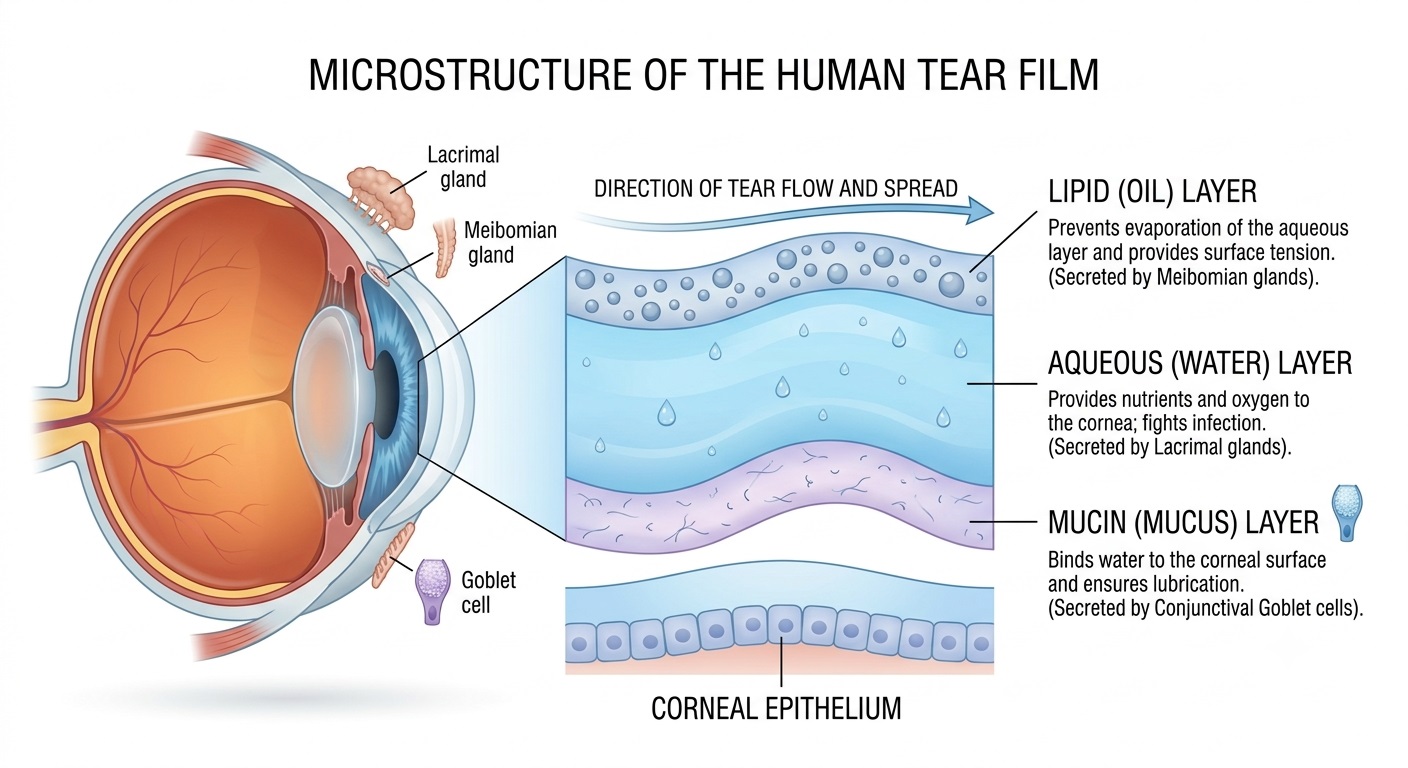
Your tears aren’t just water. They’re made of three layers, and each one has a job:
- Oil layer – slows down evaporation
- Water layer – keeps things moist
- Mucus layer – spreads tears evenly across your eye
If even one layer gets thrown off, your eyes notice immediately. This is exactly why so many remedies focus on eyelid health—that’s where the oil layer comes from.
Are These Remedies Actually Safe?
Generally, yes. Most home remedies for dry eye are safe when you use good hygiene and common sense.
Benefits You Might Notice
- Less irritation overall
- More comfort during long screen sessions
- Better eyelid function
- A healthier, more stable tear film
- Better eye-care habits that stick long-term
Where They Fall Short
- Not every remedy works for every person
- Relief can be temporary if you stop the habit
- Home care can’t treat every medical cause
- If symptoms don’t improve, you need a professional opinion
- Learn when dry eye is simply uncomfortable and when it may need closer medical attention in Can Dry Eyes Cause Blindness? The Real Medical Truth.
Who Benefits Most
These remedies tend to help people with:
- Mild dry eye
- Occasional irritation
- Screen-related dryness
- Dry indoor air
- Minor oil gland blockage
If you’re dealing with severe pain, sudden vision loss, an eye injury, or intense redness, skip the home remedies and get medical help right away.
The Best Home Remedies for Dry Eye (And How to Do Them Right)
1. Warm Compresses

This one’s a classic for good reason.
How to do it:
- Wash your hands first
- Soak a clean washcloth in warm water—not hot
- Wring it out so it’s damp, not dripping
- Lay it over closed eyelids for 5–10 minutes
- Reheat if it cools down too fast
- Repeat once or twice a day
The warmth loosens up oils sitting in your eyelid glands. That helps your tears stay balanced instead of drying out too fast.
2. Clean Your Eyelids Daily
Debris and buildup along your lash line can clog those same oil glands.
Quick routine:
- Use warm water
- Gently wipe along the lash line
- Try a mild eyelid cleanser if your doctor recommends one
- Always remove makeup before bed
Don’t scrub. Gentle pressure is all you need.
3. Blink More Often (Seriously)

Screens cut your blink rate almost in half without you noticing.
Try this every 20 minutes:
- Close your eyes gently
- Hold for two seconds
- Open fully
- Repeat a few times
It sounds too simple to matter, but full blinks spread tears evenly across your eye. Partial blinks don’t.
4. Use the 20-20-20 Rule
If you work on a computer, this one’s non-negotiable.
Every 20 minutes, look at something roughly 20 feet away for 20 seconds. It gives your eyes a break and naturally resets your blink rate.
5. Drink Enough Water
Dehydration affects more than your energy levels—it affects tear production too.
Simple ways to stay hydrated:
- Sip water steadily through the day, not all at once
- Drink more when it’s hot or you’re active
- Eat water-rich foods like cucumbers, watermelon, oranges, and lettuce
6. Add Omega-3s to Your Diet
Some research points to omega-3 fatty acids supporting healthier eyelid oil glands.
Good sources include:
- Salmon
- Sardines
- Trout
- Tuna
- Walnuts
- Chia seeds
- Flaxseeds
Thinking about supplements? Talk to your doctor first, especially if you’re already on medication.
7. Eat for Your Eyes

A varied diet beats any single “superfood.” Here’s what actually helps:
| Nutrient | Where to Find It |
|---|---|
| Vitamin A | Carrots, sweet potatoes, spinach |
| Vitamin C | Citrus fruits, strawberries |
| Vitamin D | Fortified dairy, fatty fish |
| Vitamin E | Almonds, sunflower seeds |
| Lutein | Kale, spinach |
| Zeaxanthin | Corn, peppers |
8. Use Artificial Tears the Right Way
Over-the-counter lubricating drops can bring fast relief.
- Follow the label instructions exactly
- Choose preservative-free drops if you’re using them often
- Don’t rely on redness-relief drops repeatedly—they mask symptoms rather than treat them
9. Fix Your Environment
Small changes in your surroundings can cut down tear evaporation fast.
- Run a humidifier, especially in winter
- Keep your chair out of direct airflow from fans or vents
- Avoid smoky environments
- Stay out of dusty rooms when you can
- Set your monitor slightly below eye level—this alone reduces how wide you open your eyes
10. Wear Wraparound Sunglasses Outside
Wind, dust, and bright sun all speed up tear evaporation. Wraparound sunglasses block a lot of that before it ever reaches your eyes.
11. Sleep Enough
Your eyes need rest just like the rest of your body. Aim for 7 to 9 hours a night. Skimping on sleep shows up in your eyes faster than you’d think.
12. Stay Away From Smoke
Cigarette smoke, secondhand or not, irritates your eyes and makes dryness worse. Cutting exposure helps more than people expect.
Mistakes That Make Dry Eye Worse
I see these all the time, and they’re easy to fix once you know about them.
Not blinking enough during screen time. This is probably the single biggest cause of daily dryness.
Overusing redness-relief drops. They’re built for occasional redness, not ongoing dryness. Overuse can actually backfire.
Skipping eyelid hygiene. Clogged oil glands mean poor tear quality, plain and simple.
Not drinking enough water. Even mild dehydration affects some people’s tear production.
Sitting right in front of a fan. Constant airflow dries your eyes out fast—it’s one of the most overlooked triggers.
Waiting too long to see a doctor. If home remedies aren’t cutting it after a few weeks, that’s your sign.
Building a Routine That Actually Works
Start small. Don’t try to do everything at once—that’s how habits fail.
A solid daily routine looks like this:
- Clean your eyelids gently
- Apply a warm compress
- Blink consciously during screen time
- Drink water consistently
- Eat a balanced, nutrient-rich diet
- Use artificial tears if you need them
- Wear sunglasses outdoors
- Keep indoor air from getting too dry
A few tips for beginners:
- Add one new habit at a time
- Give each habit a few weeks before judging results
- Always wash your hands before touching your eyes
- Follow product instructions exactly, especially with eye drops
Frequently Asked Questions
What’s the best home remedy for dry eyes?
There isn’t one single “best” remedy, because dry eye doesn’t have one single cause. Most people get real relief by combining a few things—warm compresses, clean eyelids, regular blinking, good hydration, and artificial tears when needed.
What are the best home remedies for dry eyes overall?
The most reliable ones include warm compresses, gentle eyelid cleaning, the 20-20-20 rule, conscious blinking, drinking enough water, eating omega-3-rich foods, running a humidifier, wearing wraparound sunglasses outdoors, and using artificial tears when your eyes need extra support.
How can I rehydrate my eyes quickly?
Preservative-free lubricating drops work fast for most people. Combine that with blinking a few times, stepping away from your screen, and applying a warm compress. If dryness doesn’t ease up, book an eye exam.
What should I drink for dry eyes?
Plain water is still your best option. Some people include milk or vitamin D–fortified drinks as part of a balanced diet. Go easy on alcohol—it can dehydrate you more than you’d expect.
Can screen time actually cause dry eyes?
Yes, and it’s extremely common. Staring at a screen naturally slows down your blink rate, which lets tears evaporate faster than normal. Taking breaks and blinking on purpose helps a lot.
When should I actually see an eye doctor?
Don’t wait if:
- Symptoms stick around for weeks
- Your vision suddenly blurs or changes
- You’re in real pain
- Your eyes are very red
- Home remedies stop helping altogether
A Note on Accuracy
This guide is meant for general information, not personal medical advice. It’s based on widely accepted eye-care knowledge available at the time of writing. If your symptoms are severe, persistent, or come with vision changes, please see a qualified eye care professional for a proper evaluation. Nothing here replaces that.
To learn more about the underlying causes and symptoms of dry eye disease, you can read the Mayo Clinic’s overview of dry eye disease.
Final Thoughts
Dry eye is common, and honestly, most people deal with it at some point. The good news is that mild cases usually respond well to simple daily habits—warm compresses, regular blinking, clean eyelids, proper hydration, a balanced diet, and a little protection from harsh environments.
Home remedies for dry eye can genuinely improve how your eyes feel, but only if you stay consistent. This isn’t a one-time fix. It’s a routine. And if you’ve done all of this and your eyes still aren’t cooperating, don’t tough it out. See a professional. A proper diagnosis catches the real cause and points you toward the right treatment, so you’re not just guessing your way through discomfort that has an actual solution.