
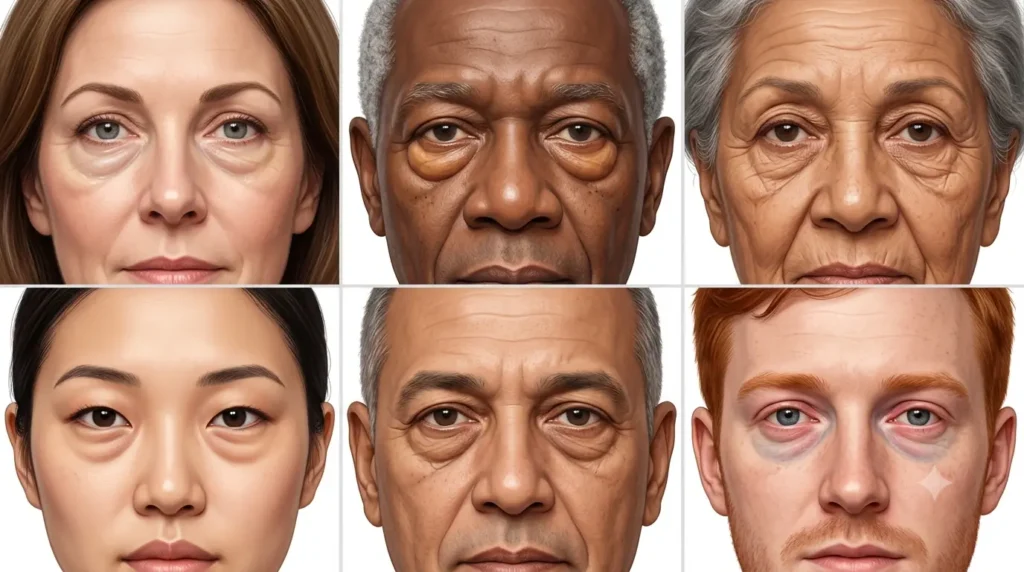
Quick Answer: What are the main types of eye bags? There are six main types of eye bags: fluid-based (water retention), fat-based (orbital fat prolapse), skin laxity (collagen loss), genetic, age-related, and allergy-related. Fluid-based bags are soft and worse in the morning. Fat-based bags are firm and constant. Knowing your type is the only way to pick a fix that actually works.
I used to think all eye bags were the same thing. Tired eyes, puffy face, blame the late night. That’s what everyone tells you. But it’s wrong.
There are different types of eye bags, and they don’t come from the same place. Some show up because you ate salty food last night. Others show up because fat pads under your eyes have been quietly shifting for years. One responds to sleep. The other doesn’t care how much you sleep.
I wrote this guide because I got tired of seeing the same generic advice everywhere — “drink water, sleep more, use a cold spoon.” That advice works for one type of eye bag. For the other types, it does almost nothing. If you’ve tried the usual tricks and your eye bags haven’t budged, you’re probably not dealing with fluid. You’re dealing with something structural.
Let’s break down the real types of eye bags, how to spot which one you have, and when it’s worth seeing a professional instead of guessing. By the end, you’ll know exactly where your under-eye puffiness fits among the different types of eye bags — and what to actually do about it.
Table of Contents
What Are Eye Bags, Really?
Eye bags are the swelling, puffiness, or mild bulge that shows up under your eyes. Simple definition. But the causes behind that bulge vary a lot.
Some people get soft puffiness in the morning that fades by lunch. Others have a bulge that never changes — not with sleep, not with water, not with anything. That difference matters. It tells you what’s actually happening under your skin.
Here’s the short version: fluid collects, fat shifts forward, or skin and muscle loosen with age. Sometimes it’s one of these. Often it’s two or three working together at once. That’s exactly why your friend’s “miracle eye cream” might do nothing for you.
Common signs people notice:
- Puffiness under one or both eyes
- A tired look even after eight hours of sleep
- Morning swelling that shifts through the day
- Shadowing that looks like dark circles but isn’t
- Slow worsening with age, though not for everyone
The Anatomy Behind Eye Bags
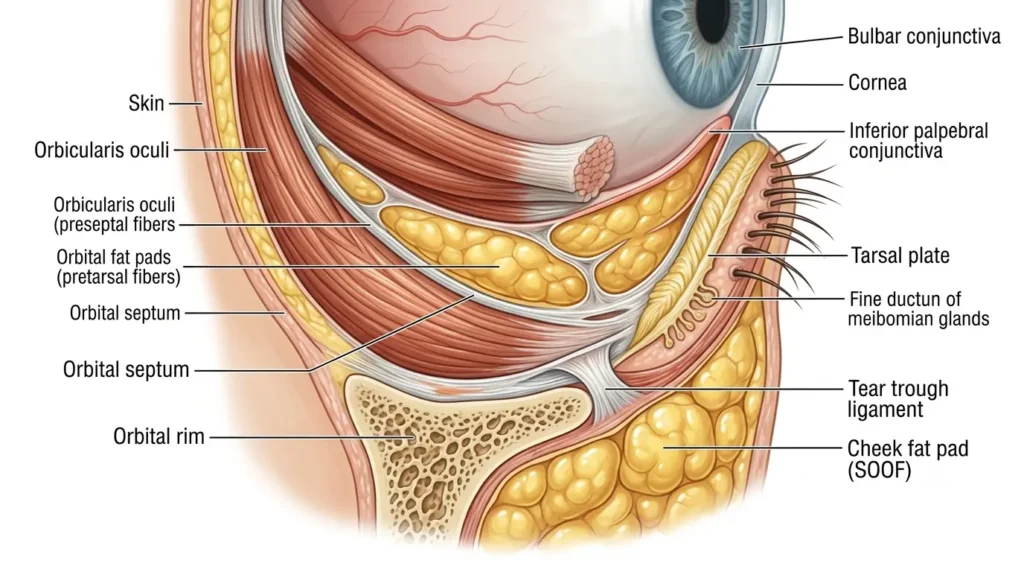
Before we get into the types, it helps to actually see what’s happening under your skin. This isn’t complicated once you look at it in cross-section.
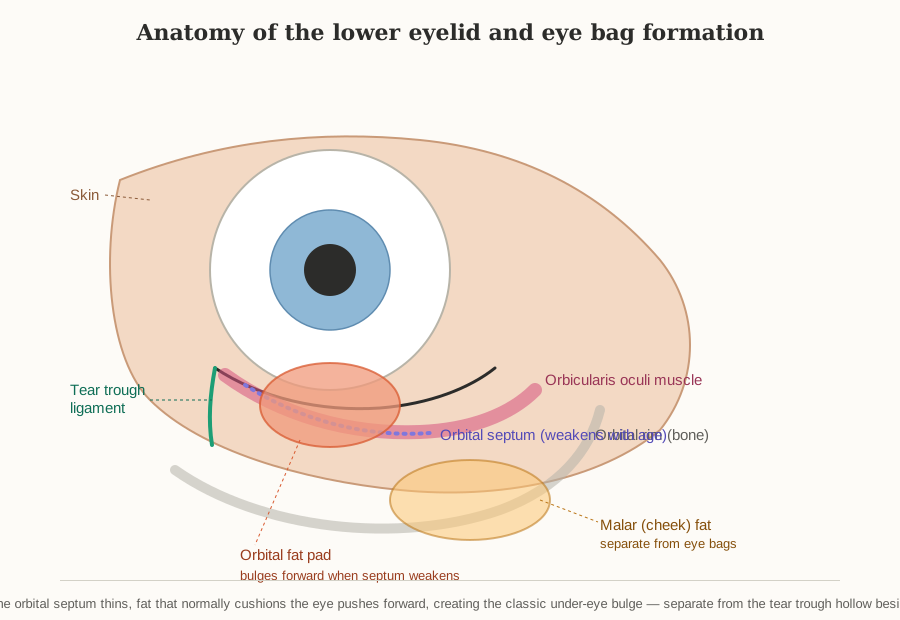
Here’s what you’re looking at. Right under your skin sits a thin sheet of muscle called the orbicularis oculi — it’s what lets you blink and squint. Behind that is the orbital septum, a delicate membrane that acts like a wall, holding your eye’s cushioning fat pad in its place. Below the rim of bone that frames your eye socket, the tear trough ligament anchors the skin down, creating a natural groove between your eyelid and your cheek.
This matters because eye bags aren’t random. Anatomists have shown the orbital septum is the structure that actually contains the fat pad, and once it thins with age, that fat pushes forward instead of staying put — which is exactly what creates the classic bulge people call a fat-based eye bag.<sup>[1]</sup> Right beside that bulge, the tear trough ligament stays anchored, which is why you often see a bulge and a hollow sitting side by side — the fat pushed forward on one side of the ligament, and a shadowed groove on the other.<sup>[2]</sup> Lower down, a separate pad of cheek fat sits below the orbital rim. It’s often confused with eye bags, but it’s a different structure entirely — which is exactly why malar bags and festoons look and behave differently from standard under-eye puffiness.
The Main Types of Eye Bags, Sorted by Cause
When people search for the different types of eye bags, they’re usually trying to figure out which category fits them. Doctors and dermatologists usually group eye bags by cause, not appearance. Two people can look almost identical and need completely different approaches. Here’s why.
Fluid-Based Eye Bags (Fluid Retention Under Eyes)
This is the puffiness most people are familiar with. Fluid builds up in the thin tissue under your eyes overnight. It’s soft. It’s usually worst right when you wake up. By afternoon, it often calms down on its own.
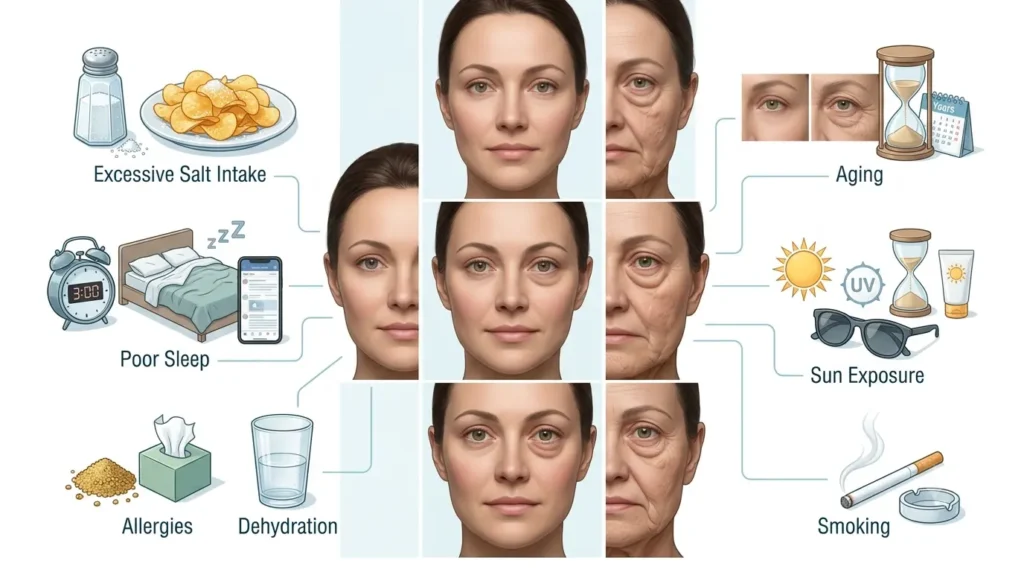
What triggers it? Too much salt, not enough water, allergies, poor sleep, hormone shifts, or lying flat for too long. I’ve noticed my own puffiness gets worse after a salty dinner and a night on my stomach — that combination is basically a formula for morning puffiness.
Small changes help here. Cut sodium in the evening. Drink water consistently through the day, not all at once. Sleep with your head slightly raised. None of this is glamorous, but it works for this specific type.
Fat-Based Eye Bags (Orbital Fat Prolapse Under Eyes)
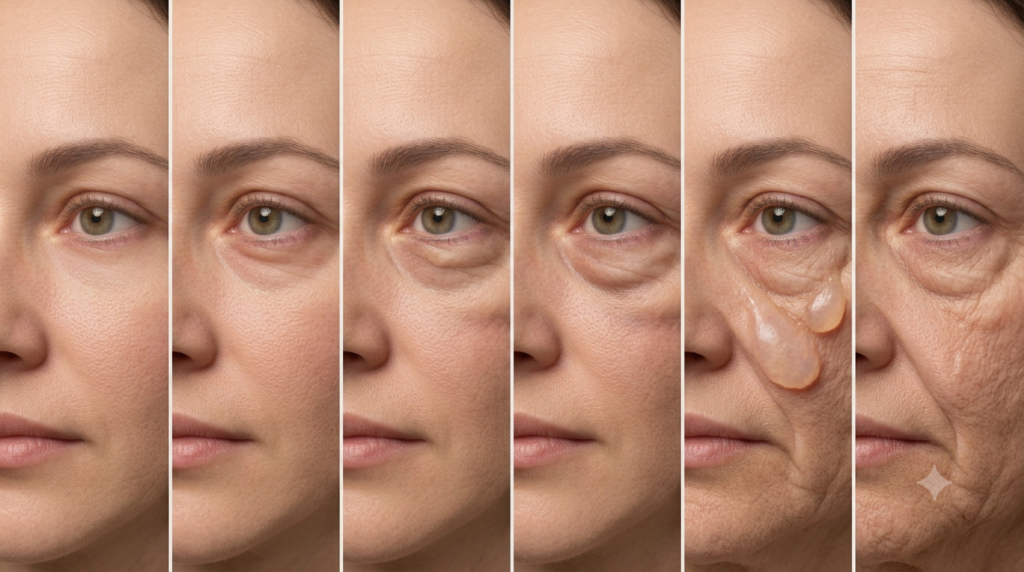
This one is different. The fat pads that normally cushion your eyes shift forward or bulge out. It’s called orbital fat prolapse, and it happens when the connective tissue holding that fat back weakens with age.
Fat-based bags feel firm. Press on them and they don’t compress like fluid does. They stay put no matter how much you sleep or how little salt you eat. This is the type that frustrates people the most, because they try everything and nothing changes — and that’s actually the clue. If lifestyle tweaks aren’t working, this is likely why.
Skin Laxity Eye Bags (Collagen Loss Under Eyes)
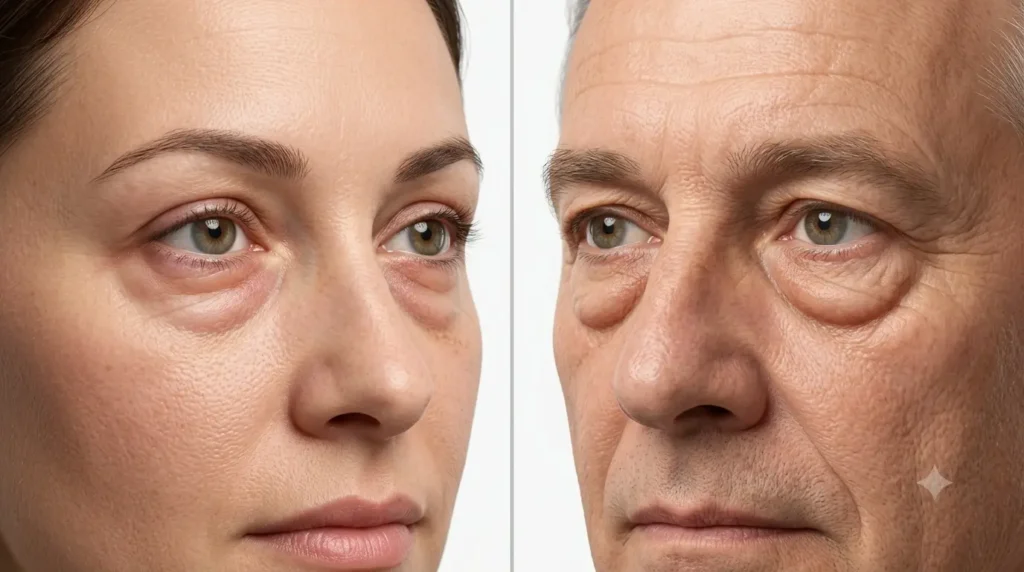
As collagen and elastin break down over the years, the thin skin under your eyes loses its firmness. It doesn’t bulge outward exactly — it sags. Some people describe it as crepey rather than puffy.
Sun exposure speeds this up more than most people realize. I’d bet the biggest reason people in their 30s and 40s start noticing this type is years of skipping sunscreen around the eyes.
Genetic Eye Bags (Family History)
Some people get noticeable under-eye fullness in their twenties. Not from tiredness. Not from diet. Just genetics. If a parent has prominent under-eye bags, there’s a real chance you inherited the same anatomy — larger fat pads, thinner skin, or both.
This type is often mistaken for “looking tired” by people who don’t realize it’s simply how their face is built.
Age-Related Eye Bags (Fat Pad Protrusion)
This overlaps with fat-based bags, but it deserves its own mention because multiple things happen together: fat shifts forward, skin thins, elasticity drops. All at once. That’s why bags often become more noticeable later in life, even in people who never had them before.
Allergy-Related Eye Bags (Puffy Eyes From Allergies)
Pollen, dust, pet dander, certain makeup — any of these can trigger inflammation and fluid buildup under your eyes. This type comes and goes. It shows up when you’re exposed to the trigger and calms down once you’re not.
The giveaway is usually itching, redness, or watery eyes alongside the puffiness. If your eye bags flare up during allergy season and settle down the rest of the year, this is almost certainly your type.If burning accompanies excessive tearing, read our guide on why your eyes burn when you cry.
Persistent irritation may also be linked to dry eyes, which can sometimes occur alongside allergies.
Malar Bags vs Eye Bags
Malar bags aren’t the same thing as standard eye bags, even though people use the terms interchangeably. They sit lower — over the cheekbone, not directly under the lower eyelid. They’re tied to fluid collection and loose skin, and they tend to get worse as the day goes on.
Because they sit in a different spot and need a different kind of assessment, malar bags get confused with regular under-eye bags constantly. If your “eye bag” actually sits closer to your cheek than your eyelid, you might be dealing with a malar bag instead.
Festoons Under Eyes
Festoons are the more advanced version of malar bags. Picture persistent, hammock-like folds of skin below the lower eyelid and upper cheek. They’re linked to long-term sun damage, loss of elasticity, and fluid buildup.
Home remedies generally don’t touch festoons. If you’re dealing with this, a professional consultation is worth more than another eye cream.
Eye Bags vs Related Conditions: Quick Comparison
| Condition | Typical Appearance | Common Cause | Changes Daily? |
|---|---|---|---|
| Fluid-based eye bags | Soft, puffy swelling | Water retention, salt, sleep position | Yes |
| Fat-based eye bags | Firm bulge or pouch | Orbital fat shifting forward | No |
| Dark circles | Flat discoloration, no bulge | Thin skin, blood vessels, pigmentation | Somewhat |
| Malar bags | Bulge lower on the cheek | Fluid collection, loose tissue | Sometimes |
| Festoons | Hanging folds of skin | Long-term skin laxity, sun damage | No |
| Allergy-related puffiness | Red, itchy swelling | Allergen exposure | Yes, episodic |
How to Tell Which Type of Eye Bags You Have
People ask me constantly: how do I know if my under-eye bags are fat or fluid? Here’s what actually helps.
Timing. Fluid-based bags look worse in the morning and ease up during the day. Fat-based bags stay the same no matter the hour.
Feel. Gently press under your eye. Soft and squishy points to fluid. Firm and unmoving points to fat.
Cold compress test. Fluid-based puffiness usually responds a bit to a cold compress or elevating your head. Fat-based bulging barely reacts.
Lifestyle check. Sleep more, cut salt, drink water — did anything change? If yes, fluid retention is probably a big part of your story. If nothing changed after weeks of trying, you’re likely looking at fat protrusion or skin laxity.
A bulge that’s been sitting there for months or years, unchanged, combined with a family history of the same thing, usually means it’s permanent rather than temporary. Temporary types shift with time of day and daily habits.
There’s no single home test that nails your exact type with certainty. A mirror check in good daylight, tracked over a week or two, gets you close. For a definite answer, see a dermatologist. Self-diagnosis only gets you so far.
Eye Bag Severity Scale: How Mild to Severe Is Graded
Dermatologists and plastic surgeons don’t just say “you have eye bags.” Since the types of eye bags range from barely noticeable to structurally advanced, they grade how far the fat has pushed forward, because that grading changes what actually helps. The most widely used clinical tool for this is called the Barton grading scale, and clinics still use it today to decide whether someone is a candidate for surgery or a better fit for non-surgical options.<sup>[3]</sup> Below is a simplified version you can use to get a general sense of where you fall — this isn’t a diagnosis, just a way to understand the language a dermatologist might use with you.
| Grade | What It Looks Like | What It Usually Means |
|---|---|---|
| Grade 0 — None | Smooth transition from lower lid to cheek, no visible bulge | No structural fat prolapse |
| Grade 1 — Mild | Slight fullness, visible mainly in certain lighting or when smiling | Early fat pad changes; often manageable with lifestyle steps |
| Grade 2 — Moderate | Noticeable bulge at rest, tear trough hollow visible beside it | Fat prolapse combined with early ligament laxity; home remedies have limited effect |
| Grade 3 — Severe | Persistent, prominent bulge that doesn’t change with sleep, hydration, or time of day | Significant fat pad prolapse; usually needs a professional evaluation for lasting change |
| Grade 3+ / Festoon stage | Hanging folds extending onto the cheek, often with skin laxity | Advanced changes involving muscle and skin, sometimes worsened by fluid retention from allergies, salt, or underlying conditions<sup>[4]</sup> |
A quick way to place yourself: if your bags fade with sleep and hydration, you’re likely in the mild-to-moderate range. If nothing changes them no matter what you try, you’re probably looking at a moderate-to-severe grade, and that’s the point where a professional opinion becomes genuinely useful instead of optional.
Is It Normal, or Are They “Bad” Eye Bags?
Most eye bags are completely normal. They’re a cosmetic concern, not a medical one, in the vast majority of cases.
Usually mild and typical:
- Occasional morning puffiness that fades
- Gradual, symmetrical changes matching age or family history
- Puffiness tied to poor sleep, allergies, or diet
Worth paying closer attention to:
- Noticeably bigger bag on one eye than the other
- Sudden appearance in just one eye, especially with eye pain or vision changes
- Swelling that won’t budge no matter what you try
- Puffiness alongside fatigue, skin color changes, or swelling elsewhere in your body
If your eye bags are knocking your confidence, or if they change suddenly and unevenly, a professional opinion beats another round of home remedies.
Best Ways to Manage the Appearance of Eye Bags
This isn’t medical advice — think of it as a starting point, not a guarantee.
- Fix sleep and hydration first. Fluid-based puffiness usually responds here before anywhere else.
- Cut salt, especially at night. A salty dinner close to bedtime is one of the most common triggers for morning puffiness.
- Try a cool compress. A few minutes of gentle cold pressure can temporarily calm fluid-based swelling.
- Raise your head while sleeping. An extra pillow reduces overnight fluid pooling for a lot of people.
- Handle allergies directly. If pollen or dust is the trigger, addressing that does more than any cream.
- Wear sunscreen daily. UV exposure breaks down collagen — protecting the area slows that process down.
- Stop rubbing your eyes. The skin there is thin and fragile. Rubbing makes puffiness and discoloration worse over time.
- See a professional for structural types. Fat-based or genetic bags rarely respond to lifestyle changes. A dermatologist or plastic surgeon can walk you through realistic options.
Common Mistakes People Make
- Treating every type the same way. Sleep and hydration fixes won’t touch a fat-based bulge.
- Relying on concealer instead of the cause. Makeup hides it for a few hours. It doesn’t change the tissue underneath.
- Ignoring sudden one-sided swelling. This is one of the most overlooked warning signs, and it deserves a doctor’s attention, not another home remedy.
- Salt or alcohol before bed. Both are frequent culprits behind next-morning puffiness.
- Rubbing your eyes out of habit. It aggravates already-fragile skin.
- Expecting a cream to reverse structural change. Cold compresses and creams help temporarily. They don’t fix fat protrusion or lost skin elasticity.
How to Choose the Right Approach for Your Type
- Bags that shift daily and ease up with sleep or less salt? Start with lifestyle changes.
- Bags that stay constant no matter what you do? That’s likely structural — fat or genetics — and a dermatologist visit will save you time.
- Puffiness with itching, redness, or watery eyes? Go after the allergy trigger first, not skin treatments.
- New to all this? Start with the low-risk basics — sleep, hydration, sunscreen — before considering any cosmetic procedure.
When Eye Bags May Be a Medical Concern
Most eye bags trace back to sleep, genetics, allergies, or aging. Nothing serious. But a few situations are worth a doctor’s attention:
- Sudden swelling in one eye only, especially with pain, redness, or vision changes, can occasionally signal something that needs prompt care.
- Eye bags linked to kidney or thyroid issues are a real possibility in some cases. Clinical reviews note that thyroid conditions, including an overactive or underactive thyroid, can cause fluid to build up around the eyes, and kidney disorders that affect fluid balance are a recognized cause of periorbital swelling as well.<sup>[5]</sup> That doesn’t mean every puffy morning points to a hidden condition — but unexplained, persistent swelling that doesn’t fit the usual pattern is worth mentioning at a checkup.
- Swelling paired with other symptoms — unusual fatigue, weight changes, swelling elsewhere in the body — deserves a conversation with a healthcare provider, not a guess.
This isn’t meant to worry you. Most eye bags are just a normal part of getting older, your genetics, or your daily habits. But when something changes suddenly or breaks the usual pattern, get it checked.
Treatment Directions by Type (General Overview)
This guide is about understanding your type, not prescribing treatment, but here’s the general direction each type tends to go:
- Fluid-based eye bags usually get addressed first through lifestyle changes — hydration, less salt, better sleep.
- Fat-based eye bags are structural. When people want a lasting fix, the conversation usually moves toward procedures like blepharoplasty, since fat protrusion doesn’t resolve with skincare.
- Genetic eye bags can be softened cosmetically, but since they come from inherited anatomy, it’s smart to keep expectations realistic about what non-surgical options can actually do.
A qualified dermatologist or facial plastic surgeon can look at your specific case and map out what fits best.
Frequently Asked Questions
How can I tell if my under-eye bags are fat or fluid? Fluid-based bags feel soft, look worse in the morning, and ease up with sleep, water, or a cold compress. Fat-based bags feel firm, stay constant all day, and barely react to lifestyle changes.
What counts as “bad” eye bags? Eye bags become more concerning when they’re strongly asymmetrical, appear suddenly in one eye, or come with pain, vision changes, or unexplained swelling elsewhere. Gradual, even puffiness tied to age or genetics is common and not something to worry about.
How do I get rid of my eye bags? There’s no single cure that works for every type. Fluid-based puffiness usually responds to better sleep, hydration, and less salt. Fat-based or genetic bags are structural and generally need a professional consultation for a realistic, longer-term plan.
What actually causes eye bags? There isn’t one cause. Fluid retention, fat pad protrusion, collagen loss, genetics, and allergies can all play a role — often more than one at once. Figuring out which factor applies to you is the most useful first step.
What’s the difference between eye bags and dark circles? Eye bags involve puffiness or bulging. Dark circles are flat discoloration from thin skin, visible blood vessels, or pigmentation. You can have one without the other, though a lot of people deal with both together.
Can allergies actually cause eye bags? Yes. Allergic reactions trigger inflammation and fluid buildup under your eyes, causing puffiness that comes and goes with exposure to the trigger. It usually shows up alongside itching, redness, or watery eyes.
Scientific References
- Medscape / Eyelid Anatomy — clinical review describing how lower eyelid fat pad boundaries and their containment by the orbital septum and retaining ligaments relate to aging changes and surgical planning. emedicine.medscape.com/article/834932-overview
- Acquisition Aesthetics, “Anatomy of the Tear Trough” — summary of Ghavami et al. (2008) cadaveric dissection research on the orbicularis retaining ligament as the structure responsible for the tear trough groove. acquisitionaesthetics.co.uk/blog/anatomy-of-the-tear-trough
- ClinicalTrials.gov, NCT07481695 — study description referencing the Barton Grading Scale as a validated clinical tool for assessing tear trough depth and orbital fat prolapse severity. clinicaltrials.gov/study/NCT07481695
- U.S. Patent US11103183, “Periorbital puffiness assessment scale and methods of use thereof” — describes grading criteria for fat pad pseudoherniation, malar mounds, and festoons, including aggravation by fluid-related conditions. image-ppubs.uspto.gov
- All About Vision, “Periorbital Edema” — clinical overview of periorbital swelling causes, including kidney disease and thyroid disorders such as Graves’ disease. allaboutvision.com/conditions/symptoms/periorbital-edema
These sources are cited for general educational context. They don’t replace an in-person evaluation, and the severity scale above is a simplified, non-diagnostic adaptation meant to help you understand clinical terminology — not to self-diagnose.
A Quick Note on This Guide
I put this together to help you understand the common types of eye bags and how they differ, based on widely accepted, publicly available information about skin aging, fluid retention, and under-eye anatomy. I’m not a doctor or licensed dermatologist, and this isn’t a substitute for professional medical advice. Don’t use it to self-diagnose. If you’re dealing with sudden, asymmetrical, or persistent under-eye swelling, talk to a qualified healthcare provider or dermatologist.
Final Thoughts
Eye bags aren’t one problem with one fix. They range from temporary fluid puffiness to permanent fat-based or genetic bulging, with malar bags, festoons, and dark circles adding to the confusion along the way.
Pay attention to how your under-eye area behaves — does it change with sleep, salt, or time of day? That alone tells you a lot about which type you’re dealing with. For mild, fluctuating puffiness, hydration, sleep, and cutting salt are a solid starting point. For anything more persistent or structural, a dermatologist will give you a far clearer picture than trial and error ever will.
Whatever type you’re dealing with, understanding the cause first is what makes every next step actually worth taking.