

Quick Answer: An eye ache sinus infection happens because your sinuses sit right next to your eye sockets. When sinuses swell up with a cold or infection, the pressure pushes into the eye area. You feel it as a dull ache, heaviness, or throbbing behind or around your eyes. It usually gets better in 7 to 10 days with rest, warm compresses, and saline rinses.
Table of Contents
Why Does My Eye Ache During a Sinus Infection?
Woke up today with your eyes throbbing and your nose completely blocked? I get why you’re worried. Your brain jumps straight to “something’s wrong with my eyes.” But most of the time, your eyes are fine. The real problem is sitting right next door.
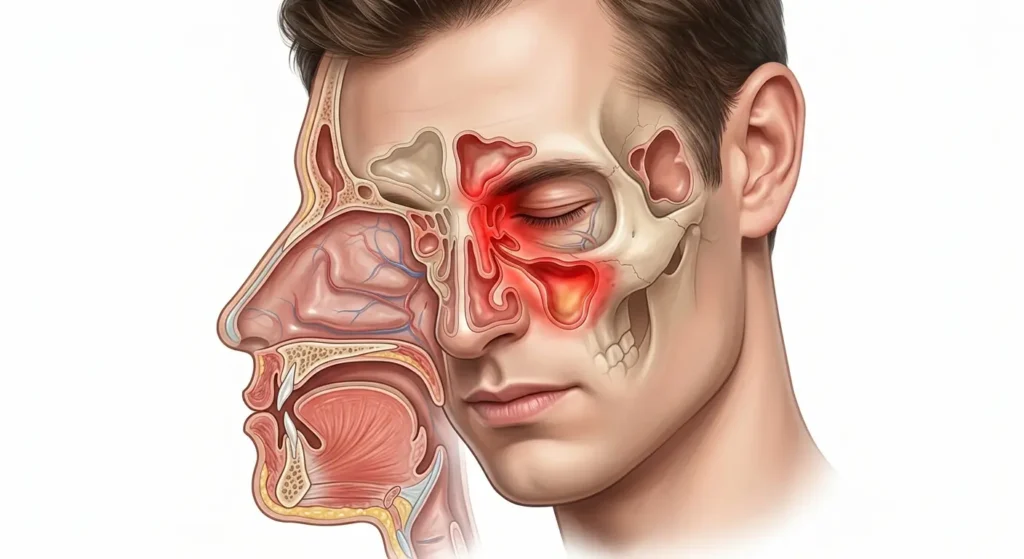
Here’s the simple truth. Your sinuses are small air pockets in your skull. Two of them — the maxillary sinuses behind your cheekbones and the ethmoid sinuses between your eyes — practically touch your eye sockets. When a cold or infection hits, these spaces fill up with mucus and swelling. That pressure has nowhere to go. So it leaks outward, straight into the tissue around your eyes.
This is an eye ache sinus infection. Not a separate eye disease. Just pressure looking for an exit, and your eye sockets happen to be right there.
I’ve seen people convinced they need an eye doctor when really, they need a decongestant and a good night’s sleep. Understanding this connection saves you a lot of unnecessary worry.
What This Actually Feels Like
No two people describe it exactly the same way, but common patterns show up again and again:
- A heavy, “full” sensation pressing behind your eyes
- Ache behind eye that gets worse when you bend forward
- A tight band across your brow and cheeks
- Eyes that feel tired even though you haven’t touched a screen
- Watery eyes, sometimes puffy eyelids in the morning
Sound familiar? You’re not imagining it. This is textbook sinus-related eye pain.

Sinus Eye Pain vs. Migraine vs. Screen Fatigue
People mix these up constantly. And treating the wrong one wastes time and makes you more frustrated. Let me break it down plainly.
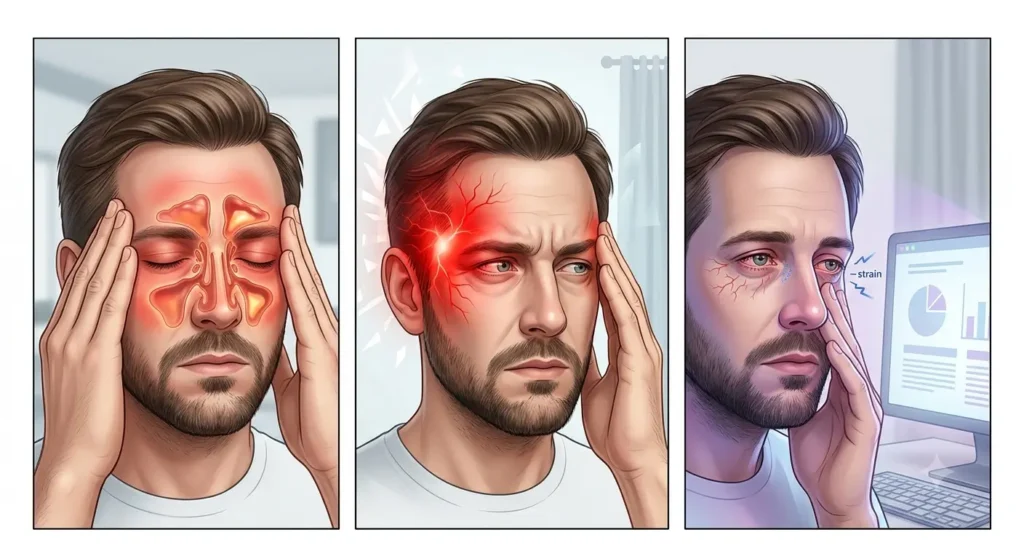
| Feature | Sinus Infection Eye Pain | Migraine | Digital Eye Strain |
|---|---|---|---|
| Where it hurts | Both eyes, cheeks, forehead | Usually one side, behind one eye | Both eyes, front of head |
| Nose symptoms | Stuffy nose, thick mucus | Rarely any | None |
| What triggers it | Cold, allergies, infection | Light, stress, hormones, food | Long hours on screens |
| Gets worse when | You bend over or lie down | Movement, bright light, noise | After hours of close-up work |
| How long it lasts | A few days to about a week | A few hours to three days | Fades once you rest your eyes |
Quick rule I use myself: stuffy nose plus eye pressure equals sinus infection eye pain. One-sided pain with nausea or light sensitivity? That’s more likely a migraine, and worth a doctor’s opinion.
Why Does My Eye Ache — The Real Numbers
You don’t need vague reassurance. You need facts. Here’s what’s actually known about eye ache sinus infection cases:
- Most sinus infections start as viral, like a common cold. Bacterial infections are the minority, and they usually follow a viral infection that lingers too long.
- Symptoms, including the eye ache, typically clear up within 7 to 10 days.
- If sinus symptoms drag on past 12 weeks, doctors classify that as chronic sinusitis. That needs a specialist, not another week of waiting. If your symptoms include blurred vision, learn more in our article on Left Vision Blurry.
- Smoking, allergies, a deviated septum, and nasal polyps all raise your risk.
- Research cited by major health institutions shows a surprising number of people who think they have “sinus headaches” are actually dealing with migraines. The symptoms overlap more than people expect.
- Difficulty focusing your eyes may have another cause. See our guide on Eye Tracking Problems
That last point matters. Don’t assume. If home care isn’t working after a week, it’s time to question the diagnosis, not just push harder on the same remedies.
Is This Dangerous, or Just Annoying?
For most people, it’s annoying, not dangerous. Your body is fighting an infection, and the eye area is catching some of the fallout.
Usually fine to manage yourself:
- Mild aching pain in left eye or right eye, nothing alarming
- Slight puffiness around the eyelids
- Watery eyes, but your vision stays sharp
- Gradual improvement day by day
Needs closer attention:
- Pain that keeps climbing instead of easing off
- Swelling that spreads, or feels warm when you touch it
- Any change in how clearly you see
Here’s my honest take: give home remedies about three to five days. If things are trending better, keep going. If they’re trending worse, stop guessing and call a doctor. If your discomfort is related to prolonged screen use rather than sinus pressure, our article on How to Fix Eye Strain may help.
What Actually Helps: Real Remedies, Not Fluff
None of these cure the infection outright. But they take the edge off while your body does the real work.
- Warm compress. Press a warm, damp cloth over closed eyes and your sinus area for 10 to 15 minutes. Do this two or three times a day. It loosens mucus and eases pressure fast.
- Steam inhalation. Lean over a bowl of hot water, towel over your head, and breathe deeply for five to ten minutes. This thins out mucus so it drains instead of building pressure.
- Saline nasal rinse. A simple saltwater rinse clears congestion. Less congestion means less pressure pushing on your eyes.
- Drink more water than usual. Thin mucus drains. Thick mucus sits there and hurts. Hydration is not optional here.
- Run a humidifier at night. Dry air irritates already-inflamed sinuses. Moisture helps them calm down.
- Over-the-counter pain relief. Standard pain relievers, decongestants, or antihistamines (if allergies are part of the picture) can help. Follow the label. Ask a pharmacist if you’re unsure.
- Sleep with your head propped up. Lying completely flat increases pressure around your eyes. A couple of extra pillows genuinely helps overnight.

About Eye Ache Drops
People often ask about eye ache drops specifically. Standard lubricating eye drops can soothe dryness and irritation that comes along with sinus pressure, but they won’t fix the underlying cause. If your eyes feel gritty or watery on top of the ache, drops offer short-term comfort. They’re not a treatment for the sinus infection itself.

Mistakes I See People Make Constantly
- Blaming allergies for everything. Thick discharge and facial pressure usually point to infection, not just seasonal allergies.
- Overusing decongestant sprays. Using them more than three days straight can backfire and cause rebound congestion. Now you’re worse off than when you started.
- Ignoring pain that’s only on one side. Sinus discomfort is usually spread across both sides. One-sided pain deserves a second look.
- Skipping rest because you’re “too busy.” Pushing through without sleep or fluids just drags the infection out longer.
- Brushing off blurry vision as tiredness. This is the mistake that worries me most. Don’t do this. Get it checked.
- Quitting antibiotics early. If a doctor diagnosed a bacterial infection and gave you antibiotics, finish the full course. Stopping early lets the infection bounce back.
Warning Signs: When to Stop Waiting and Get Help
The eyes and sinuses sit close together, and in rare cases, infection can spread. These signs are uncommon, but you need to know them:
- Swelling, redness, or warmth around one or both eyes
- Blurry vision or double vision
- Sudden vision loss or noticeably dimmer sight
- Trouble moving your eye normally
- High fever along with confusion or a stiff neck
- Fast, severe swelling on one side of your face
If you notice any of these, don’t wait it out. Get seen the same day. These are rare complications, but rare doesn’t mean impossible, and eyes aren’t worth gambling on.

How to Decide What to Do Right Now
- Mild ache, normal vision: Start with home care. Warm compress, saline rinse, rest, fluids.
- Symptoms past a week, or getting worse: Book an appointment with your regular doctor. A bacterial infection might need antibiotics.
- Any vision change, spreading swelling, or high fever: Skip the wait-and-see approach entirely. Get medical care now.
When shopping for saline sprays, look for simple, minimal-ingredient options. If you’re choosing a decongestant, check the dosing against your age and any existing health conditions. A five-minute chat with a pharmacist can save you a lot of trial and error.
Frequently Asked Questions
Can a sinus infection really cause eye pain?
Yes, absolutely. Your sinuses sit directly around and below your eye sockets. When they swell, that pressure spreads into the eye area, causing an ache, tenderness, or heaviness that feels a lot like an eye problem even though it isn’t one.
Why does my eye ache more when I bend over?
Bending forward briefly raises pressure inside your sinuses. That extra pressure makes the fullness or ache around your eyes feel more intense for a moment. This is one of the clearest signs you’re dealing with sinus pressure, not something else.
What helps with headache and eye ache from sinus pressure?
Warm compresses, saline rinses, steam inhalation, hydration, and standard pain relievers all help. They ease discomfort while your body clears the infection. They don’t replace medical treatment if things get severe.
Is blurry vision from a sinus infection dangerous?
Blurry vision isn’t typical of ordinary sinus pressure. Get it checked promptly. It can sometimes trace back to pressure near nerves or muscles, but it can also point to something more serious that needs quick evaluation.
How long does eye ache from a sinus infection usually last?
Most viral sinus infections, including the eye discomfort, ease up within 7 to 10 days. If it drags on longer or keeps getting worse, that’s your signal to see a doctor rather than wait another week.
When should I stop treating this at home and see a doctor?
See a doctor if the pain is severe, if your vision changes at all, if swelling spreads or feels warm, if a fever won’t quit, or if things haven’t improved after one to two weeks.
A Quick Note on This Guide
I’ve put this together using widely recognized medical information about sinusitis and its symptoms, drawing on publicly available patient-education resources from established health organizations. I’m not a licensed physician, and this isn’t a personal diagnosis or treatment plan. It’s meant to help you understand what’s likely going on and when it’s time to bring in a professional. If your symptoms are severe, persistent, or affecting your vision, see a doctor directly.
Bottom Line
Eye ache sinus infection symptoms feel scary until you understand where they’re actually coming from. Your sinuses and eye sockets are neighbors, and when one gets inflamed, the other feels it. Most cases settle down within a week to ten days with basic home care — warm compresses, saline rinses, hydration, and rest.
But don’t tune your eyes out completely. Ordinary sinus pressure rarely touches your actual vision. Any blurriness, spreading swelling, redness that won’t quit, or symptoms getting worse instead of better — that’s your cue to get checked. Treat what you can manage at home. Know exactly when to hand it off to a professional. That’s the whole game.