

Quick Answer: Eye aches when I look up almost always trace back to sinus pressure, digital eye strain, dry eyes, or tired eye muscles. The pain sits behind or above the eye and often eases within a few days of rest and simple home care. See a doctor the same day if it comes with blurry vision, fever, or swelling.
Why My Eye Aches When I Look Up
You glance up at a shelf. Or the sky. And a small, sharp pull grabs behind your eye. The first time, you brush it off. The second or third time, you start typing symptoms into your phone at midnight.
I’ve had this exact ache. It’s unsettling precisely because it’s so specific — not a general headache, not blurry vision, just pain tied to one movement. The good news: eye aches when I look up are common, and most causes are minor. According to the American Academy of Ophthalmology, eye pain tied to a specific direction of gaze usually points to strain, dryness, or nearby sinus inflammation rather than a threat to your vision.
This guide covers what causes this ache, what the pain pattern tells you, how to treat it at home, and the exact signs that mean you shouldn’t wait to see a doctor.
A Quick Anatomy Lesson (Why This Spot Hurts So Easily)
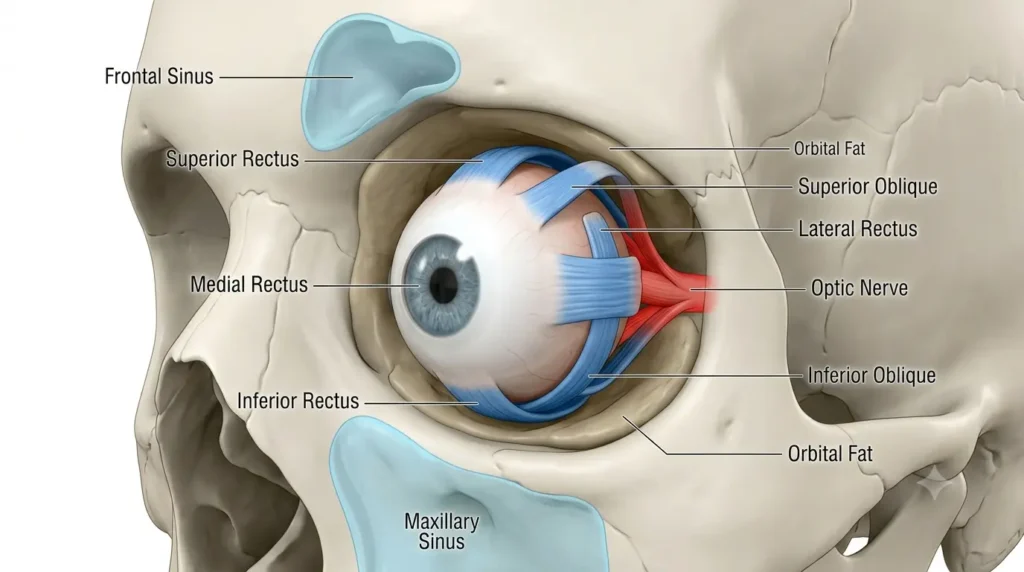
Your eye doesn’t work alone. It sits inside a bony pocket called the eye socket, or orbit, surrounded by fat, connective tissue, and six small extraocular muscles that rotate your eyeball in every direction — up, down, and side to side. The optic nerve runs from the back of your eye to your brain, carrying everything you see.
Right above that socket sit your frontal sinuses. Right behind your cheekbones sit your maxillary sinuses. All of this is packed into a tight space behind your face. When any one part — muscle, nerve, sinus lining, or eyelid — gets inflamed, swollen, or fatigued, movement in that tight space becomes uncomfortable. Looking upward stretches the orbital tissue and extraocular muscles more than a resting gaze does, which is exactly why the pain shows up on that specific movement.
What the Numbers Say
This isn’t a rare complaint. Sinus infections alone affect roughly one in seven adults every year in the United States, according to clinical research summaries, and the American Academy of Otolaryngology–Head and Neck Surgery puts the figure at close to 30 million diagnosed cases annually. Digital eye strain is even more common — the American Optometric Association has found that more than half of adults report eye strain symptoms tied to screen use. Put those two causes together, and you’ve got the explanation for the vast majority of eye movement pain people search for online.
Eye Aches When Looking Up vs. Other Movement-Related Eye Pain
| Symptom Pattern | Likely Cause | Typical Feel |
|---|---|---|
| Eye aches when looking up | Sinus pressure, muscle strain, orbital swelling | Dull ache or pressure above/behind the eye |
| Pain when looking down | Optic nerve irritation | Aching that worsens with downward gaze |
| Pain when looking left or right | Muscle fatigue, dry eyes | Mild, diffuse discomfort |
| Eye hurts when moving eyes in any direction | Broader inflammation or infection | More constant, not tied to one direction |
| One eye hurts when looking up | Localized sinus issue, injury, muscle strain on one side | Usually more noticeable and one-sided |
Note the difference between left eye hurts when looking up and right eye hurts when looking up — one-sided pain almost always points to a one-sided cause, like sinus congestion or strain affecting just that eye, rather than something systemic.
What This Actually Feels Like Day to Day
Mornings tend to feel worse if sinus pressure is behind it, since fluid pools overnight. Evenings tend to feel worse if screen fatigue is the driver, after your eye muscles have worked all day. Either way, the pattern isn’t usually constant — it flares with a trigger (a cold, a long day of scrolling, bad sleep) and eases once that trigger resolves.
Cleveland Clinic notes that most cases of mild, movement-triggered eye discomfort resolve within a few days once the underlying irritation — whether that’s dryness, congestion, or fatigue — is addressed.
The Most Common Causes, Explained
1. Sinus Congestion or Sinusitis
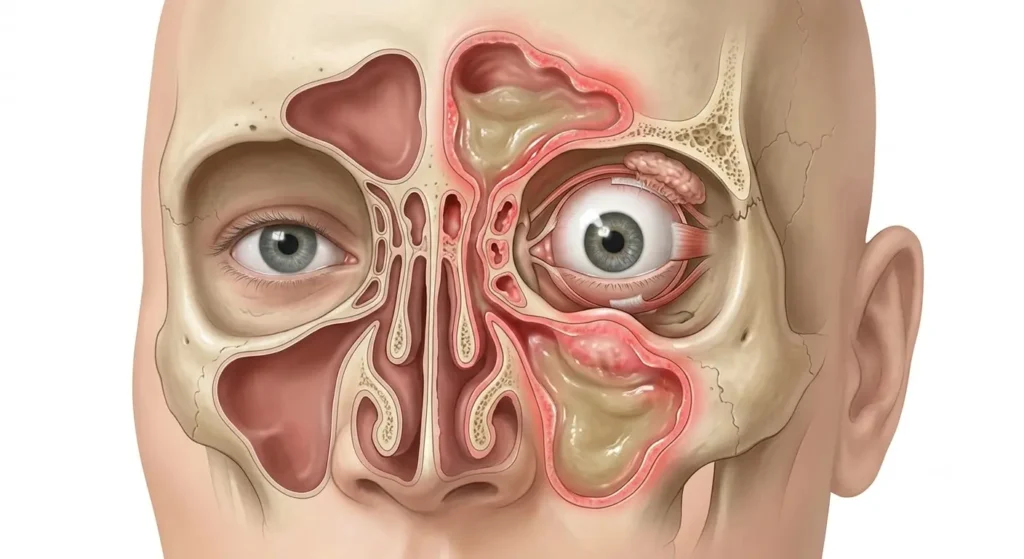
Your frontal sinuses sit directly above your eye sockets. Inflammation there — from a cold, allergies, or a full-blown infection — pushes on the orbital tissue. Upward eye movement stretches that same area, producing pain behind the eye when looking up or a dull ache above the eyebrow. Congestion, thick nasal discharge, and pressure that worsens when you bend forward are the telltale signs.
2. Digital Eye Strain (Asthenopia)
Hours on a screen keep your eyes locked in one position. The extraocular muscles barely move during that time, so when you finally look up, those stiff muscles ache. Optometric survey data cited above points to this as a leading contributor to eye movement pain in working adults.

3. Eye Muscle Strain
Beyond screens, poor posture, uncorrected vision, or simple overuse can leave your eye muscle pain lingering. Since these muscles handle every glance you make, fatigue here shows up most on a full-range movement like looking up.
Persistent discomfort with eye movement may sometimes overlap with Eye Tracking Problems, especially if you notice trouble following moving objects.
4. Dry Eyes
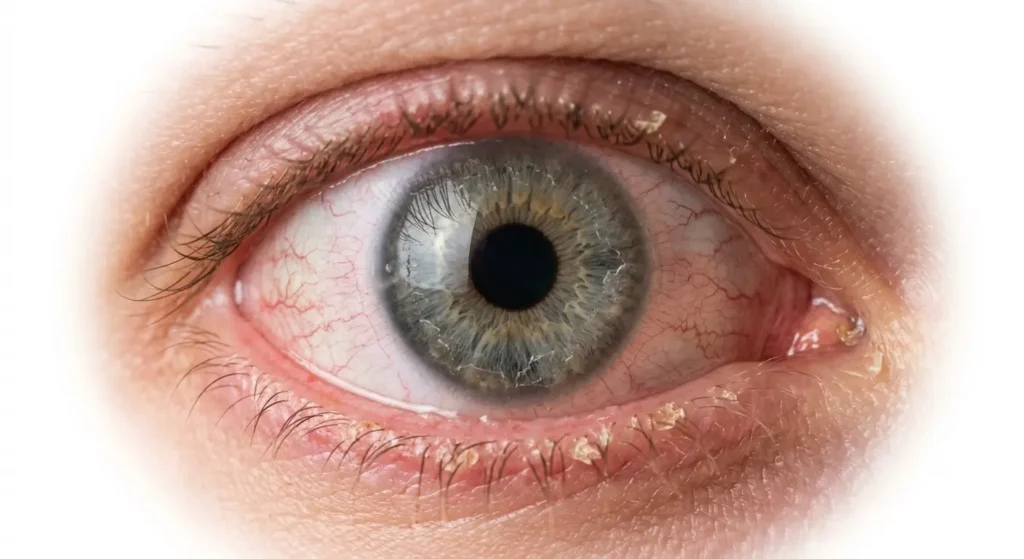
Without a proper tear layer, movement in any direction creates friction. That friction is what produces the gritty, aching feeling people describe as eye socket pain or a scratchy sensation with eye movement.
If your discomfort also includes burning or excessive tearing, check our article on Burning Watery Eyes for additional causes and relief tips.
5. Migraine
Some migraines bring pain with eye movement as part of the episode, often paired with light sensitivity or a one-sided headache. MedlinePlus lists eye pain with movement as a recognized migraine symptom in some patients.
6. Optic Neuritis
Inflammation of the optic nerve falls into this category, and it classically causes pain that worsens with eye movement, sometimes with blurred or dimmed vision. The National Eye Institute flags it as a condition that needs prompt evaluation, not home treatment, because delayed care can affect vision recovery.
7. Thyroid Eye Disease
Certain thyroid conditions inflame the tissue around the eye, creating orbital pain that’s more noticeable with specific movements, including looking up.
8. Orbital Inflammation or Infection
Rarer, but serious — infection inside the eye socket can cause pain that worsens with movement, plus swelling, redness, or trouble moving the eye freely. The NHS lists this as a same-day medical concern, particularly if fever is present.
9. Eye Injury
A recent bump or scratch near the eye can leave soreness that’s most obvious when the eye moves through its full range.
Is It Something to Worry About?
In short — no, not usually. Occasional or mild eye aches when I look up trace back to sinus pressure, screen fatigue, or dryness in the majority of cases, and they improve with basic self-care.
Reassuring signs:
- Pain is mild and comes and goes
- It eases with rest, hydration, or lubricating drops
- No change in vision
- You have an obvious trigger — a cold, allergies, a long day at a screen
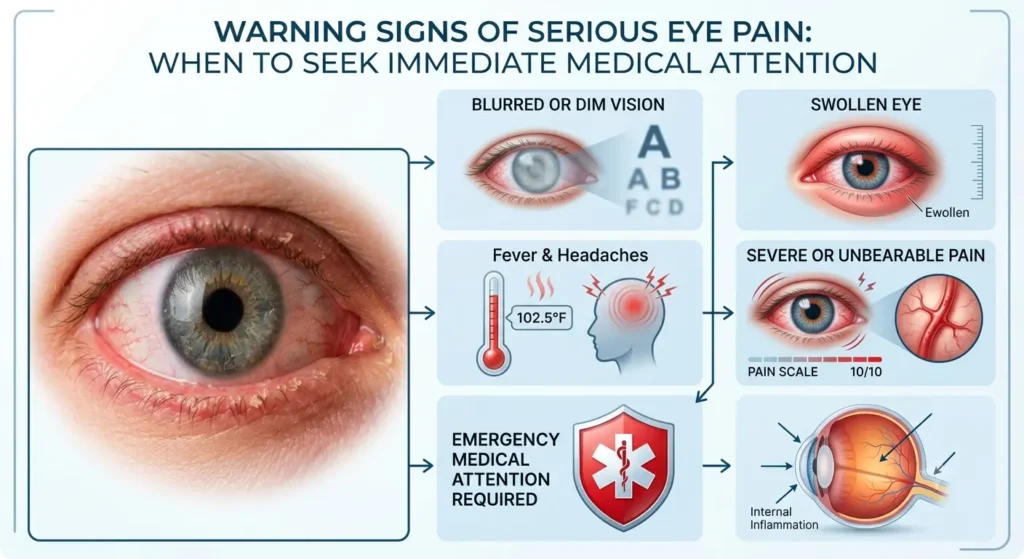
Signs that need prompt medical attention:
- Sudden, severe pain
- Blurred or reduced vision
- Pain with eye movement in every direction, not just upward
- Redness, swelling, or fever
- One pupil looking different in size from the other
- A recent eye injury
- No improvement after several days of home care
According to Cleveland Clinic and the NHS, vision changes or fever paired with eye pain are the two clearest signals that a symptom needs same-day evaluation rather than home treatment.
Managing It at Home
If none of the warning signs above apply, these steps handle most cases within a few days:
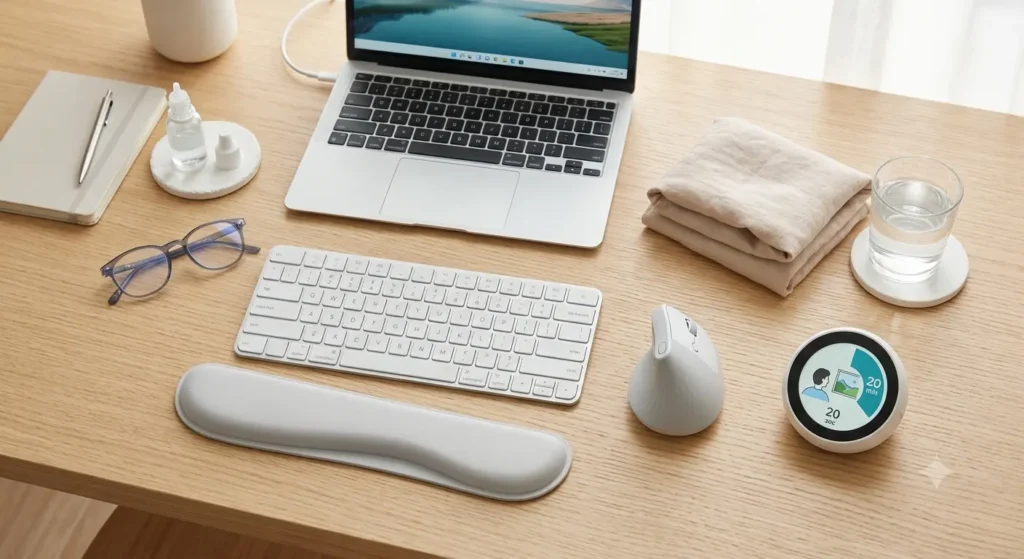
- Follow the 20-20-20 rule. Every 20 minutes, look at something 20 feet away for 20 seconds. This resets tired eye muscles fast.
- Use lubricating eye drops. Artificial tears fix dryness-related aching, often within minutes.
- Apply a warm compress. Warmth over closed eyes eases both muscle tension and sinus pressure.
- Treat sinus congestion directly. Saline rinses, steam, and staying hydrated reduce the pressure that radiates toward the eyes.
- Fix your screen setup. Position monitors at eye level and cut glare to reduce strain from constant upward or downward glancing.
- Prioritize sleep. Fatigue lowers your eyes’ tolerance for strain.
- Recheck your glasses prescription. An outdated prescription forces your eyes to overwork on every movement.
Give this combination three to five days. The National Eye Institute notes that most strain-related and congestion-related eye discomfort improves meaningfully within that window when treated consistently.
Mistakes That Slow Down Recovery
- Treating dryness when sinus pressure is the real cause. Eye drops won’t fix congestion-driven pain.
- Overusing drops without knowing the trigger. They help dryness but do nothing for nerve- or sinus-related aching.
- Assuming it’s “just strain” indefinitely. If nothing improves after a week, that’s your cue to get checked rather than keep guessing.
- Rubbing your eyes constantly. This worsens irritation and can introduce infection.
- Skipping the eye exam. Plenty of people treat symptoms for weeks without ever confirming there isn’t an uncorrected vision or muscle issue underneath it all.
Choosing Your Next Step
- New, mild pain with an obvious trigger (a cold, a heavy workday)? Try home care for three to five days first.
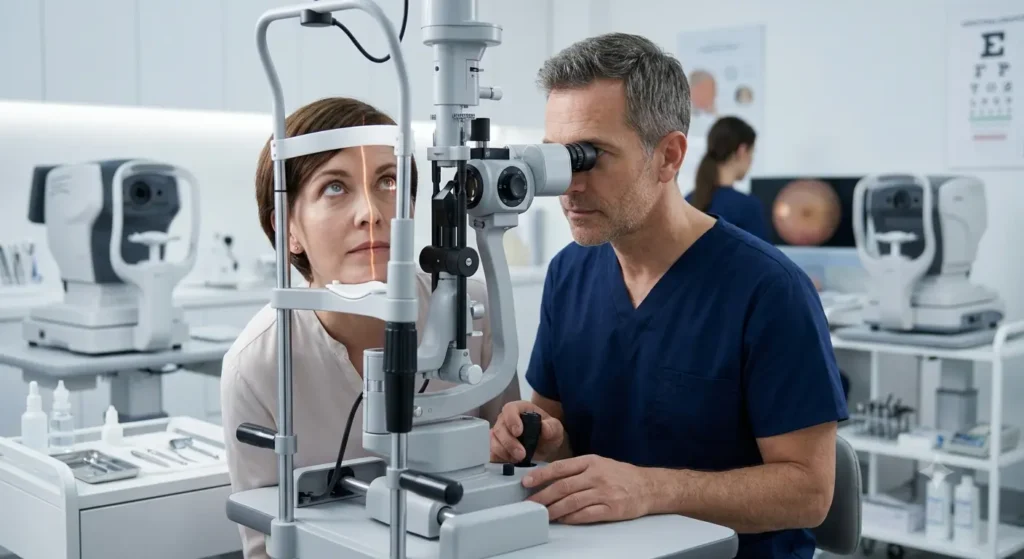
- Pain lasting beyond a week, or any vision change? Book with an eye care provider — they have pressure checks and nerve exams that general practitioners don’t.
- Sudden severe pain, vision loss, or trauma? Go to urgent or emergency care the same day.
- Keep a short symptom log — when it happens, how long it lasts, what triggers it. MedlinePlus recommends this kind of tracking because it speeds up diagnosis significantly when you do see a provider.
Frequently Asked Questions
Why does my eye hurt when I look up? Sinus pressure, digital eye strain, and dry eyes account for most cases. Less often, it’s nerve inflammation or a thyroid-related issue.
Can sinus pressure make eye movement painful? Yes. The frontal sinuses sit right above the eye sockets, so inflammation there gets noticeably worse with upward eye movement.
Is eye pain when moving the eye normal? Mild, occasional discomfort — especially after long screen sessions — is common. Severe, constant, or vision-affecting pain is not typical and should be checked.
Why does only one eye hurt when I look up? One-sided pain usually means a one-sided cause: sinus congestion on that side, minor injury, or localized muscle strain. It’s still worth mentioning to a doctor if it lingers.
Can dry eyes cause pain when looking up? Yes. Without enough lubrication, eye movement in any direction creates friction, producing that gritty, aching sensation.
What causes pain behind the eye when looking upward? The most frequent culprits are sinus pressure, extraocular muscle fatigue, and general orbital inflammation.
When should eye movement pain be checked by a professional? If it’s severe, lasts more than a few days despite home care, or comes with vision changes, red eyes , swelling, or fever, get it evaluated.
Who This Guide Is For
I wrote this to help you understand a common, specific symptom — not to replace a professional eye exam. The information here draws on generally accepted guidance from the American Academy of Ophthalmology, the National Eye Institute, Cleveland Clinic, MedlinePlus, and the NHS. It isn’t a diagnosis, and it doesn’t replace advice from a licensed doctor or ophthalmologist. If your symptoms are persistent, severe, or worsening, book an appointment with an eye care provider for an evaluation tailored to you.
Final Thoughts
An ache that shows up only when you look up feels strange precisely because it’s so specific. But in nearly every case, it traces back to something manageable — sinus pressure, screen fatigue, or dry eyes. Pay attention to the pattern, try the home care steps above, and know the handful of warning signs that mean it’s time to stop guessing. A comprehensive eye exam is low-risk and high-value if the ache doesn’t budge — it rules out the rarer causes and gives you real peace of mind either way.