
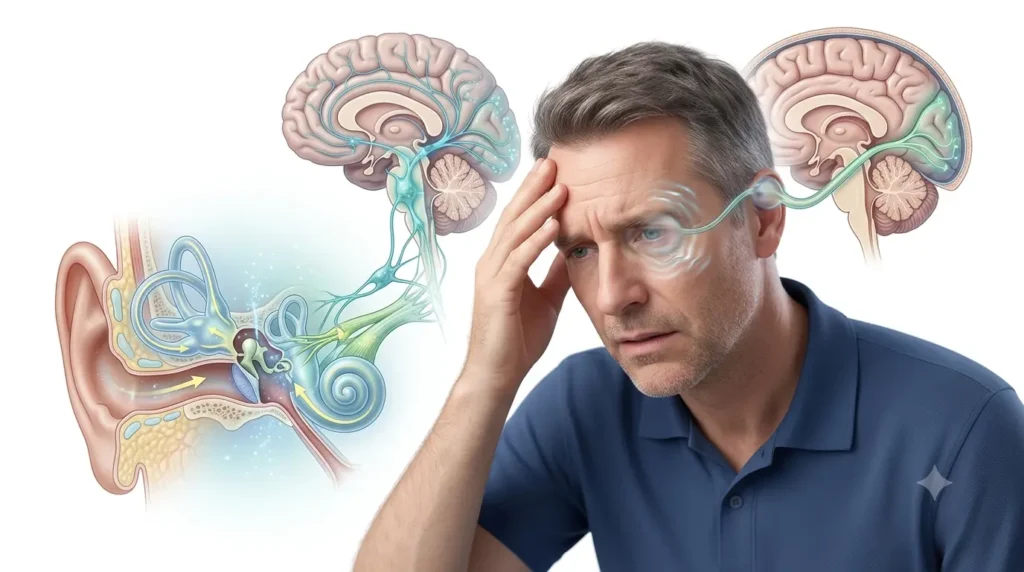
Quick Answer: Yes, eye problems can cause dizziness. Your eyes send constant signals to your brain about movement, distance, and position. When those signals get confused — from eye strain, blurry vision, an outdated prescription, or a condition like binocular vision dysfunction — your brain struggles to match what it’s seeing with what your inner ear feels. That mismatch is what shows up as dizziness, lightheadedness, or that “off balance” feeling.
I Get This Question a Lot
I’ve talked to a lot of people who ask the same thing: can eye problems cause dizziness, or is something else going on? It’s a fair question, and the honest answer to can eye problems cause dizziness is more layered than a simple yes or no. Usually they’ve noticed a pattern. The room feels a little tilted after two hours on a laptop. Reading a book makes their head swim. Standing up after screen time feels weird for a second.
Here’s the thing. Most people jump straight to “it’s my inner ear” or “maybe it’s my blood pressure.” Nobody thinks about their eyes first. But eye problems and balance are more connected than most doctors even explain clearly during a five-minute appointment.
So let’s actually dig into it. No fluff. No vague reassurance. Just the real connection between your eyes and that dizzy feeling.
Why Your Eyes and Your Balance Are Basically Roommates
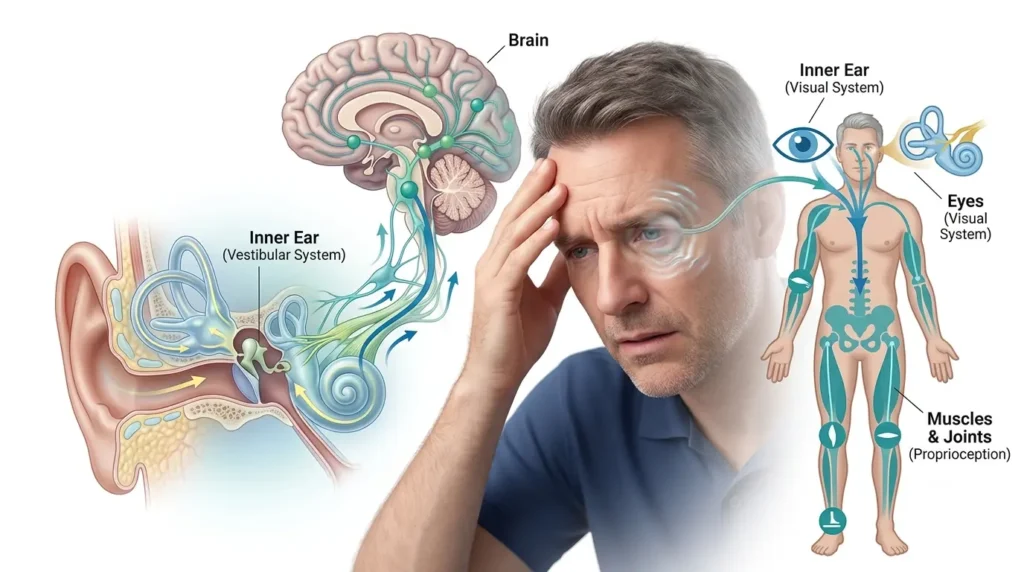
Your body doesn’t use one system to keep you upright. It uses three, and they have to agree with each other constantly.
First, there’s your visual system. Your eyes tell your brain where objects are, how far away they sit, and whether you’re moving toward or away from them.
Second, there’s your vestibular system, tucked inside your inner ear. It tracks head position and motion.
Third, there’s proprioception — sensors in your muscles and joints that tell your brain where your body actually is in space right now.
When all three agree, you feel steady. Simple as that. But when your vision sends blurry, doubled, or unstable information, your brain gets stuck trying to reconcile it with what your inner ear and muscles are reporting. That confusion is exactly why eye problems can cause dizziness. It’s not usually the eyes acting alone — it’s your brain trying to make sense of conflicting input.
Doctors sometimes call this visually induced dizziness. Other times it gets labeled a vestibular-visual mismatch. Different names, same idea: your eyes threw a wrench into your balance system.
Takeaway: Balance isn’t just an inner-ear job. It’s a team effort between your eyes, your inner ear, and your body’s own position sensors. Mess with one, and the other two have to scramble to compensate.
The Numbers Behind This (Why You’re Not Imagining It)
This isn’t a fringe complaint. Real data backs up how common both sides of this issue are.
The American Optometric Association reported that 58% of adults have experienced digital eye strain or related vision problems, largely tied to how much time we now spend on screens. Separate research shows that figure climbing even higher among people who use devices for five or more hours a day.
On the balance side, the National Institute on Deafness and Other Communication Disorders (NIDCD), part of the National Institutes of Health, found that about 15% of American adults — roughly 33 to 37 million people — reported a balance or dizziness problem within a 12-month period. That number has actually risen over time, not fallen.
The Vestibular Disorders Association puts it in even starker terms: an estimated 35% of adults aged 40 and older in the U.S. have experienced some form of vestibular dysfunction at some point. That’s tens of millions of people navigating exactly the kind of eyes-versus-balance confusion this article is about.
Put those two data sets side by side, and the overlap makes sense. Millions of people are straining their eyes daily. Millions more are dealing with balance complaints. It would be strange if these two groups never intersected — and it’s a big part of why can eye problems cause dizziness keeps trending as a search term.
Which Eye Conditions Actually Cause Dizziness?
If you’re wondering which eye conditions cause dizziness specifically, not every eye issue affects balance the same way. I’ll break down the ones that come up again and again.
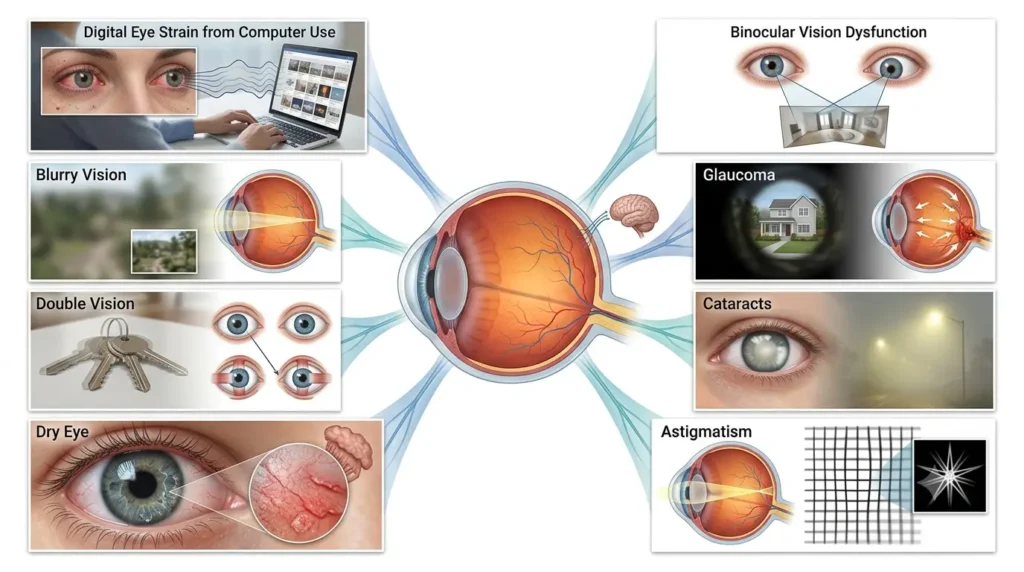
Eye strain and dizziness. This is probably the most common one I hear about. Staring at a screen for hours forces your eye muscles to hold a fixed focus far longer than they’re built for. Add poor lighting or glare, and your eyes get exhausted. Tired eye muscles send inconsistent signals to your brain, and dizziness after screen time follows. Digital eye strain is real, and it’s becoming more common as remote work and phone use keep climbing.
If long hours on digital devices leave your eyes feeling tired, learning how to fix eye strain can reduce discomfort and may also help ease vision-related dizziness.
Blurry vision and dizziness. When your vision isn’t sharp, your brain has to work harder to interpret what it’s seeing. That extra processing load can trigger dizziness, especially when you’re trying to focus on something at a distance or in a busy environment.
Double vision and dizziness. This one’s more serious. If your eyes aren’t tracking together properly, your brain receives two slightly different images and tries to merge them. That mismatch is disorienting, and it often causes noticeable dizziness or nausea, not just mild unsteadiness. Difficulty keeping both eyes aligned or tracking moving objects can also contribute to dizziness. Learn more about eye tracking problems and how they affect visual coordination.
Dry eyes and dizziness. Can dry eyes cause dizziness on their own? Not usually, not directly. But dry eyes cause irritation, fluctuating clarity, and constant blinking to compensate. Over a long stretch, especially during reading or screen work, that fluctuation adds up and contributes to a foggy, unsteady feeling.
Can glasses cause dizziness? Yes, temporarily. A brand new prescription — especially if it’s a big change in strength or a new astigmatism correction — forces your brain to recalibrate how it interprets distance and depth. Most people adjust within a few days. If dizziness from glasses doesn’t fade after a week or two, the prescription itself might be off, and it’s worth going back to get it checked.
Can eye pressure cause dizziness? This connects to conditions like glaucoma, where pressure inside the eye rises and can affect the optic nerve over time. Vision changes from pressure fluctuations can, in turn, disturb your sense of balance. This isn’t something to self-diagnose. If you have known eye pressure issues and you’re experiencing dizziness, that combination needs a professional look, not guesswork.
Cataracts and dizziness. Cataracts cloud your natural lens gradually. As vision dims or blurs, your brain gets less reliable visual input, which can make depth perception harder and contribute to unsteadiness, particularly in low light or unfamiliar spaces.
Astigmatism and dizziness. Uncorrected or under-corrected astigmatism distorts how light focuses on your retina. That distortion means your brain is working with a slightly warped image constantly, which can trigger eye fatigue, headaches, and yes, dizziness. f astigmatism is contributing to eye fatigue, some people also explore eye exercises for astigmatism, although corrective lenses remain the primary treatment.
Eye muscle problems and dizziness. Conditions like strabismus, where the eyes don’t align correctly, throw off binocular vision — your ability to use both eyes as a coordinated team. When binocular vision breaks down, dizziness during reading or eye movement is common, and it often responds well to vision therapy or prism lenses.
What Vision-Related Dizziness Actually Feels Like
I want to be specific here because people often describe this wrong to their doctor and get dismissed.
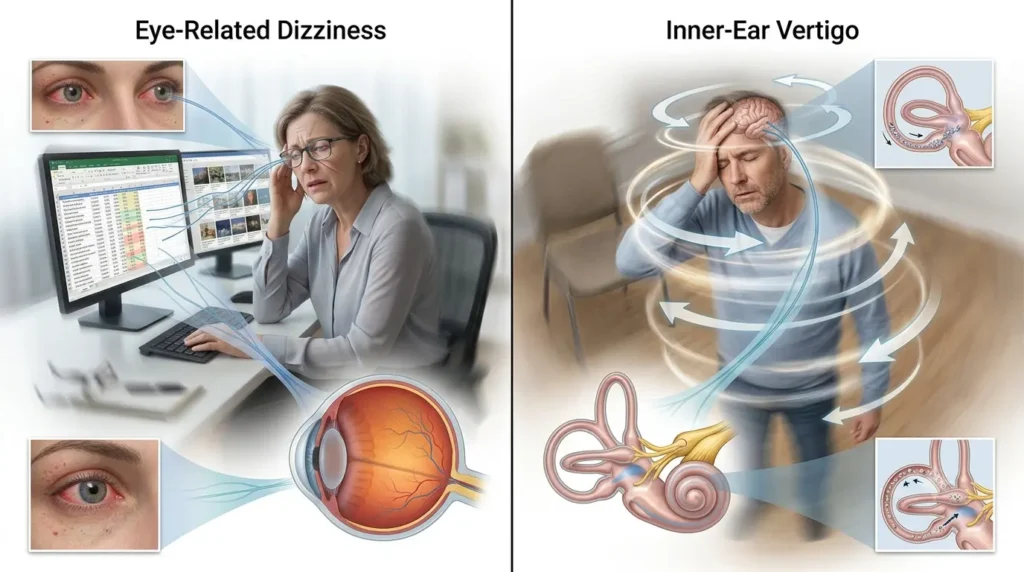
Vision-related dizziness usually isn’t the room-spinning kind. That spinning sensation is more typical of classic vertigo from an inner ear issue. What eye-driven dizziness usually feels like instead:
- A subtle swaying or floating feeling, especially right after reading or screen work
- A “foggy” or disconnected feeling rather than an acute spin
- Symptoms that build slowly across the day instead of hitting suddenly
- Relief after closing your eyes or stepping away from a screen
- Getting worse in visually busy places, like grocery stores or crowded streets
If that pattern sounds familiar, your eyes are probably playing a role. I won’t pretend that’s a guaranteed diagnosis, though. The only real way to confirm it is a proper eye exam.
Eye-Related Dizziness vs. Vertigo: How to Tell Them Apart
People use “dizzy” for a dozen different feelings, and that’s part of why this gets confusing. Here’s a straight comparison so you can pin down what you’re actually experiencing.
| Feature | Eye-Related Dizziness | Vertigo (Inner Ear) |
|---|---|---|
| Main sensation | Swaying, floating, foggy, unsteady | Room or self spinning intensely |
| Onset | Gradual, builds during visual tasks | Often sudden, can hit without warning |
| Trigger | Screens, reading, glare, new glasses | Head movement, rolling over in bed |
| Duration | Fades with visual rest | Can last seconds to hours, sometimes longer |
| Associated symptoms | Eye fatigue, headache, mild nausea | Hearing changes, ringing in ears, vomiting |
| Worsens with | Busy visual environments, prolonged focus | Specific head positions or movements |
| Eases with | Closing eyes, stepping away from screen | Staying still, avoiding the trigger position |
| Typical cause | Eye strain, binocular vision issues, blurry vision | BPPV, Meniere’s disease, vestibular neuritis |
If your symptoms line up more with the left column, start with an eye exam. If they line up with the right column, an ENT or vestibular specialist is the better first stop.
Takeaway: “Dizzy” isn’t one feeling. If it’s foggy and screen-triggered, look at your eyes first. If it’s a genuine spinning sensation tied to head movement, your inner ear is the more likely suspect.
Does Eye Strain Affect Balance? Let’s Be Clear About It
Yes, it does. Eye strain and dizziness show up together often enough that eye doctors have a name for the underlying mechanism: your eye muscles are working overtime, and that fatigue affects how accurately your visual system reports information to your brain. Less accurate input means your balance calculations get shakier too.
If you feel dizzy when reading, this is very likely the culprit, especially if it happens during long stretches without breaks. Your focusing muscles simply get tired, the same way your legs get tired after a long walk.
When Dizziness Points to Something Bigger Than Your Eyes
I’m not going to sugarcoat this part. Dizziness with vision changes can sometimes signal something more serious than screen fatigue.
Migraines can cause dizziness and vision changes together — this is called vestibular migraine, and it’s more common than people realize. Some neurological disorders, including multiple sclerosis and certain forms of stroke, also produce combined vision and balance symptoms. A concussion can do the same thing, disrupting both visual processing and the vestibular system at once.
This is where I’d tell you straight: don’t try to diagnose yourself off a list of symptoms online. Matching your experience to a condition on a page is not the same as an actual diagnosis.
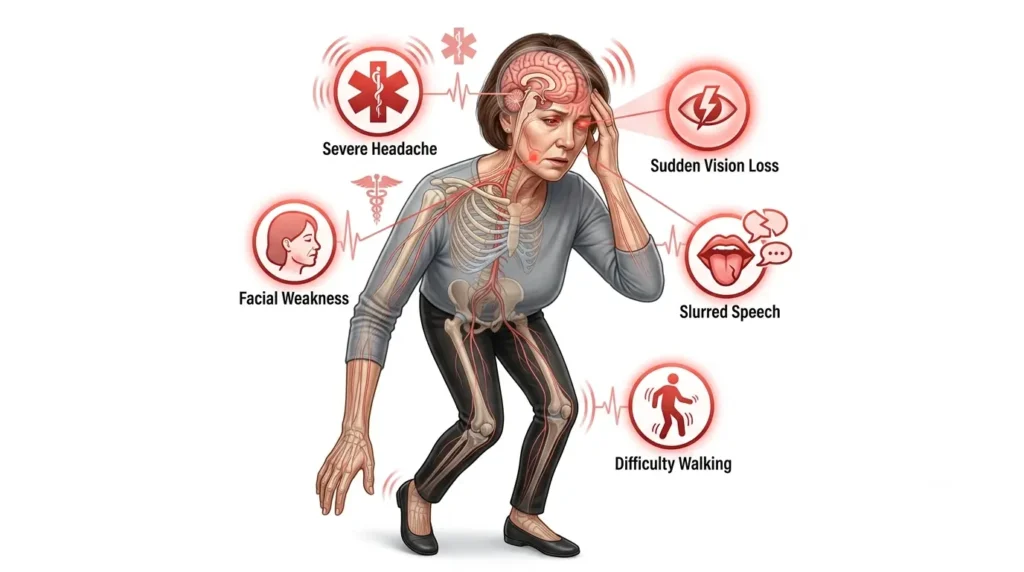
Go to the ER immediately if dizziness comes with:
- Sudden vision loss
- Slurred speech
- Numbness or weakness on one side
- Difficulty walking or sudden loss of coordination
- A severe headache unlike any you’ve had before
Those are stroke symptoms, not eye strain symptoms. Don’t wait it out.
How Do I Know If My Dizziness Is From My Eyes?
Ask yourself a few honest questions:
Does the dizziness show up mainly during or right after visual tasks — reading, screens, driving? Does it ease when you rest your eyes or close them for a few minutes? Does it worsen in visually cluttered spaces? Have you changed your glasses recently, or skipped an eye exam for a while?
If you answered yes to most of these, vision problems causing dizziness is a reasonable working theory. If your dizziness feels more like actual spinning, comes with ringing in your ears, or happens completely independent of anything visual, that points more toward your inner ear or nervous system.
What Tests Are Needed?
A comprehensive eye exam is the sensible first step. A good exam for this issue checks more than just how well you read letters on a chart. Ask specifically whether the exam includes binocular vision testing, eye tracking assessment, and focusing ability — not just visual acuity.
If the eye exam comes back clear and dizziness continues, the next step is usually a referral to an ENT or neurologist, who can check for vestibular disorders, inner ear issues, or neurological causes.
Modern clinics may also use AI-assisted imaging and screening tools during comprehensive eye exams. Learn how AI in eye care is changing vision diagnosis.
How Is It Treated?
Treatment depends entirely on the cause, but here’s what tends to help across the board:
Follow the 20-20-20 rule — every 20 minutes of close work, look at something 20 feet away for 20 seconds. Get your glasses prescription checked if it’s been over a year. Use artificial tears if dry eyes are part of the picture. Set up your workstation so your screen sits at eye level, not below or above it. Take real breaks from reading and screens instead of pushing through fatigue. Stay hydrated — dehydration alone can worsen dizziness regardless of the cause. Stand up slowly instead of jumping up quickly.
For binocular vision issues specifically, vision therapy or prism lenses often make a real difference within weeks, not months.
Takeaway: Most eye-related dizziness responds to boring, unglamorous fixes — breaks, updated glasses, artificial tears, hydration. You rarely need anything dramatic. You just need consistency.

Should I See an Eye Doctor or a Neurologist?
Start with the eye doctor if your dizziness clearly tracks with visual activity — reading, screens, focusing on things close up. That’s the lower-risk, faster path, and it rules out or confirms several common causes quickly.
Go straight to a neurologist or ENT if you’re dealing with true spinning sensations, hearing changes, ringing in your ears, or dizziness that shows up with no connection to what you’re looking at.

Related Conditions Worth Ruling Out
Your eyes aren’t the only thing that can send dizziness signals through your body. Before you settle on “it’s my vision,” it’s worth knowing what else commonly causes this exact symptom. I’d bring this list to your doctor if eye strain and glasses adjustments don’t fully explain what you’re feeling.
Diabetes — Blood sugar swings, both high and low, commonly cause lightheadedness and blurred vision at the same time, which can look a lot like eye-related dizziness.
High blood pressure — Hypertension can cause headaches and a floaty, unsteady feeling, and in some cases affects blood flow to the eyes too.
Low blood pressure — Dropping blood pressure suddenly, especially when standing up, is one of the most common and overlooked causes of dizziness — and it has nothing to do with your eyes.
Anemia — Low iron reduces oxygen delivery throughout your body, including your brain, which frequently shows up as dizziness, fatigue, and difficulty focusing your eyes.
Thyroid disease — Both an overactive and underactive thyroid can disrupt energy levels, heart rate, and circulation in ways that produce dizziness alongside vision changes.
None of these rule out your eyes as a contributor. Honestly, they often overlap. Someone with anemia and heavy screen use, for example, could easily have two things stacking on top of each other. A basic blood panel from your doctor, alongside an eye exam, covers your bases far better than guessing.
Frequently Asked Questions
Can eye problems actually cause dizziness? Yes. Your visual system feeds directly into your balance system, so disruptions like blurry vision, eye strain, or misalignment can absolutely trigger dizziness.
Can bad eyesight make you dizzy? It can. Uncorrected or poorly corrected vision forces your brain to work harder to interpret what it sees, and that extra strain can lead to dizziness, especially with prolonged use.
Why do my eyes feel weird and I get dizzy? This combination often points to eye strain, an outdated prescription, or binocular vision dysfunction. If it’s persistent, get an eye exam rather than guessing.
Does eye strain affect balance? Yes, tired eye muscles send less reliable signals to your brain, which can throw off your sense of balance temporarily.
Can dry eyes cause vertigo? Not typically true vertigo, but dry eyes can contribute to general unsteadiness through irritation and fluctuating visual clarity.
Can blurry vision affect balance? Yes. Unclear visual input makes it harder for your brain to judge distance and depth, which can affect your sense of balance.
Is dizziness a symptom of glaucoma? Not directly in most cases, but pressure changes and vision effects linked to glaucoma can indirectly contribute to feelings of imbalance. This needs professional monitoring, not self-assessment.
What neurological diseases cause dizziness and vision problems? Vestibular migraine, multiple sclerosis, and stroke are among the conditions that can produce both symptoms together. Any sudden or severe combination of the two deserves prompt medical attention.
Sources and Expert Organizations Medical Referenced
For anyone who wants to dig deeper or verify what’s here, these are reputable places to start:
- American Optometric Association (AOA) — research and guidance on digital eye strain and computer vision syndrome Eye diseases, vision care, and patient education.
- National Institute on Deafness and Other Communication Disorders (NIDCD / NIH) — data and fact sheets on dizziness and balance disorders
- Vestibular Disorders Association (VeDA) — patient education on vestibular dysfunction and vertigo
- American Academy of Ophthalmology (AAO) — clinical guidance on eye diseases including glaucoma and cataracts
- Mayo Clinic — general patient-facing overviews of dizziness, vertigo, and related symptoms
A Quick Note on This Article
I’m writing this to help you understand the possible connection between your eyes and your balance, based on widely accepted general health information. I’m not a licensed doctor, and this isn’t a diagnosis. If your dizziness is persistent, severe, or paired with any warning signs I mentioned above, please see a qualified eye doctor or physician for a real evaluation.
Bottom Line
So, can eye problems cause dizziness? Yes — genuinely, yes. If there’s one line to remember from this whole guide, it’s this: can eye problems cause dizziness is a real, evidence-backed question, not a stretch. Your eyes are one-third of the system keeping you steady, and when vision gets disrupted by strain, blur, misalignment, or an old prescription, dizziness often follows close behind. But dizziness has plenty of possible causes, and your eyes are just one piece of a bigger puzzle that includes your inner ear, hydration, blood pressure, and nervous system.
If your dizziness lines up with visual activity, book an eye exam. It’s quick, it’s low-risk, and it rules a lot of things in or out fast. If it comes with any of the serious warning signs I listed, don’t wait around — get medical help right away. Either way, you deserve a real answer, not more guessing.